100 mark 1922
Market Prices
22 salesAbout This Note
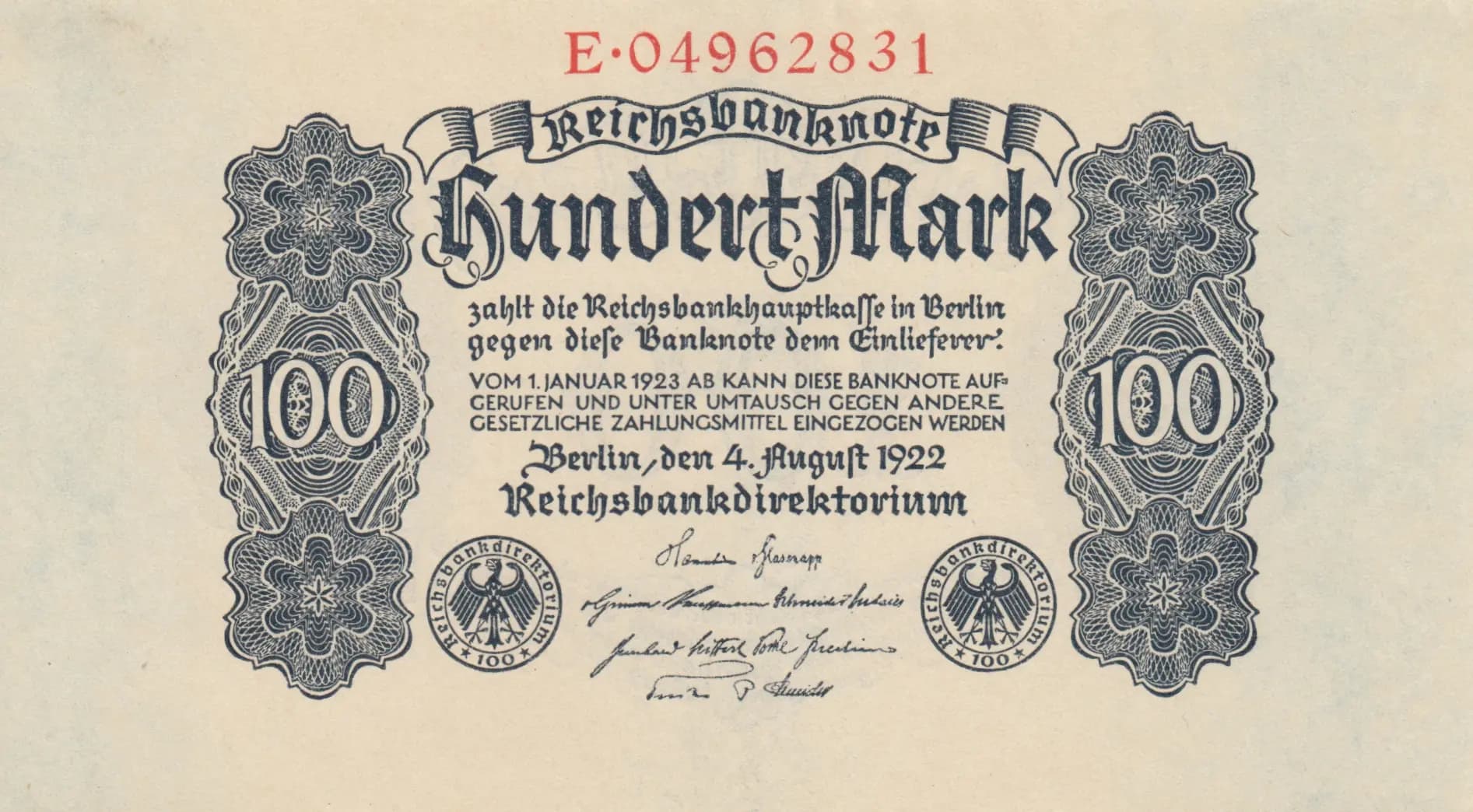
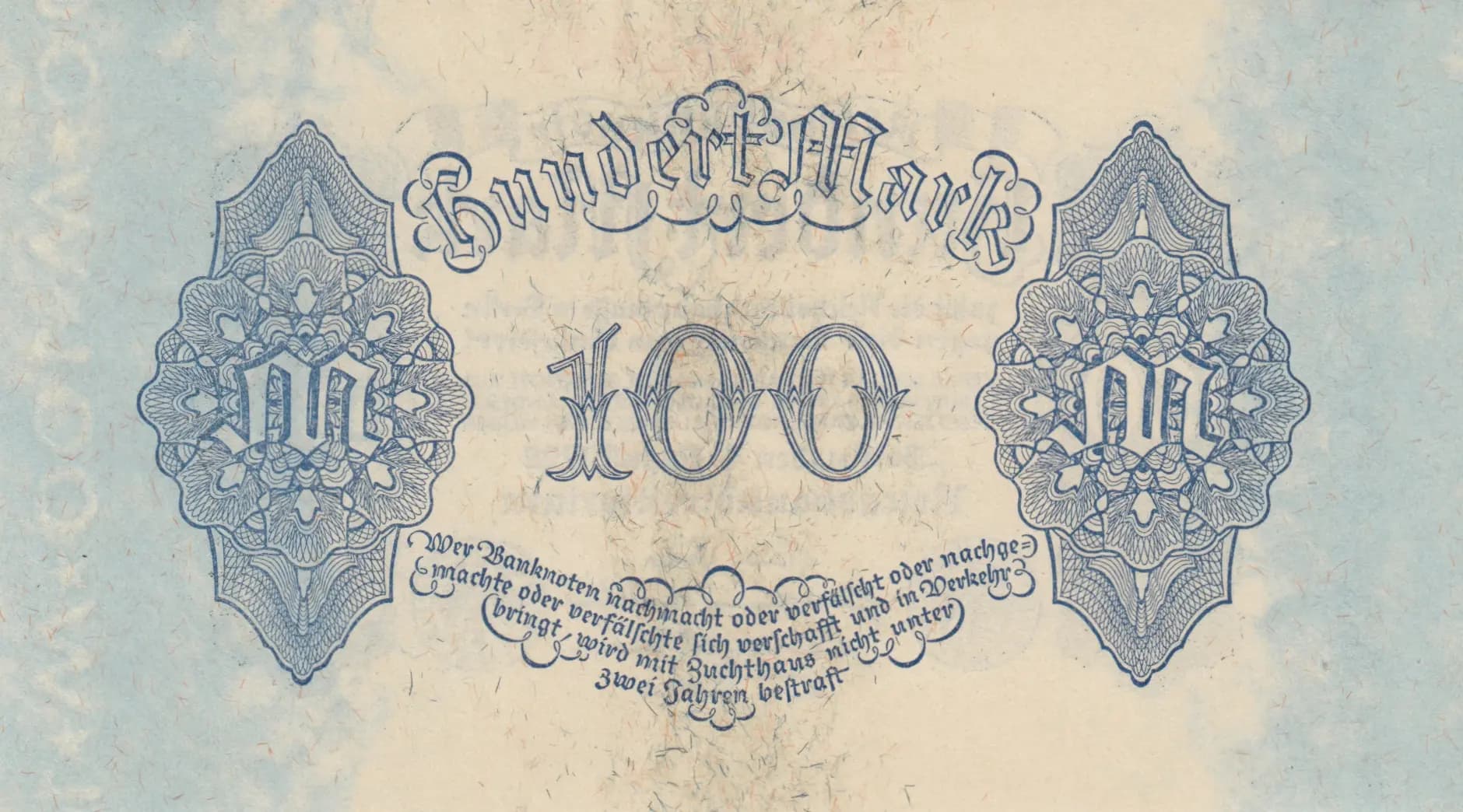
This is a German 100 Mark banknote issued by the Reichsbank on August 4, 1922, during the hyperinflation period of the Weimar Republic. The note presents in AU (About Uncirculated) condition with sharp printing, minimal wear, and only minor age-related foxing visible on the cream-colored paper. The front and back feature identical symmetrical designs with ornate geometric patterns, large denomination numerals in decorative cartouches, and the characteristic Reichsbank seals bearing the imperial German eagle, making it a notable example of Weimar-era currency design before the final monetary collapse of 1923.
Common. Despite its historical significance as a 1922 hyperinflation-era note, this Pick-75 100 Mark note is common in the collector market. eBay transaction data shows consistent sales across multiple condition grades, with recent VF examples selling for under $5 and even UNC/EF grades typically selling between $7.50 and $60. The 2016 catalogue valuations (VG: $5, VF: $10, UNC: $22) further confirm that these notes were printed in substantial quantities and remain readily available to collectors. Hyperinflation-era German marks from 1922-1923 are abundant in the market due to the massive print runs necessitated by rapidly deteriorating currency values.
This August 1922 note was issued during the final phase of Germany's hyperinflation crisis, a period when the Reichsmark's value deteriorated rapidly following World War I and the Treaty of Versailles. The inscription warning that the note would be called in and exchanged for other legal tender from January 1, 1923 onward reflects the government's anticipated monetary reform, which would culminate in the introduction of the Rentenmark in November 1923. The Reichsbank's official seal, bearing the Reichsadler (imperial German eagle), represents the continuity of pre-Weimar imperial institutions attempting to maintain monetary authority during unprecedented economic chaos.
This 100 Mark note exemplifies the aesthetic of Weimar banknote design with its symmetrical layout featuring ornate Art Nouveau/Baroque-influenced geometric patterns framing both sides. The dominant design elements include large denomination numerals '100' positioned in decorative cartouches on the left and right margins of both obverse and reverse, creating visual balance and emphasis. The Reichsbank seals appear twice on the front (lower left and lower right) and incorporate the Reichsadler (imperial German eagle with shield), a symbol of official state authority maintained from the imperial period. The center of both sides contains formal text in serif typography with elaborate scrollwork in the decorative banner areas. The fine-line engraving work visible throughout, combined with intricate geometric background patterns, served as anti-counterfeiting security measures typical of Reichsbank currency from this period. The color scheme employs dark blue or black ink on a cream/beige paper stock, with a subtle blue tint visible on the reverse side, likely from age-related discoloration.
FRONT SIDE: Serial number: E·04962831 | 'Reichsbanknote' (Reichsbank note) | 'Hundert Mark' (One hundred marks) | 'zahlt die Reichsbankhauptkaße in Berlin gegen diese Banknote dem Einlieferer:' (The Reichsbank main office in Berlin pays to the bearer of this banknote) | 'VOM 1.JANUAR 1923 AB KANN DIESE BANKNOTE AUFGERUFEN UND UNTER UMTAUSCH GEGEN ANDERE GESETZLICHE ZAHLUNGSMITTEL EINGEZOGEN WERDEN' (From January 1, 1923 onward, this banknote can be called in and exchanged for other legal means of payment) | 'Berlin, den 4. August 1922' (Berlin, August 4, 1922) | 'Reichsbankdirektorium' (Reichsbank Directorate) | Three official handwritten signatures. BACK SIDE: 'Bundestag' (Federal Parliament/legislative reference) | Denomination '100' displayed in cartouches | 'Wer Banknoten nachmacht oder verfälscht sich strafbar macht oder der Nachmachung oder Verfälschung sich schuldig macht wird mit Zuchthaus nicht unter Zwei Jahren bestraft' (Whoever counterfeits or falsifies banknotes or is guilty of counterfeiting or falsification will be punished with imprisonment for not less than two years).
Intaglio (engraved) printing, the standard security printing method used by the Reichsbank for all banknote production during the Weimar period. The fine line work, sharp registration, and intricate geometric patterns visible in the visual analysis are characteristic of intaglio engraving. The note was produced by the Reichsbank's official printing facilities; for this era, the Giesecke+Devrient company and the Reichsbank's own printing division were primary producers of German banknotes, though definitive attribution requires additional documentation.
The observed specimen shows serial number E·04962831, with the 'E' prefix indicating a specific printing batch or series designation. The three handwritten signatures on the front are characteristic of Reichsbank notes from this period; signature varieties exist depending on which members of the Reichsbankdirektorium authorized each printing. The specific date of August 4, 1922 (Berlin, den 4. August 1922) is the documented issue date for this Pick number. Minor variations in foxing patterns, paper tint, and signature fading are typical of age-related condition variation rather than catalogued varieties. PMG population data indicates a single primary variant catalogued under Pick-75, with grading seen as high as PMG 66 in market records.