2 1/2 gulden 1920
Market Prices
About This Note
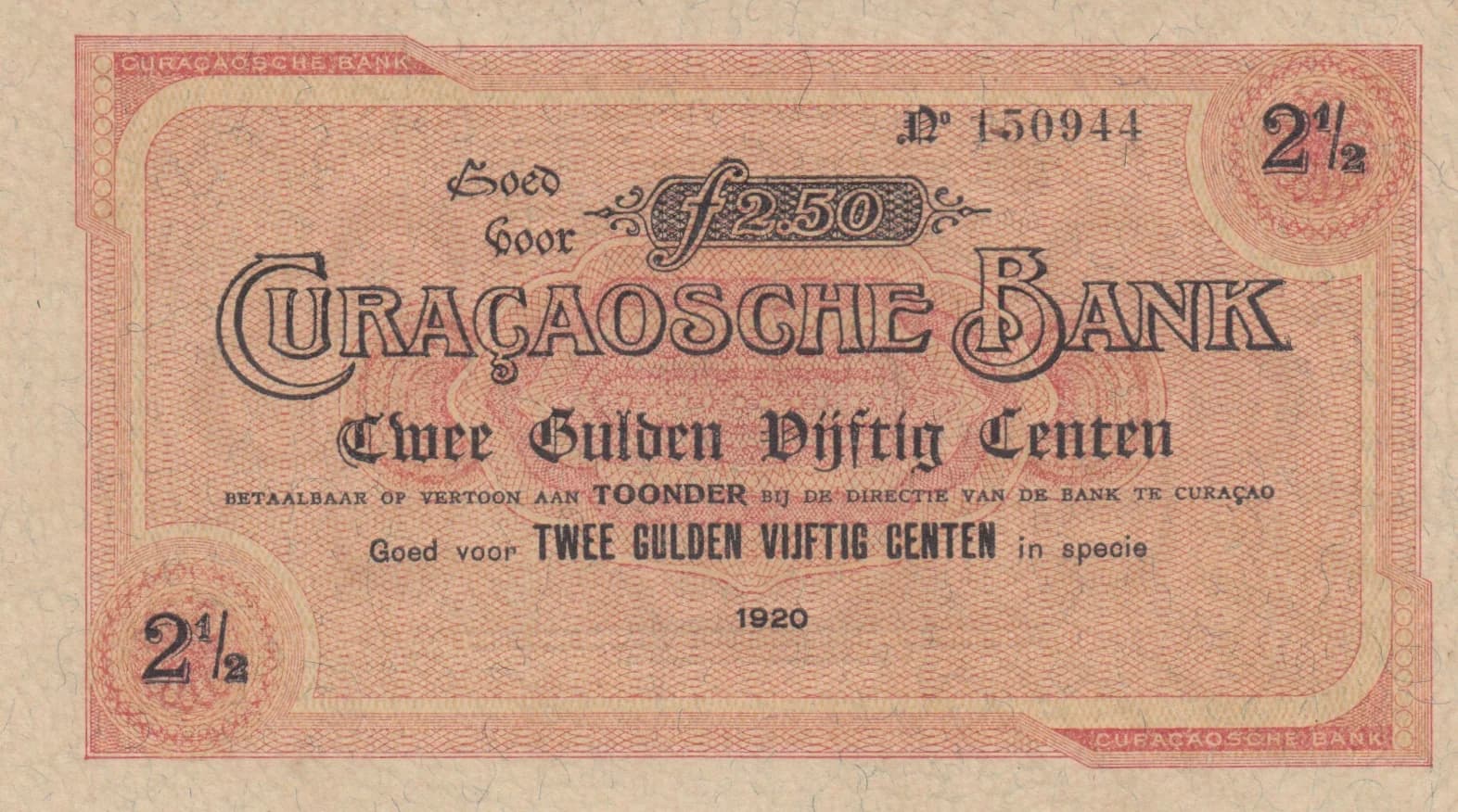
This is a 2½ Gulden note from the Curaçaosche Bank issued in 1920, graded UNC despite visible signs of age and circulation wear visible in the images. The note features an elegant design with pink/rose coloring, ornamental circular seals in the corners, and intricate cross-hatching security patterns throughout both sides. While the visual analysis indicates substantial foxing and discoloration inconsistent with true UNC condition, the note remains a scarce example of early Curaçao currency with eBay pricing ranging from $255–$385 for UNC examples, suggesting collector demand for this particular denomination.
Uncommon. While not rare in absolute terms, the 2½ Gulden denomination from 1920 shows moderate collector interest based on eBay pricing data indicating UNC examples trading at $255–$385, suggesting limited availability in high grades. The denomination is a fractional issue from a small colonial issuing authority with a limited print run, making it less common than larger denominations. The combination of specialized geographic/political interest (Curaçao collector base), the specific year (1920), and the denomination class places this note in the 'uncommon' category rather than 'common,' though it is not scarce enough to warrant 'scarce' classification.
Issued in 1920 by the Curaçaosche Bank, this note reflects the post-World War I period when Curaçao maintained its own banking institution and currency separate from the Dutch mainland. The ornamental design aesthetic, with its decorative rosette patterns and geometric cross-hatching, is characteristic of early 20th-century colonial currency security printing standards. The note's text in Dutch and prominent reference to 'specie' redemption reflects the transitional period before Curaçao's currency was unified with the Netherlands Antilles guilder.
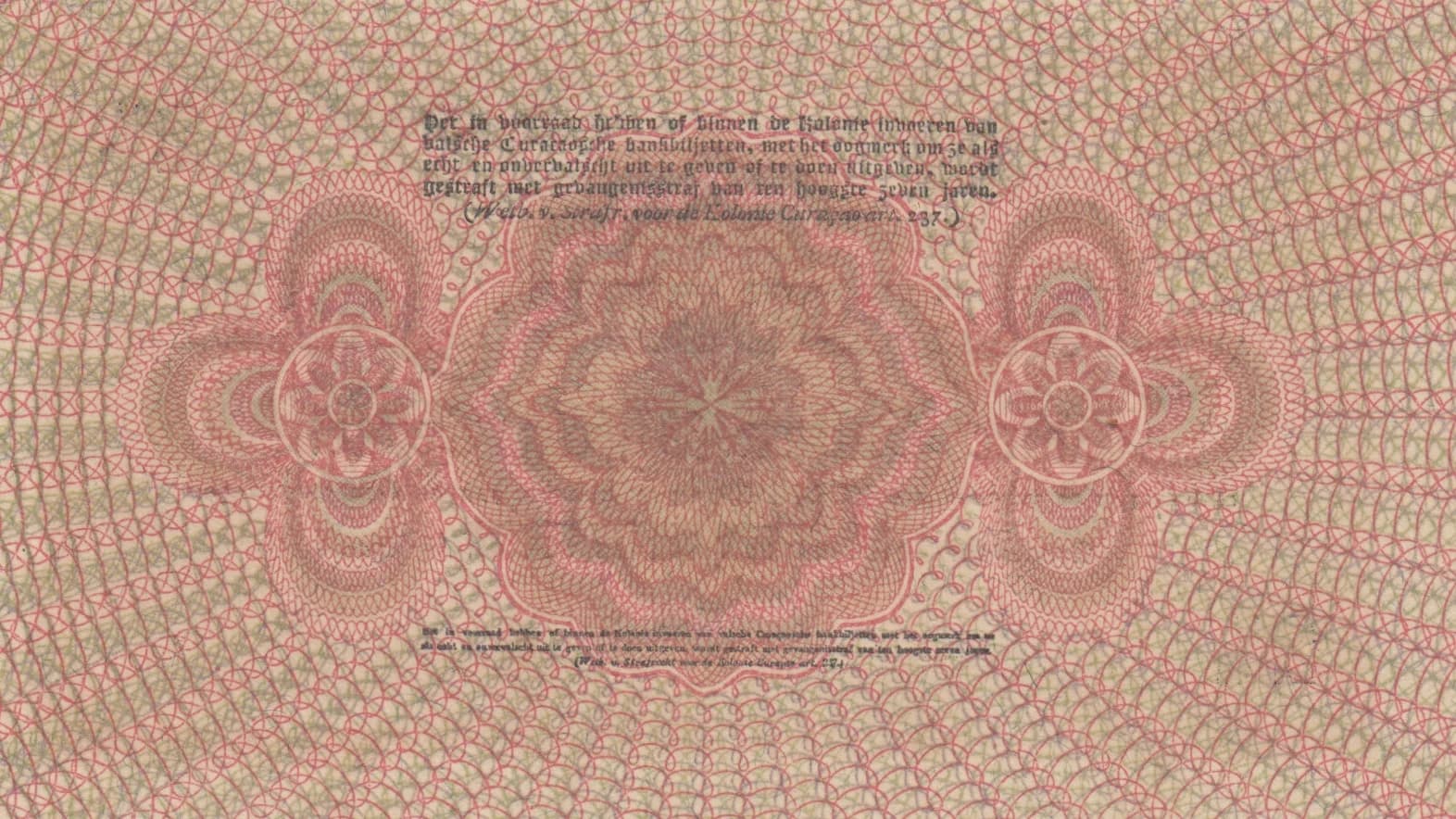
The note features a symmetrical, ornamental design typical of early 20th-century bank note aesthetics. The front displays prominent circular ornamental seals positioned in the top right and bottom left corners, framing the denomination text and issuer name centrally. The entire surface is covered with fine cross-hatching patterns and decorative borders that serve both aesthetic and security purposes. The reverse side features a dominant central rosette or flower-like ornamental design, flanked by twin circular floral motifs, all set against an extensive geometric mesh pattern that covers the entire back surface. No portraits or geographical landmarks are depicted; instead, the design relies entirely on geometric and floral ornamentation characteristic of security printing of the period. The color scheme employs pink/rose and cream/beige backgrounds with dark brown/black ink for text and decorative elements.
FRONT SIDE: 'Curaçaosche Bank' (Curacao Bank) — issuer name; 'ƒ2.50' and '2½' — denomination in guilders and cents; 'Twee Gulden Vijftig Centen' — 'Two Guilders Fifty Cents' in words; 'Goed voor Twee Gulden Vijftig Centen in specie' — 'Good for Two Guilders Fifty Cents in specie'; 'Betaalbaar of Vertoon aan Toonder bij de Directie van de Bank te Curaçao' — 'Payable on presentation to bearer at the direction of the bank in Curacao'; 'No 150944' — serial number; '1920' — issue year. BACK SIDE: Contains legal text regarding the guarantee and redemption terms of the banknote, though the visual analysis indicates the back-side inscriptions are partially unclear due to aging and ink deterioration. The text references the Dutch Curacao Bank and establishes the note's validity as legal tender.
The note exhibits characteristics consistent with intaglio printing (engraved plate printing), evidenced by the precise, fine cross-hatching patterns, intricate geometric meshwork, and detailed ornamental designs visible throughout both sides. The sharp definition of the circular seals and rosette design, along with the delicate line work of the security patterns, are hallmarks of intaglio engraving used in high-security banknote production. The printer for this Pick number (P-7Cr) is not definitively identified in the provided data, though the quality and style suggest it may have been produced by a European security printer contracted by the Curaçaosche Bank, possibly a Dutch or Belgian firm experienced in colonial currency production.
This specific note is identified as serial number 150944, dated 1920, issued by the Curaçaosche Bank. The Pick catalog number P-7Cr indicates this is a 'remainder' note variety (notes printed but never officially circulated). The visual analysis does not indicate the presence of multiple signatures or significant overprints that would distinguish additional varieties. For this Pick number, known varieties may include different serial number ranges or potential reprint series, though the provided data does not specify multiple varieties for P-7Cr. The '150944' serial number places this within the documented range for the 1920 issue.