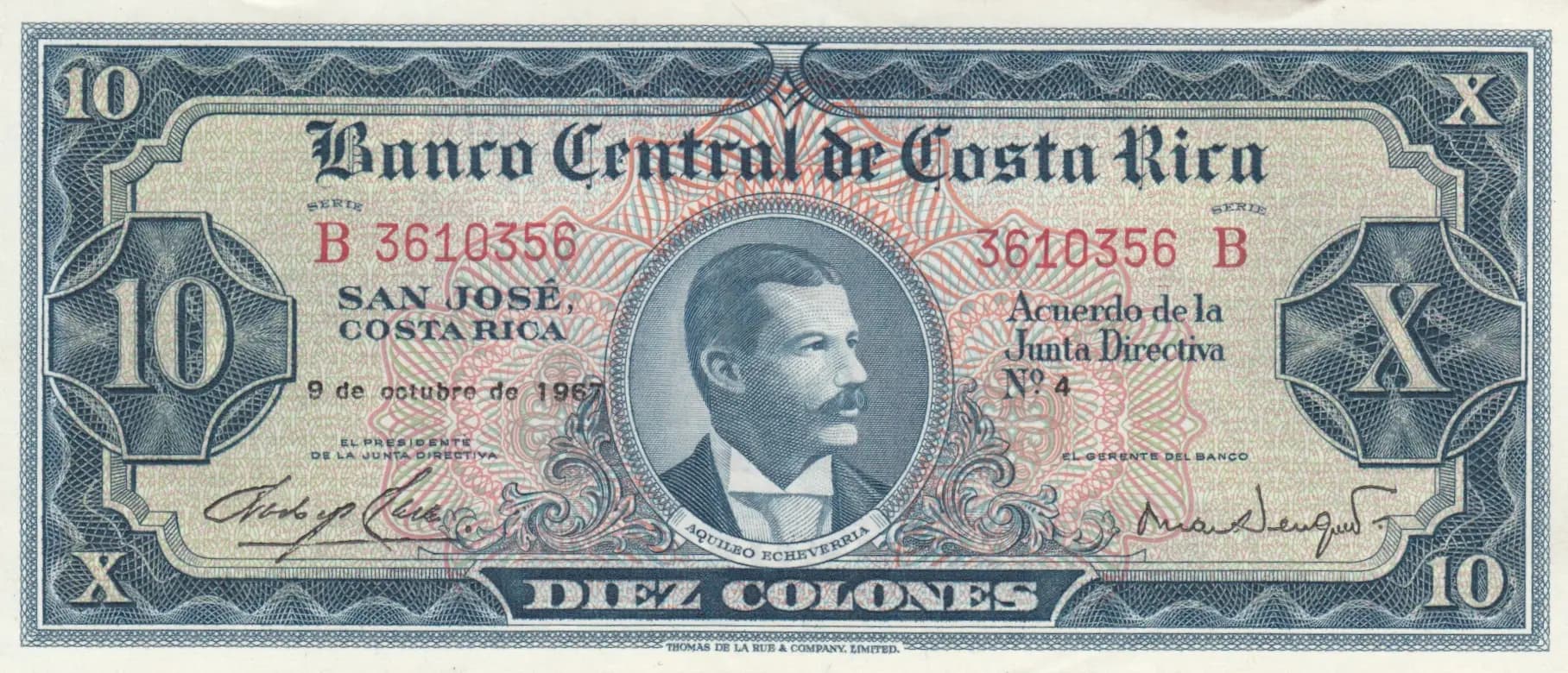
10 colones 1967
“29.05.67”
Market Prices
8 salesAbout This Note
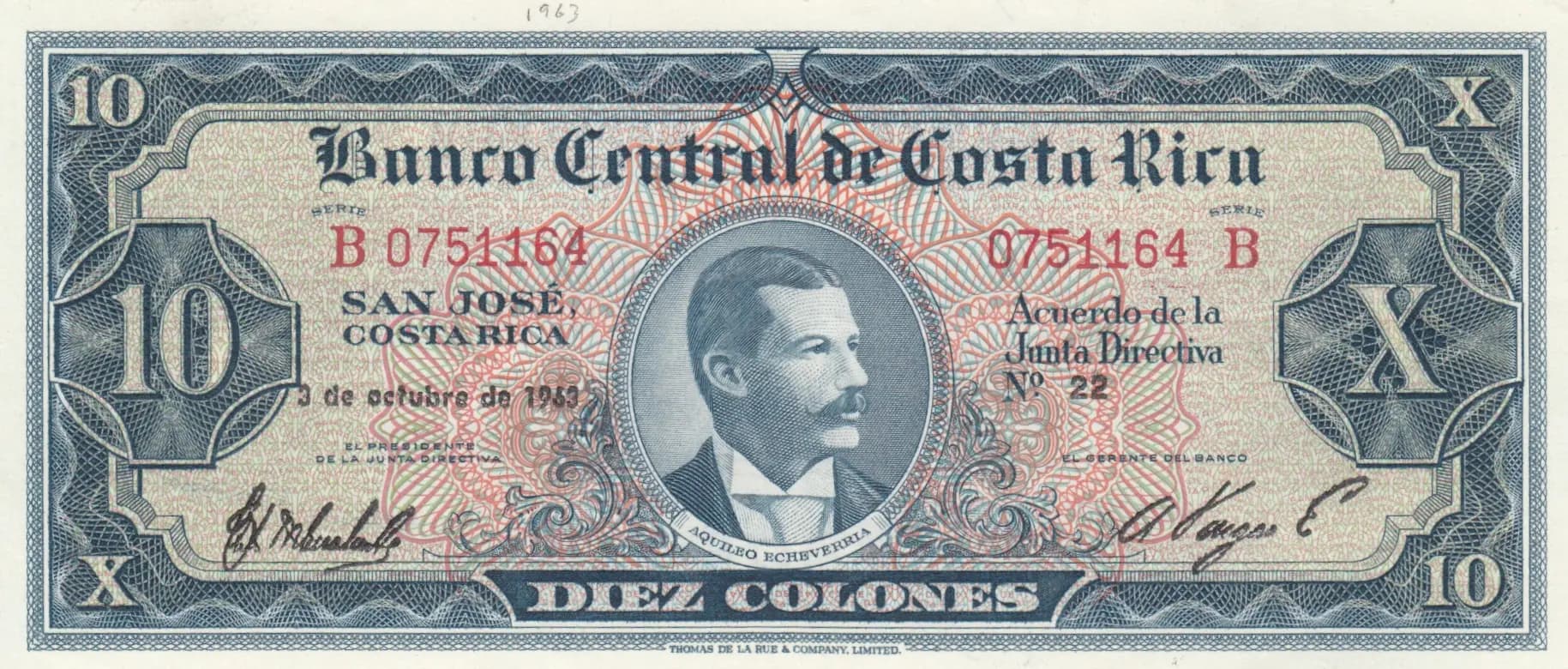
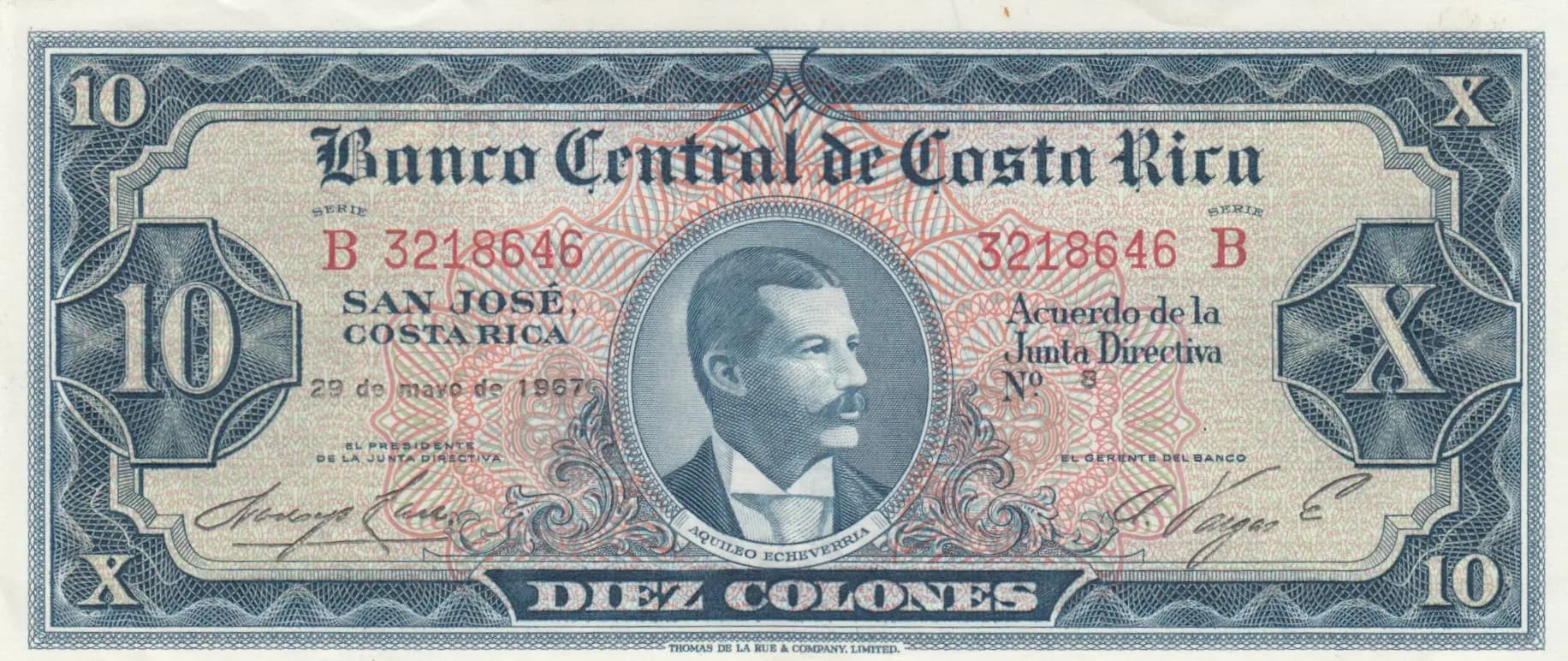
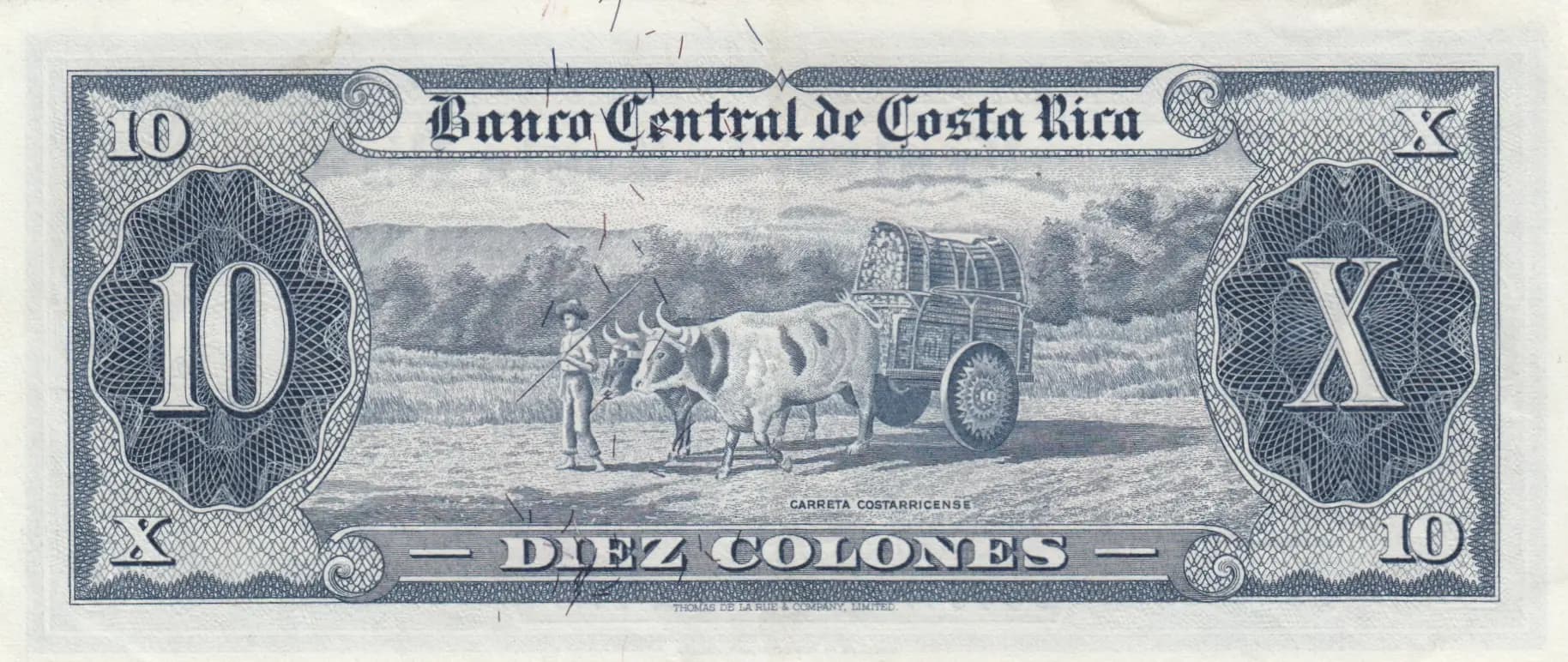
This is a Costa Rican 10 Colones note from 1967 (Pick P-229), issued by the Banco Central de Costa Rica and printed by Thomas de la Rue. The obverse features a striking portrait of Aquileo Echeverría in formal attire within an ornate circular frame, rendered in blue and multicolored tones with intricate geometric patterns. The reverse depicts the iconic Costa Rican ox cart (carreta costarricense) in a rural landscape setting. While the note shows moderate circulation wear including creasing and minor foxing typical of a 1960s-era circulated specimen, the fine line engraving and decorative elements remain clearly legible and well-preserved.
Common. The eBay sales data shows consistent pricing in the $20–$78 range across various grades (F to PMG 25), with UNC catalogue value listed at $60 as of 2019. This pricing pattern and the availability of multiple graded sales over a decade indicate this is a regularly encountered note in the collector market. The 1962–1967 date range on the Pick catalog suggests a multi-year printing run, further supporting common status.
The 1967 issue date reflects Costa Rica's mid-20th century modernization period, with the Banco Central de Costa Rica maintaining control over currency design and issue. The prominence of Aquileo Echeverría—a notable Costa Rican figure—and the featured ox cart (carreta) on the reverse celebrate the nation's agricultural heritage and rural traditions, which remained central to Costa Rican identity during this era. The formal endorsement by Board of Directors Agreement No. 8 (dated March 29, 1967) demonstrates the institutional oversight of currency production during this period.
The obverse features a formal portrait of Aquileo Echeverría, a significant Costa Rican historical figure, depicted in profile facing right within an ornate circular medallion frame with radiating lines. The portrait shows a distinguished man with a distinctive mustache wearing formal business attire (suit and tie). The background is filled with intricate geometric lattice patterns in red/pink tones, creating visual depth behind the portrait. Decorative rosettes and ornamental scrollwork appear in the corners, with denomination numerals in ornate shields. The reverse depicts a detailed landscape scene titled 'Carreta Costarricense' showing traditional oxen pulling a wooden cargo cart along a rural dirt road, with mountains and forested hills visible in the background—a celebration of Costa Rica's agricultural traditions. Both sides employ fine line engraving with complex geometric borders in predominantly blue/dark blue tones on cream/beige underprint.
FRONT: 'Banco Central de Costa Rica' (Central Bank of Costa Rica), 'DIEZ COLONES' (Ten Colones), 'SAN JOSE' (San Jose), 'COSTA RICA', '29 de marzo de 1967' (March 29, 1967), 'Acuerdo de la Junta Directiva No. 8' (Board of Directors Agreement No. 8), 'SERIE' (Series), 'EL GERENTE DEL BANCO' (The Bank Manager), 'DE LA JUNTA DIRECTIVA' (Of the Board of Directors), serial number 'B 3218646 B'. BACK: 'Banco Central de Costa Rica' (Central Bank of Costa Rica), 'DIEZ COLONES' (Ten Colones), 'CARRETA COSTARRICENSE' (Costa Rican Cart).
Intaglio engraving (line engraving), characteristic of Thomas de la Rue's security printing techniques. The fine line work, intricate geometric patterns, decorative borders, and detailed landscape rendering are all hallmarks of intaglio printing. The multicolored underprint visible on the obverse indicates the use of multiple color plates in the printing process, a standard security practice for banknote production during this era.
Series B variant observed on this specimen (serial prefix B 3218646 B). The note is dated 29 de marzo de 1967 per the Board of Directors authorization inscription. Thomas de la Rue printing credit is present as expected for the P-229 Pick number. No overprints or unusual variety markers are evident in the visual analysis.