10 000 francs 1983
Market Prices
10 salesAbout This Note
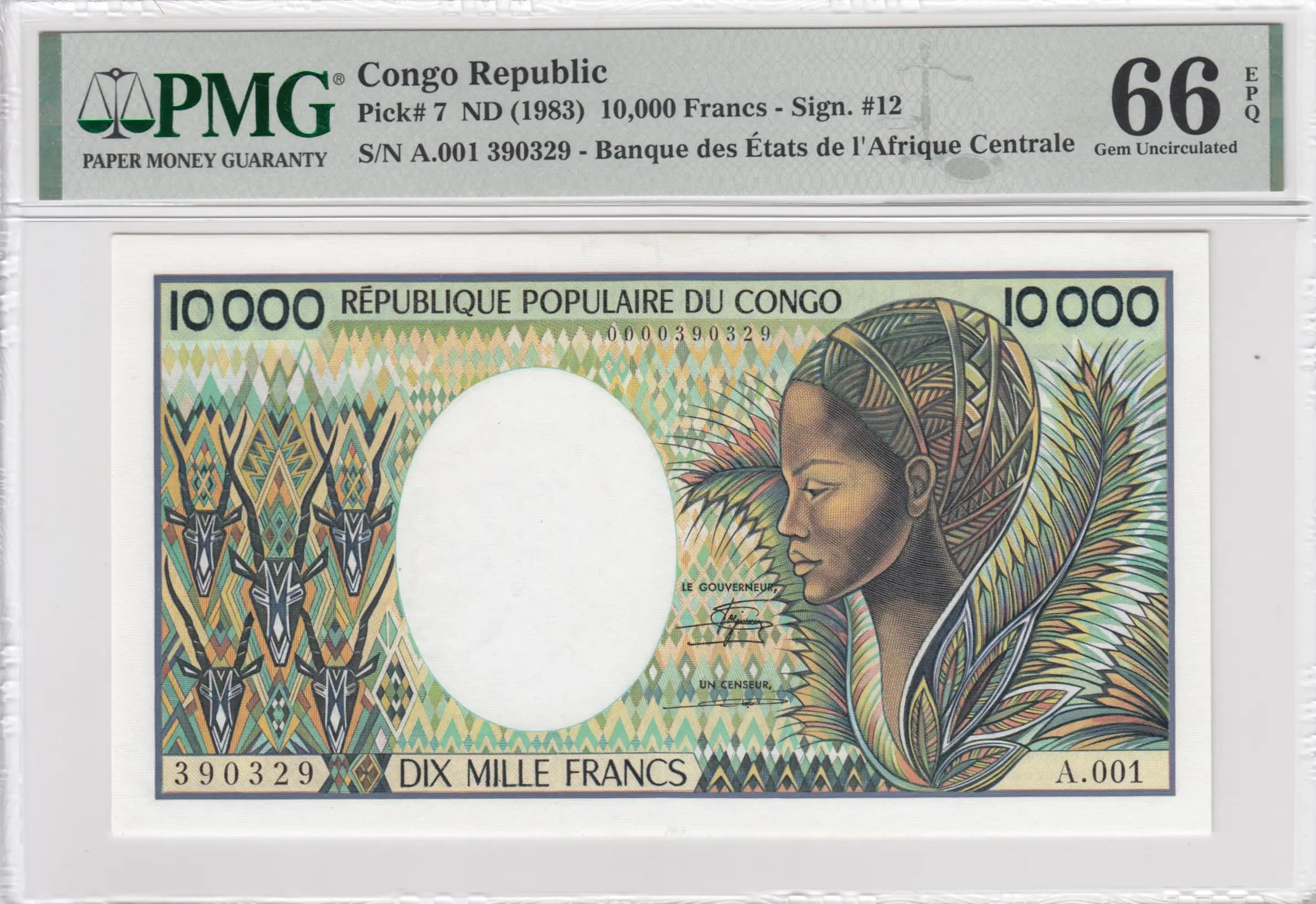
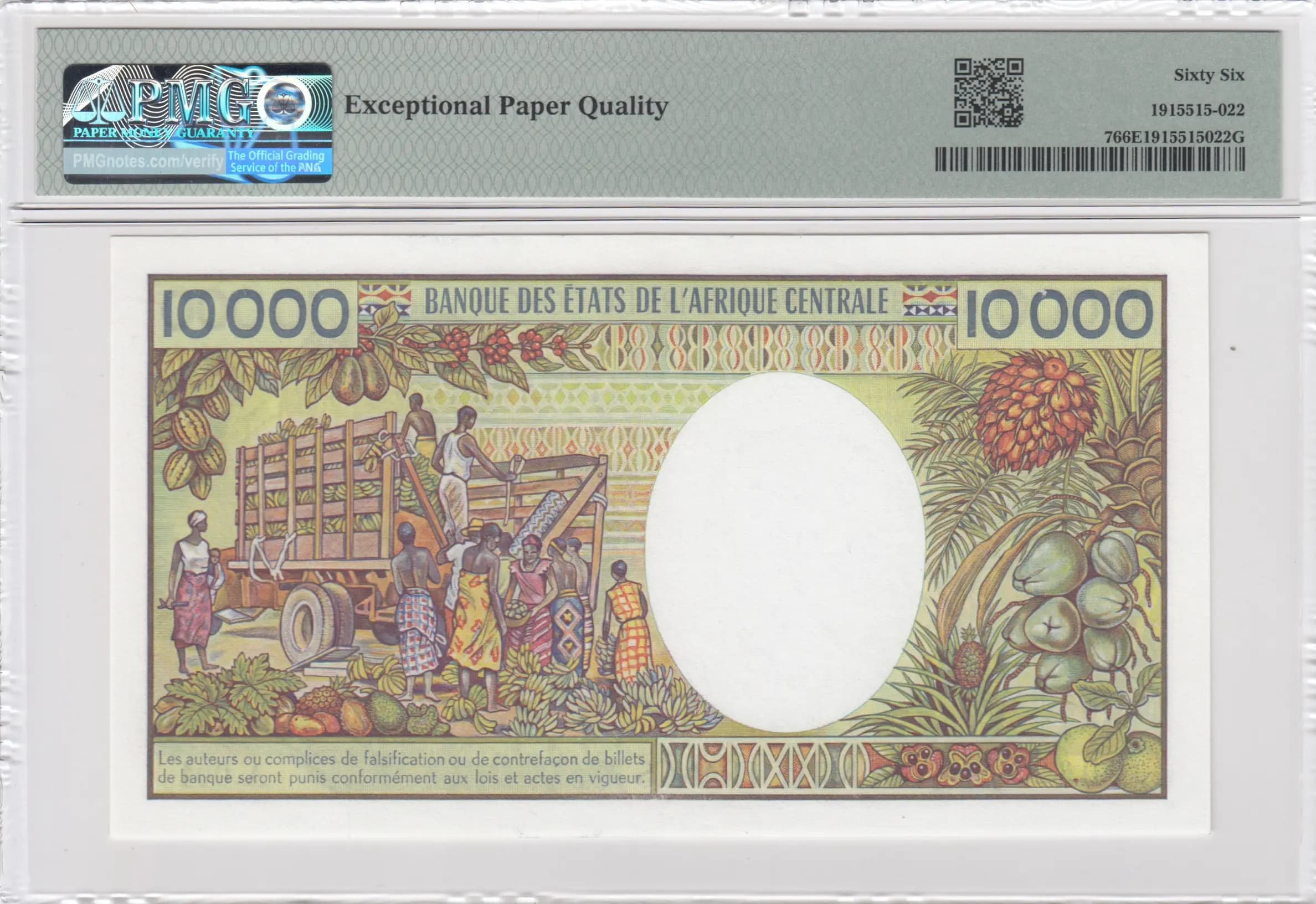
This is a PMG 66 EPQ graded 10,000 Francs note from the Congo Republic, issued in 1983 by the Banque des États de L'Afrique Centrale. The note is presented in near-uncirculated condition with crisp, clear printing throughout and no visible wear, creases, or stains. The obverse features an elegant profile portrait of a woman wearing an ornate, feathered headdress rendered in warm earth tones, complemented by striking geometric African-inspired patterns in green and yellow, while the reverse depicts a dynamic agricultural harvest scene with multiple figures loading produce onto a wooden cart, surrounded by detailed botanical illustrations of tropical fruits and cacao pods.
Common. This note is a regular issue from 1983 with no indicators of a limited print run or special rarity. The eBay price history provided demonstrates consistent collector interest across various grades, with PMG 66 examples selling in the $148–$163 range historically, indicating a stable market for this grade rather than scarcity. Notes in lower grades (F–VF) regularly sell for $9–$50, further confirming widespread availability. The catalog value for UNC is listed at $200 (2019), which is moderate for a 40+ year old banknote and typical of common regional issues.
This note was issued during the period of the People's Republic of the Congo (1970–1992), as indicated by the 'RÉPUBLIQUE POPULAIRE DU CONGO' inscription on the obverse. The reverse's emphasis on agricultural labor—specifically the harvest scene with workers and tropical produce—reflects the nation's economic reliance on agriculture and resource extraction during the Cold War era. The bank of issue, the Banque des États de L'Afrique Centrale (Bank of Central African States), was the regional central bank serving multiple Central African nations, underscoring the post-colonial monetary cooperation framework.
The obverse features a stylized portrait of a woman in profile facing left, adorned with an elaborate headdress incorporating feathered and patterned elements in shades of green, red, yellow, and brown—a design celebrating Central African cultural aesthetics. The left side displays geometric African-inspired motifs arranged in vertical columns with diamond and zigzag patterns in green and yellow against darker tones, creating visual balance with the portrait. The reverse depicts an agricultural labor scene—likely representing banana or cacao harvesting, key exports of the Congo—with multiple African workers engaged in loading produce onto a wooden cart with large wheels. Surrounding this scene are detailed botanical illustrations of tropical fruits, cacao pods, and palm fronds in naturalistic colors (greens, browns, oranges, and reds). Both sides incorporate large oval security feature areas in the center, a design characteristic of BEAC banknotes of this era. The cream/beige base allows the multicolored elements to stand out prominently.
OBVERSE: '10000' (denomination, repeated top left and right); 'RÉPUBLIQUE POPULAIRE DU CONGO' (People's Republic of the Congo); 'DIX MILLE FRANCS' (Ten Thousand Francs); 'LE GOUVERNEUR' (The Governor); 'UN CENSEUR' (A Censor); 'A.001' (signature/authority designation); Serial number '0000390329' / '390329'. REVERSE: '10000' (denomination, repeated); 'BANQUE DES ÉTATS DE L'AFRIQUE CENTRALE' (Bank of Central African States); 'Les auteurs ou complices de falsification ou de contrefaçon de billets de banque seront punis conformément aux lois et actes en vigueur.' (The authors or accomplices of falsification or counterfeiting of banknotes shall be punished in accordance with applicable laws and acts.)
Intaglio (copperplate) engraving, the standard technique for banknote production. The crisp detail visible in the portrait's facial features, the fine line work in the geometric patterns, and the intricate rendering of the agricultural scene and botanical illustrations are characteristic of high-quality intaglio printing. The excellent color definition and the precise geometric borders suggest professional security printing by a specialized banknote printer, likely one of the major European or international security printers contracted by BEAC (such as Banque Française de Gravure or De La Rue), though specific attribution requires additional documentation.
The PMG Population Report indicates this Pick number (P-7) has one catalogued variant: Signature #12. The observed note displays signature designation 'A.001' with titles 'LE GOUVERNEUR' and 'UN CENSEUR', consistent with documented variants for this series. The serial number observed (0000390329) is consistent with standard numbering practices. Without access to comprehensive signature variety documentation for this series, this note should be classified as the standard Signature #12 variant of Pick P-7.