1000 yuan 1944
About This Note
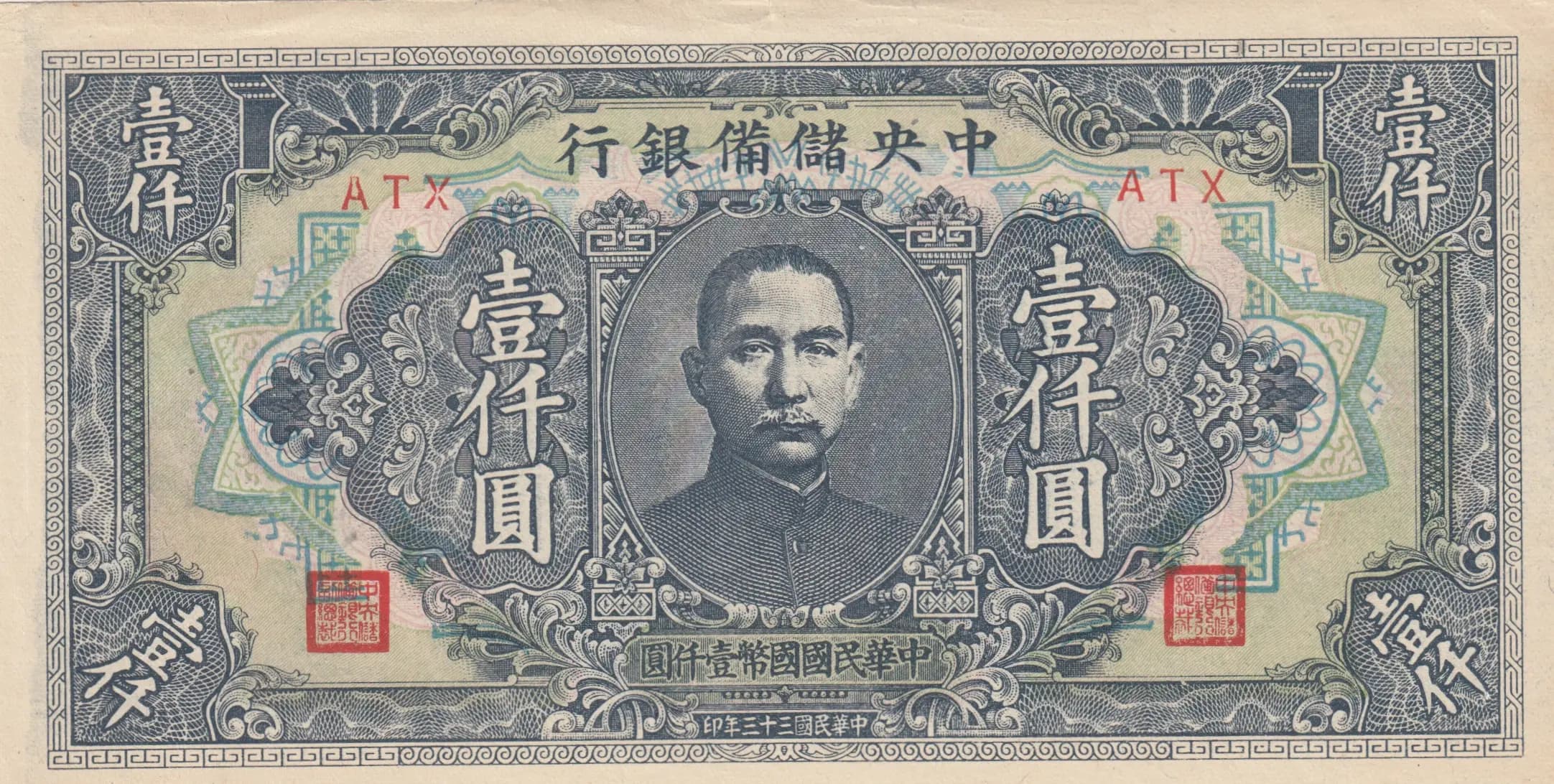
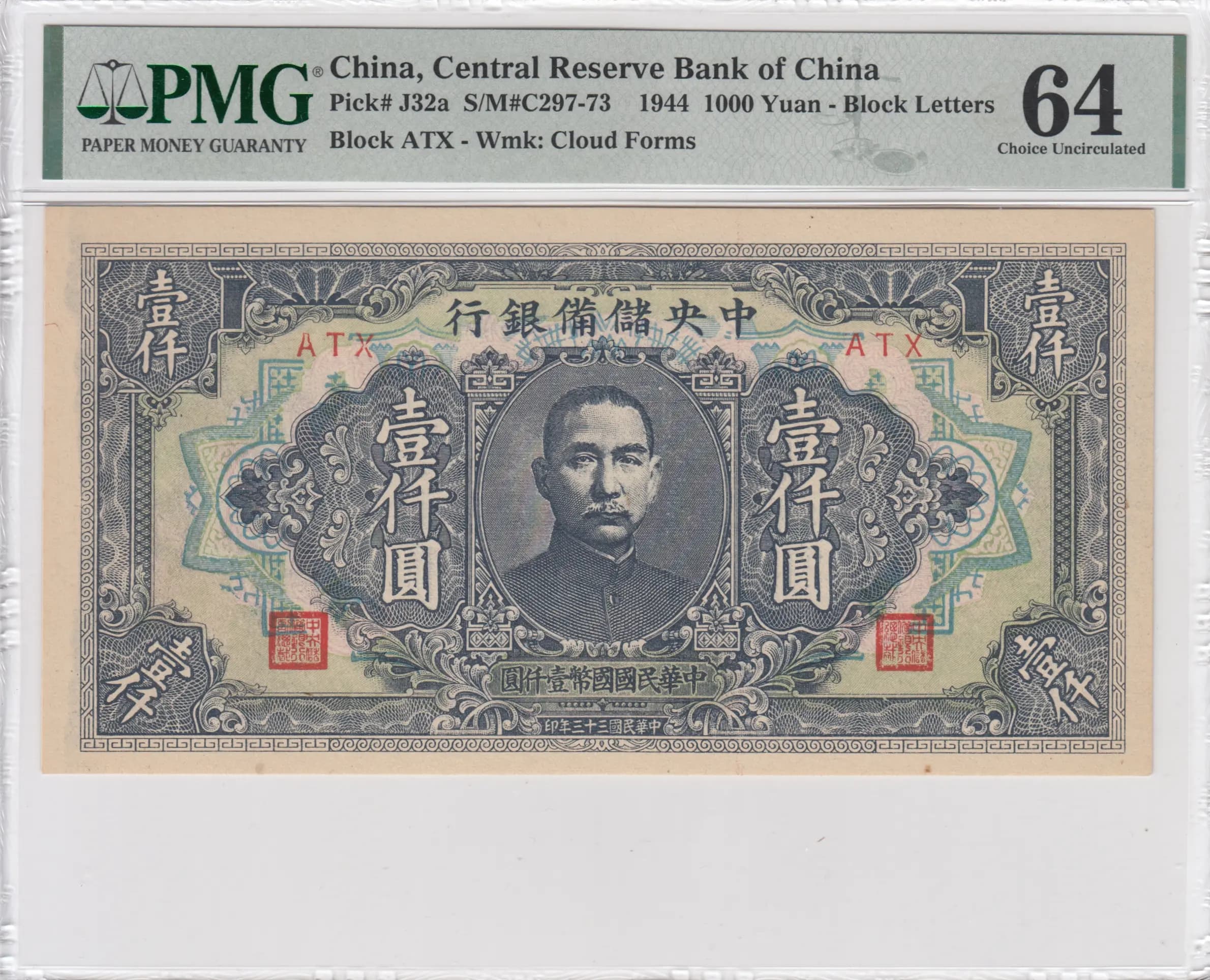
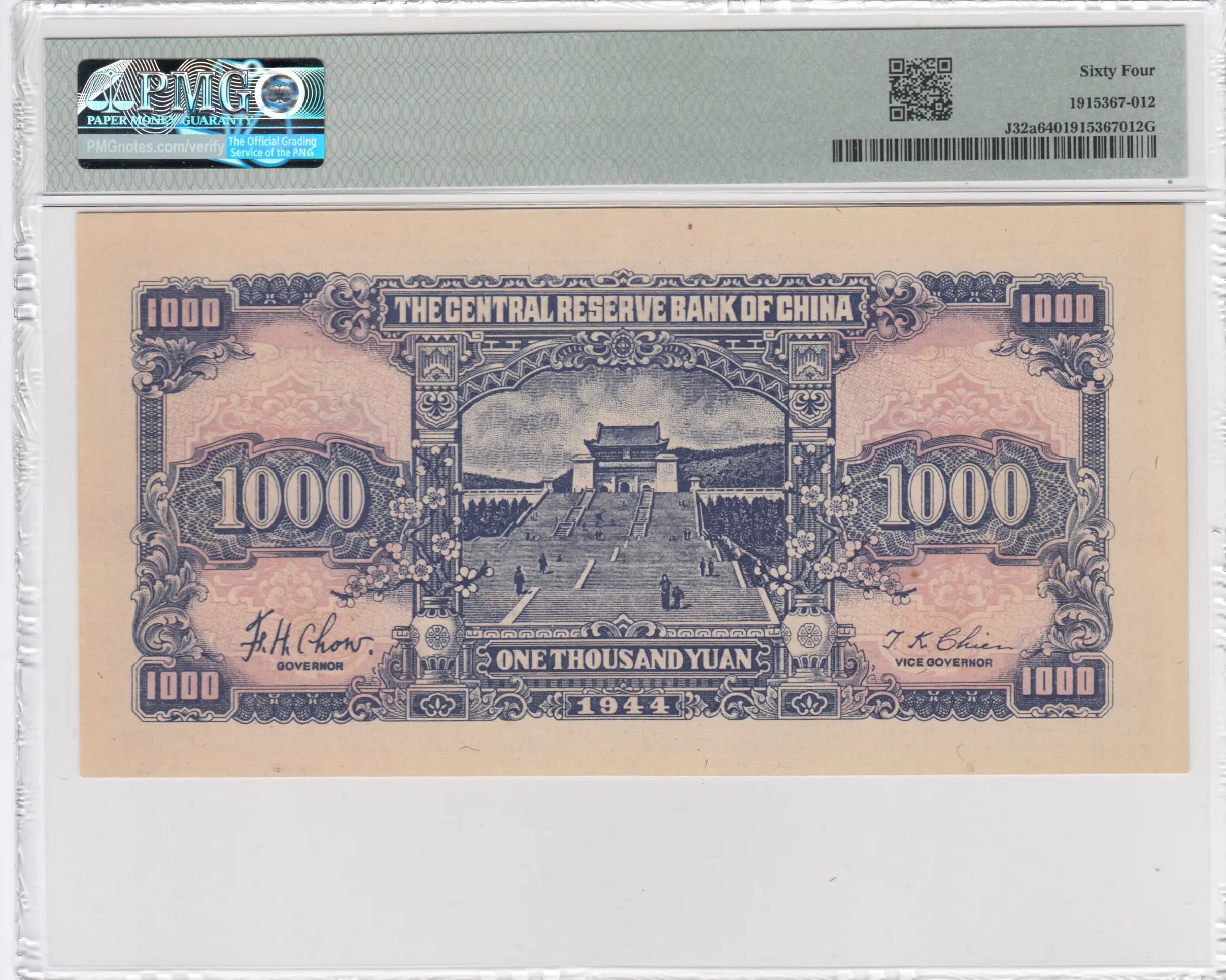
A remarkable example of the Central Reserve Bank of China's 1000 Yuan denomination from 1944, graded PMG 64. This note showcases exceptional preservation with sharp, well-defined printing throughout and no visible wear, creases, or stains. The obverse features an elegant portrait of a formally attired gentleman with distinctive mustache, while the reverse displays an intricate engraving of a traditional Chinese fortress complex, making this a visually compelling representation of mid-war Chinese monetary design.
Common. The Central Reserve Bank of China issued large quantities of this 1000 Yuan denomination in 1944 to meet wartime monetary demands. While high-grade examples in PMG 64 condition are desirable to collectors, the note itself is not scarce in the numismatic market. Original mintage was substantial, and surviving examples are regularly encountered in dealer inventories and auctions. The PMG 64 grade indicates excellent condition but does not confer rarity upon an otherwise commonly produced denomination.
Issued during the final year of the Second Sino-Japanese War (1937-1945), this note represents the Central Reserve Bank of China's efforts to maintain financial stability during a period of significant economic strain. The fortress depicted on the reverse symbolizes Chinese sovereignty and resistance, while the dual-language inscriptions reflect China's international standing and the Republic of China's diplomatic positioning. The presence of signatures by H.H. Kung (Governor) and Z.F. Lee (Vice Governor) authenticates this as a genuine instrument of the Nationalist government's wartime monetary authority.
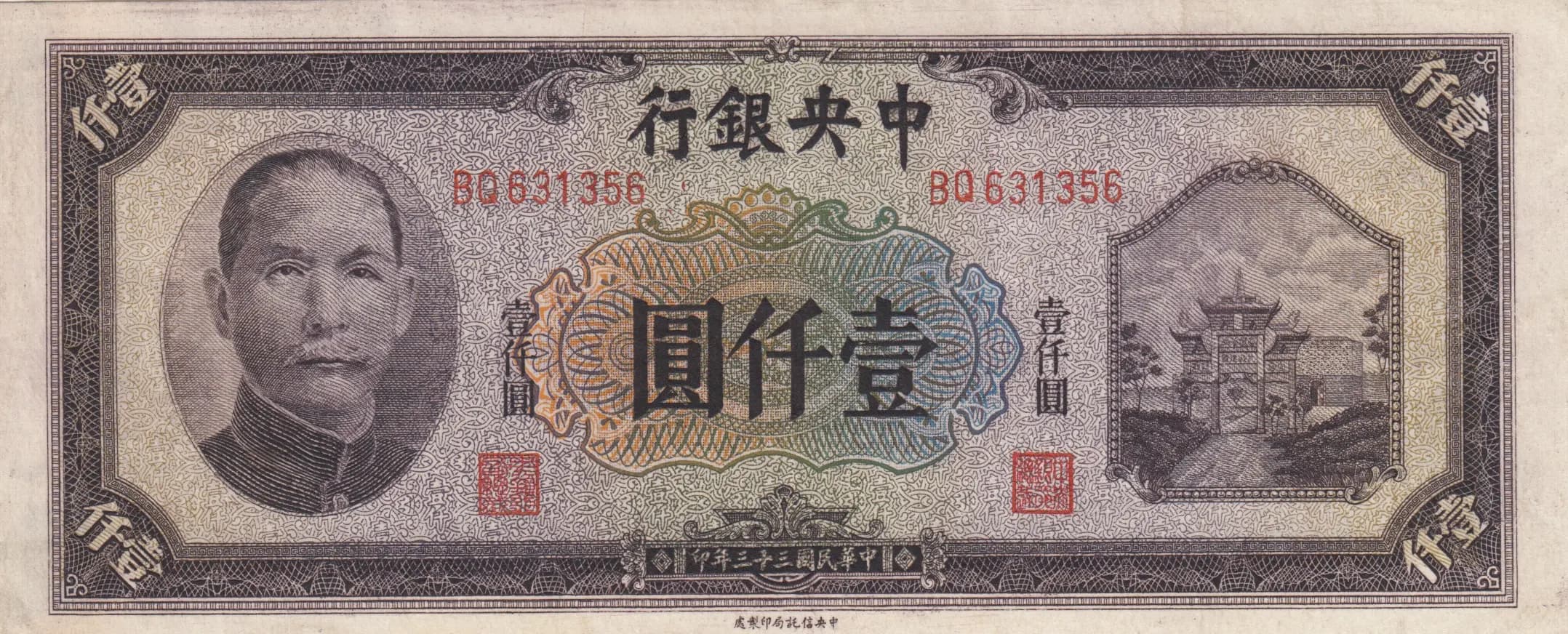
The obverse presents a formally dressed male portrait, identified through historical records as a prominent Chinese government official of the period, centered within an elaborate frame of ornate geometric and floral borders featuring traditional Chinese motifs, particularly stylized dragons and cloud formations in the corners. Red official seals (chops) flank the portrait, emphasizing governmental authority. The reverse features an ambitious landscape engraving depicting what is likely a significant Chinese fortress or gate structure—possibly the Juyongguan Pass or similar strategic military installation—complete with crenellated towers, fortification walls, and a ceremonial plaza with figures of people, framed by matching decorative elements. The color palette of beige, dark blue, green, and black throughout creates a dignified, authoritative appearance appropriate to the denomination.
FRONT SIDE: Chinese text '中央銀行儲備中國' (Central Reserve Bank of China); '壹仟圓' (One Thousand Yuan); '中華民國' (Republic of China); English designation 'ATX' (block letter series identifier). BACK SIDE: English text 'THE CENTRAL RESERVE BANK OF CHINA' (header); '1000' and 'ONE THOUSAND YUAN' (denomination in all four corners and center); '1944' (issue year); 'GOVERNOR' and 'VICE GOVERNOR' (signature line designations); Signatures of 'H.H.Kung' (Governor) and 'Z.F. Lee' (Vice Governor).
Intaglio (engraving) process, evidenced by the exceptional detail and sharp line definition visible in both the portrait work and the complex fortress landscape. The intricate geometric and floral borders, cloud form watermark, and multiple color application are consistent with high-security banknote production standards employed by the Central Reserve Bank of China during this period. The printer was likely the Chinese Government's central printing facility or an authorized international security printer capable of producing currency-grade intaglio work.
This specimen is identified as Pick J32a, with the 'a' designation indicating a specific variety within the 1000 Yuan 1944 issue. The block letter designation 'ATX' visible on the obverse indicates a specific printing block. The signatures of H.H. Kung and Z.F. Lee are consistent with the primary issued varieties of this note. No overprints, watermark variations, or error characteristics are apparent from the visual analysis, suggesting this is a standard variety from the normal production run.