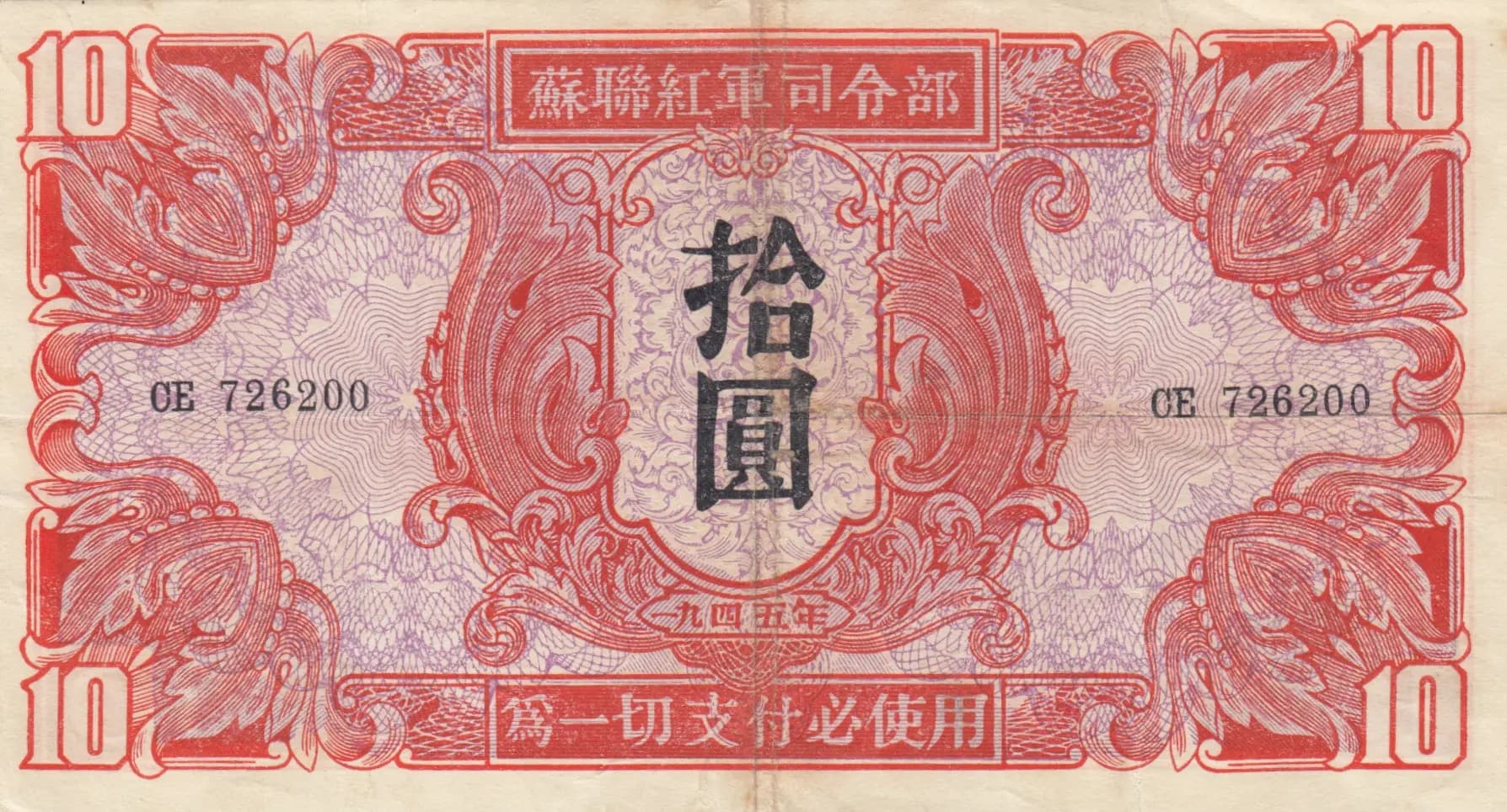
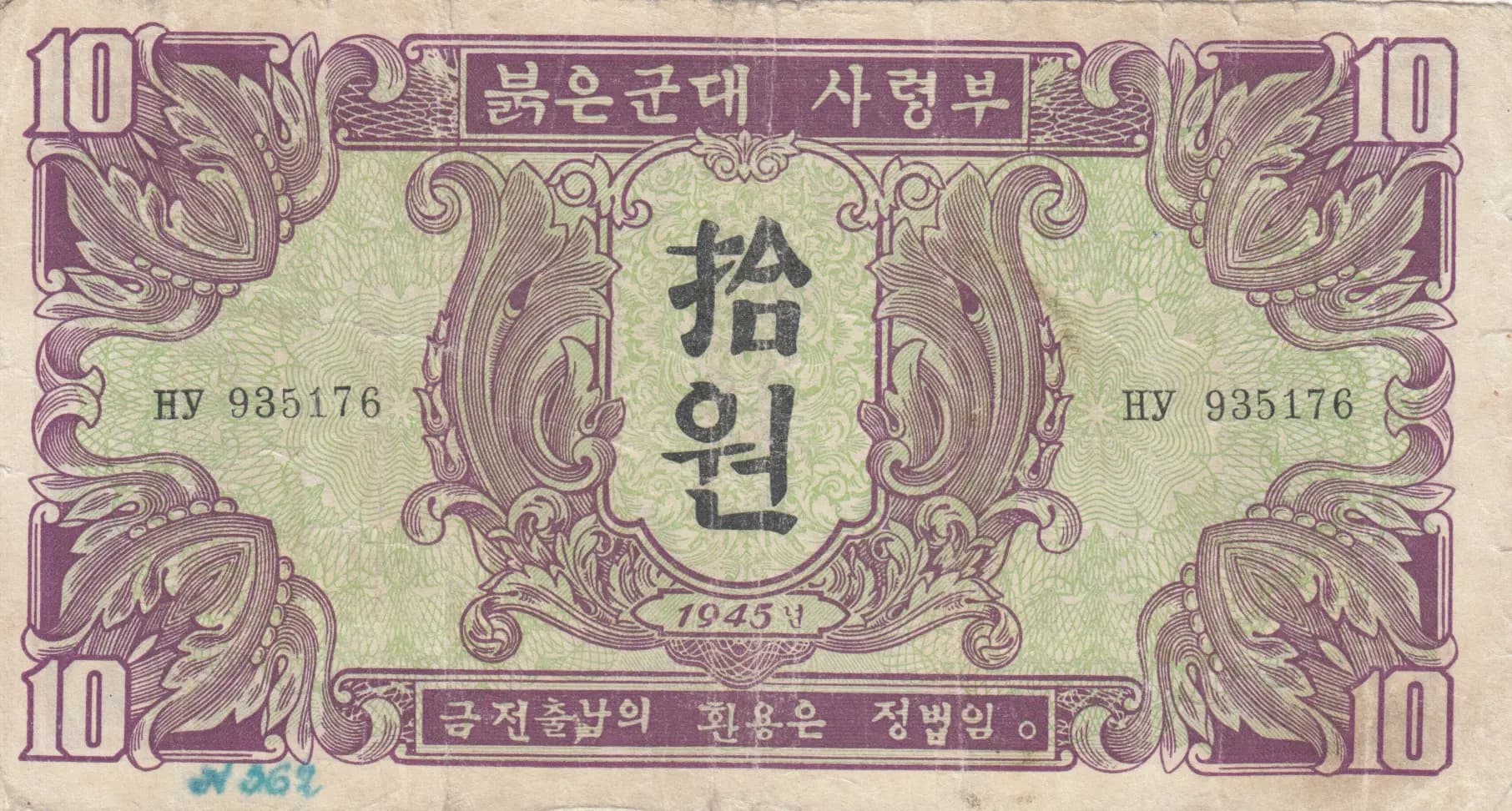
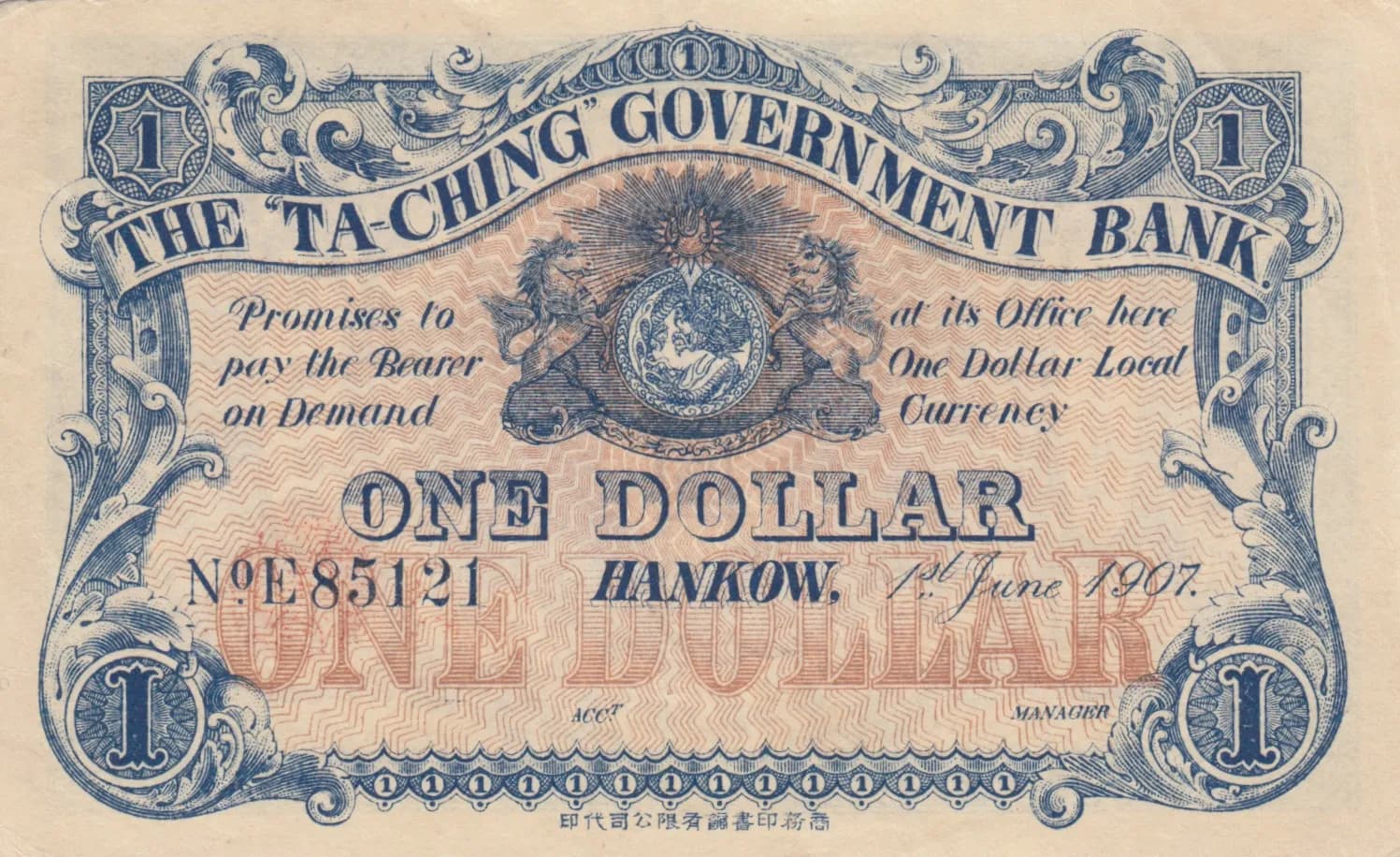
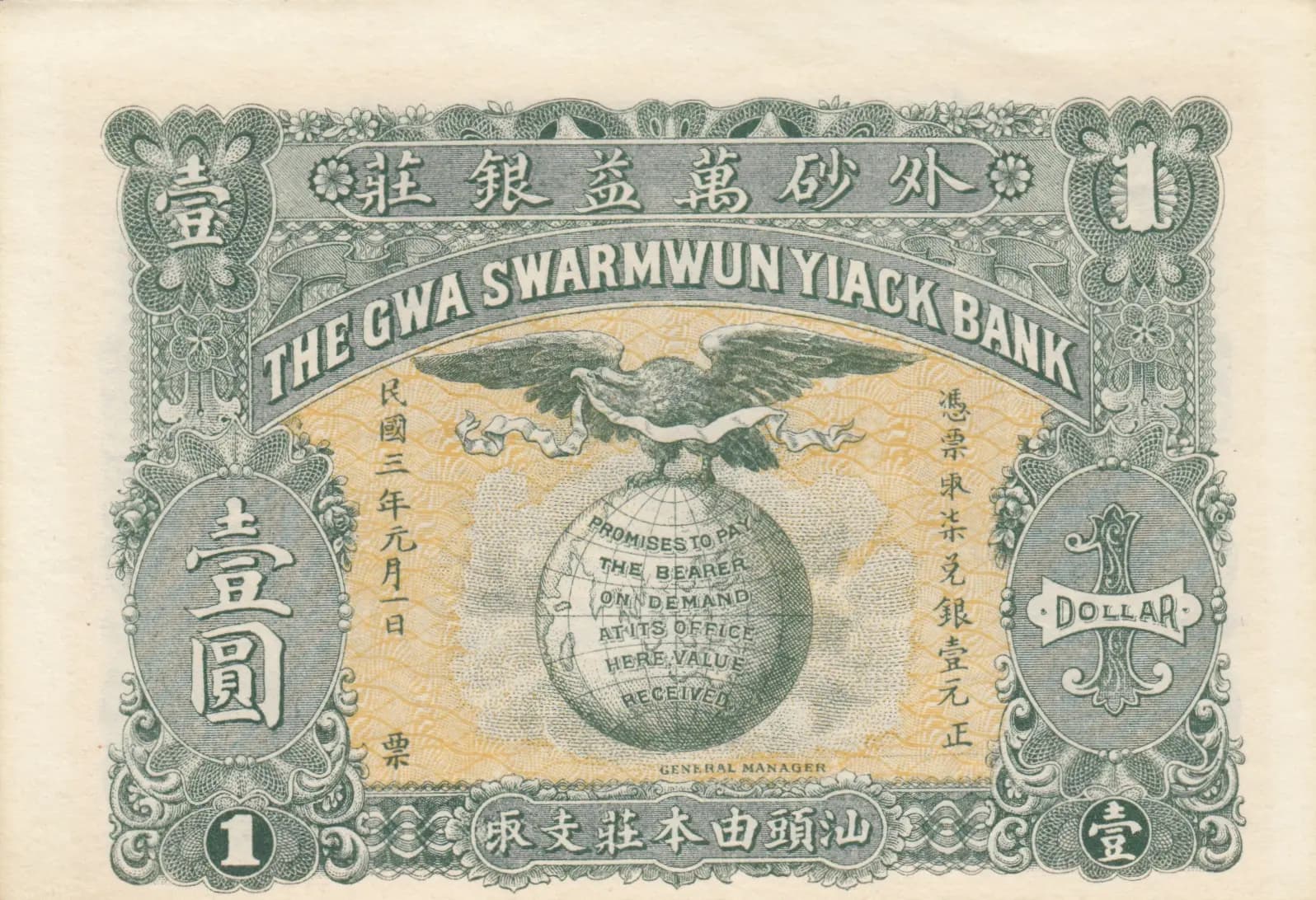
10 yuan 1945
About This Note
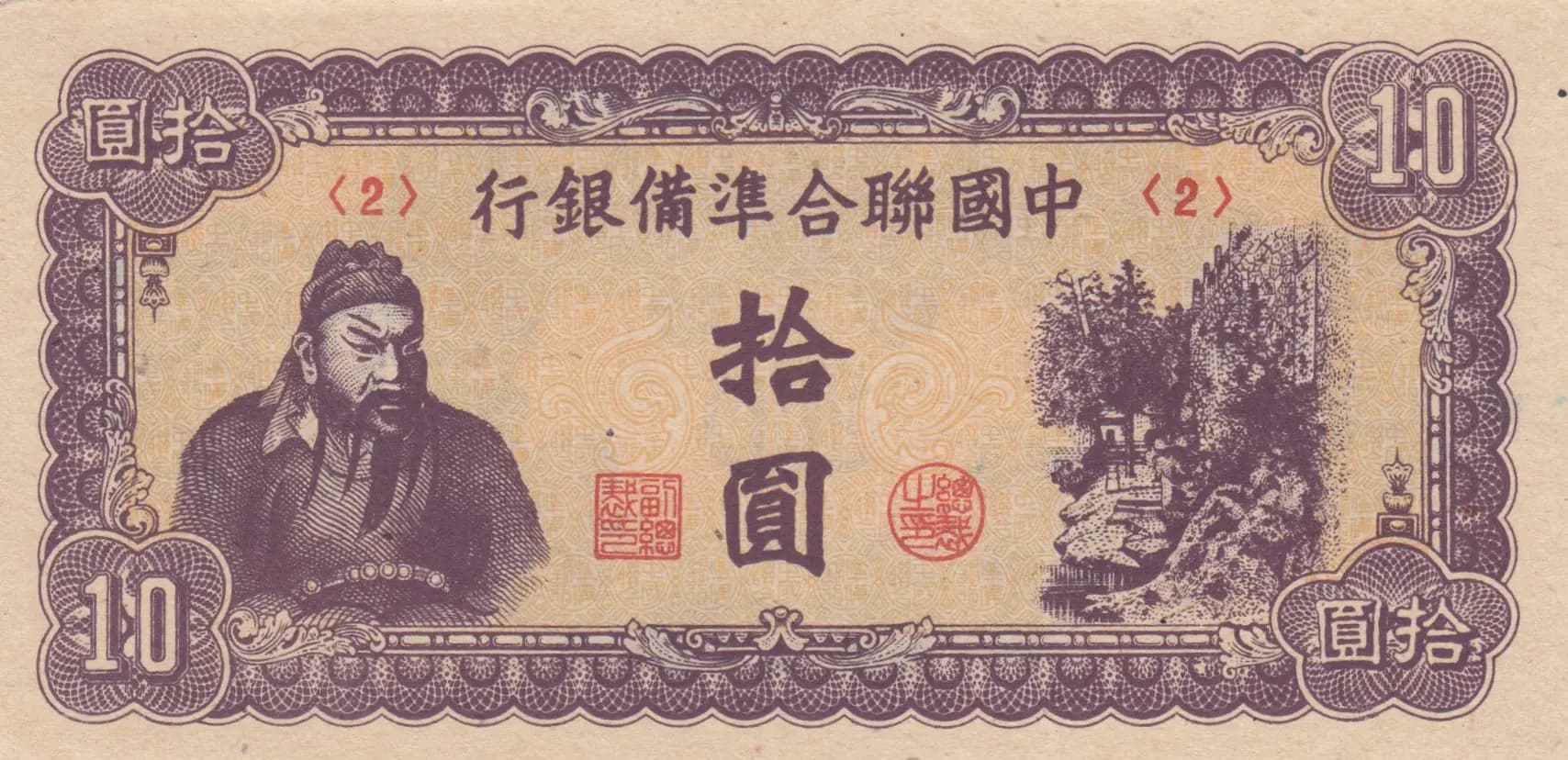
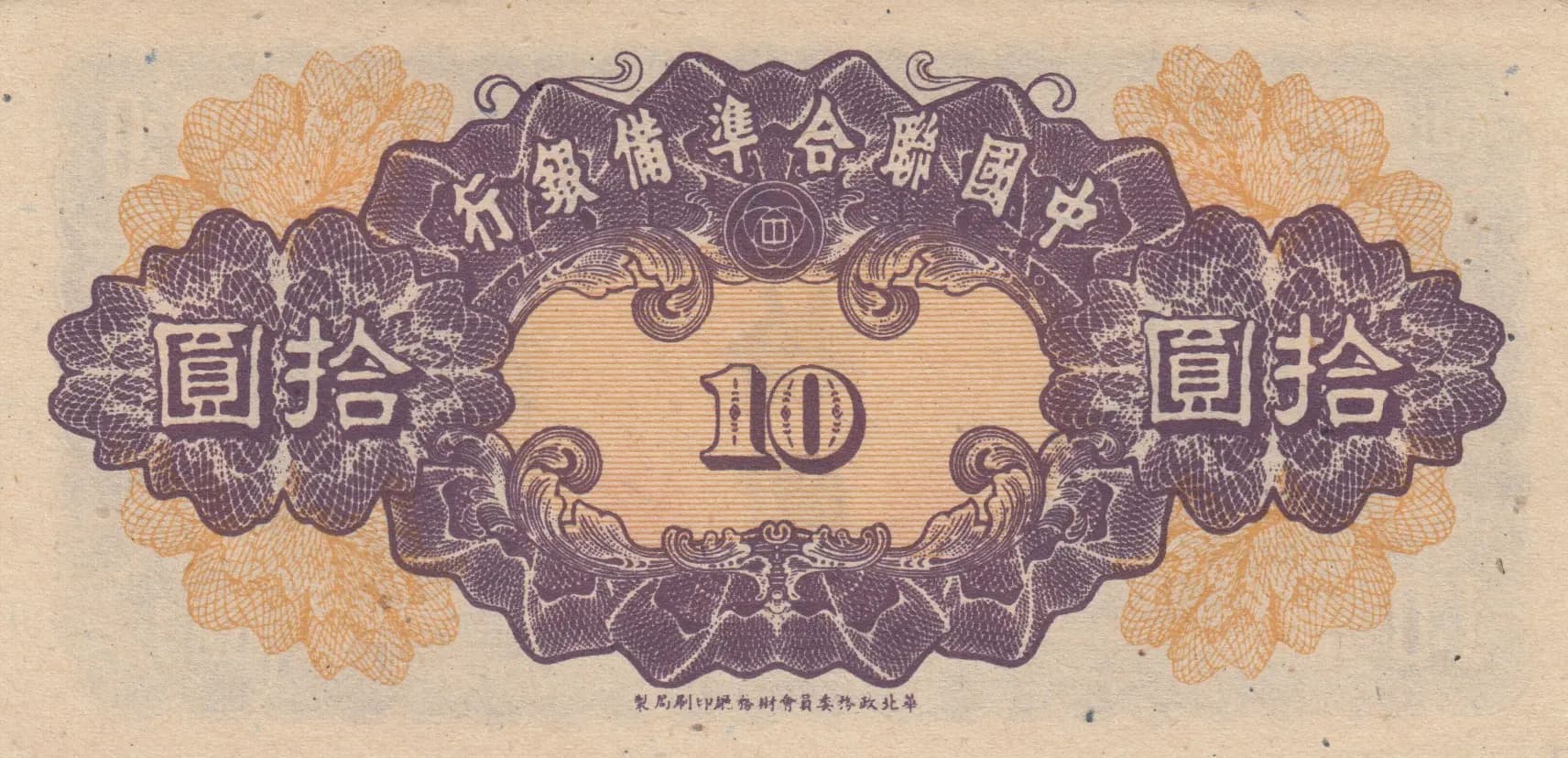
This is an AU-graded 10 Yuan note from the Federal Reserve Bank of China (1945), Pick P-J86b, featuring an attractive beige and purple color scheme with well-preserved period engraving. The front displays a bearded male portrait in traditional Chinese dress alongside a temple landscape vignette, while the reverse showcases symmetrical ornamental floral patterns framing a large central denomination cartouche. Despite light foxing and age-appropriate patina consistent with a 79-year-old note, the printing remains crisp and legible, making this an appealing example of late-period Chinese wartime currency.
Common. The Federal Reserve Bank of China's 1945 10 Yuan notes were produced in significant quantities for circulation during the final year of wartime currency operations. No evidence of unusual print run limitations, recalls, or extreme scarcity exists for Pick P-J86b. These notes, while historically interesting, remain readily available in the collector market in various grades, including AU condition examples. The AU grade and standard nature of this Pick number variant do not indicate rarity.
Issued during the final year of the Second Sino-Japanese War by the Federal Reserve Bank of China (a wartime successor entity), this 1945 note represents a critical moment in Chinese monetary history. The architectural vignette on the front likely depicts a significant cultural landmark, reflecting nationalist imagery during the period of Japanese occupation and the approach of the war's end. The elaborate engraved design and dual-language security features were characteristic of Chinese banking authorities' efforts to maintain currency legitimacy and prevent counterfeiting during wartime disruption.
The obverse features a left-facing bearded gentleman in traditional Chinese formal robes with turned collar, identifiable as Sun Yat-sen, founder of the Republic of China, rendered in fine intaglio engraving. The reverse portrait is replaced by an important architectural landmark—likely a significant temple or government building representative of Chinese cultural heritage—depicted in a naturalistic landscape with foliage and topographical elements. The reverse design employs symmetrical ornamental framing with large chrysanthemum or peony floral motifs in orange-tan tones flanking a central cartouche. Denomination indicators (both Arabic '10' and Chinese '拾圓') appear in decorative circular medallions on both sides. Red official seals serve as authenticity markers and issuer identification.
Front: 中國聯合準備銀行 (Central Bank of the Chinese United Reserve / Federal Reserve Bank of China); 拾圓 (Ten Yuan); 圓 (Yuan). Back: 中國聯合準備銀行 (Central Bank of the Chinese United Reserve); 圓拾 (Ten Yuan); 東亞印刷廠承印台北北政府印製 (Printed by East Asia Printing Factory, Taipei Government Printing). Serial/reference markings also present on front.
Intaglio (line engraving) printing on banknote paper, as evidenced by the fine mesh patterns, intricate border work, and precise line-work visible in both the portrait and landscape vignettes. The back's fine horizontal line patterns and elaborate cartouche work are characteristic of high-security banknote production. Printed by East Asia Printing Factory (東亞印刷廠) in Taipei for the Taipei Government, indicating professional security printing standards of the period. The multi-color design (tan, purple, red, black) suggests sequential color printing applications typical of 1940s banknote production.
This note is catalogued as Pick P-J86b, one of two recognized variants for the 1945 10 Yuan denomination (the other being P-J86a). The distinction between variants likely relates to minor design differences, signatures, or serial number characteristics. Without access to direct comparison imagery or detailed signature analysis, the specific distinguishing features of P-J86b versus P-J86a cannot be definitively identified from the visual analysis alone, though the printer imprint (East Asia Printing Factory, Taipei Government) and overall design characteristics are consistent with documented examples of this variant.