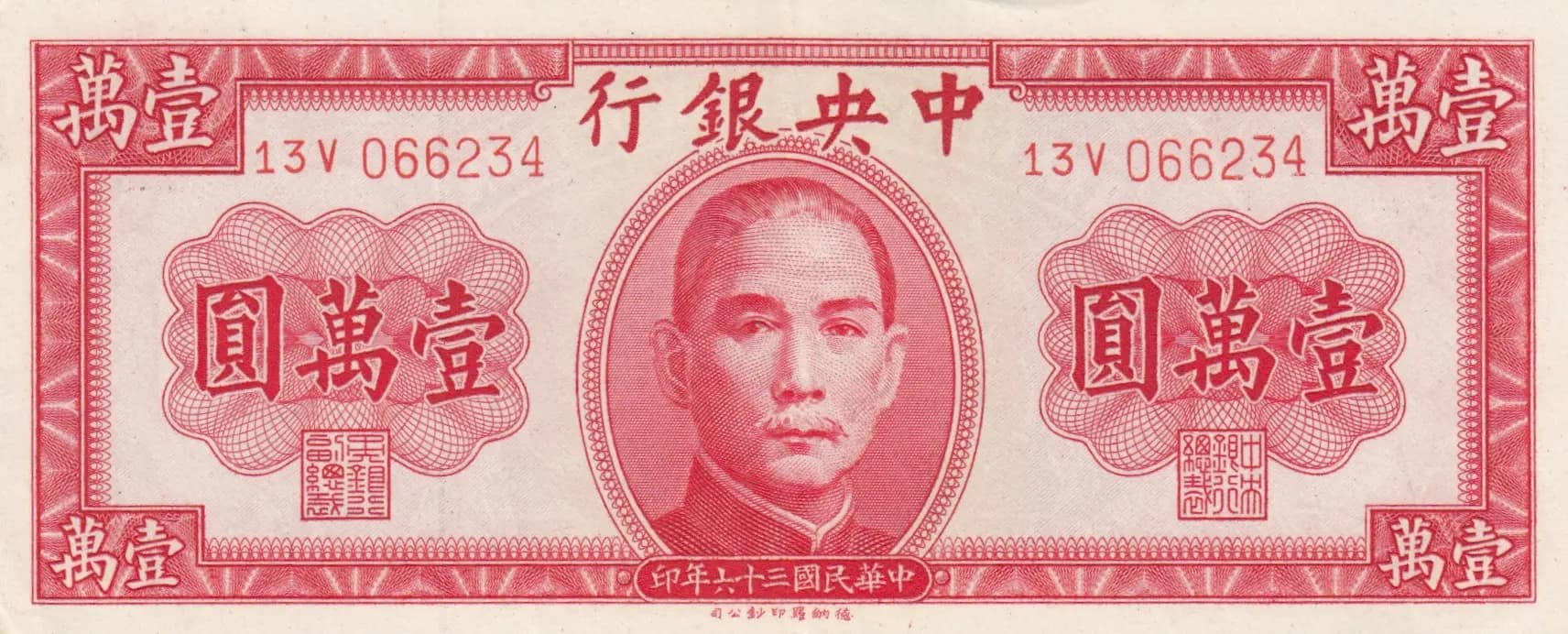
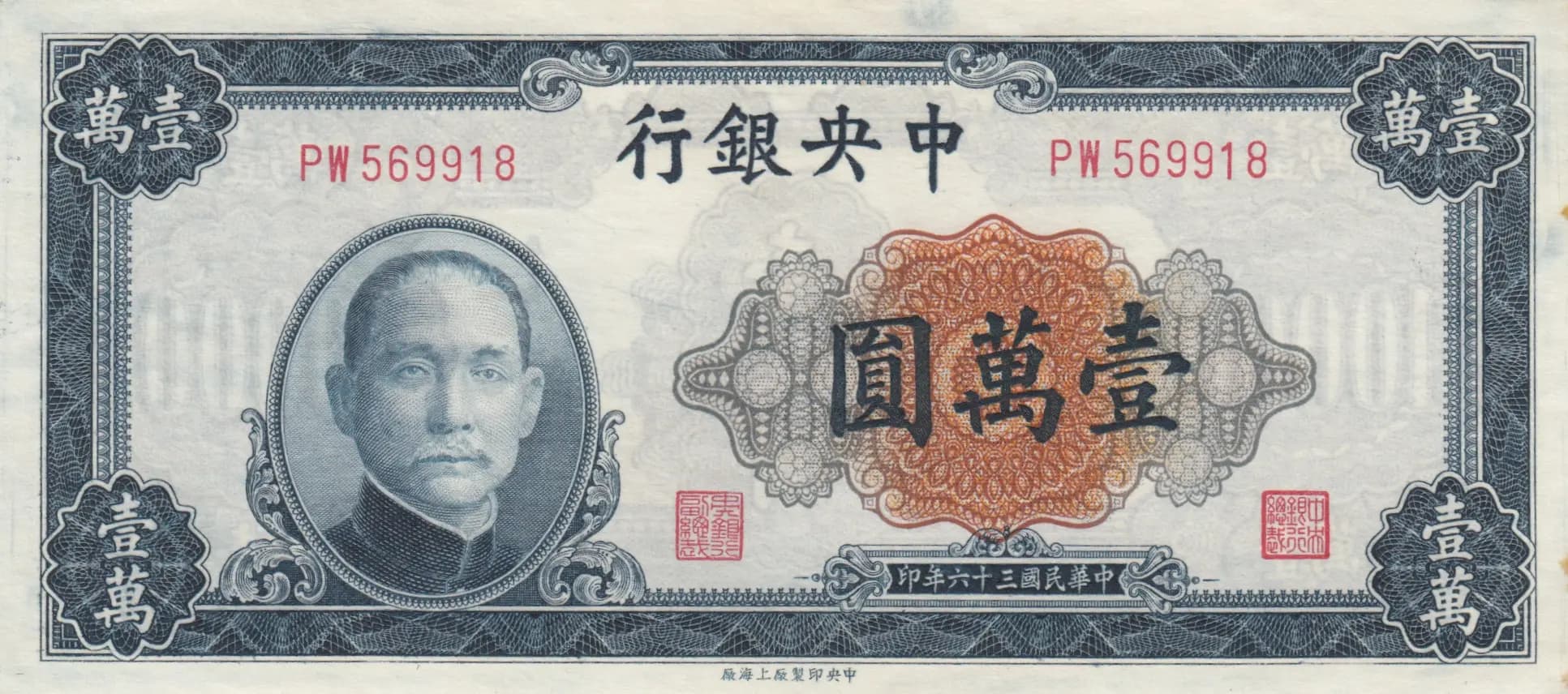
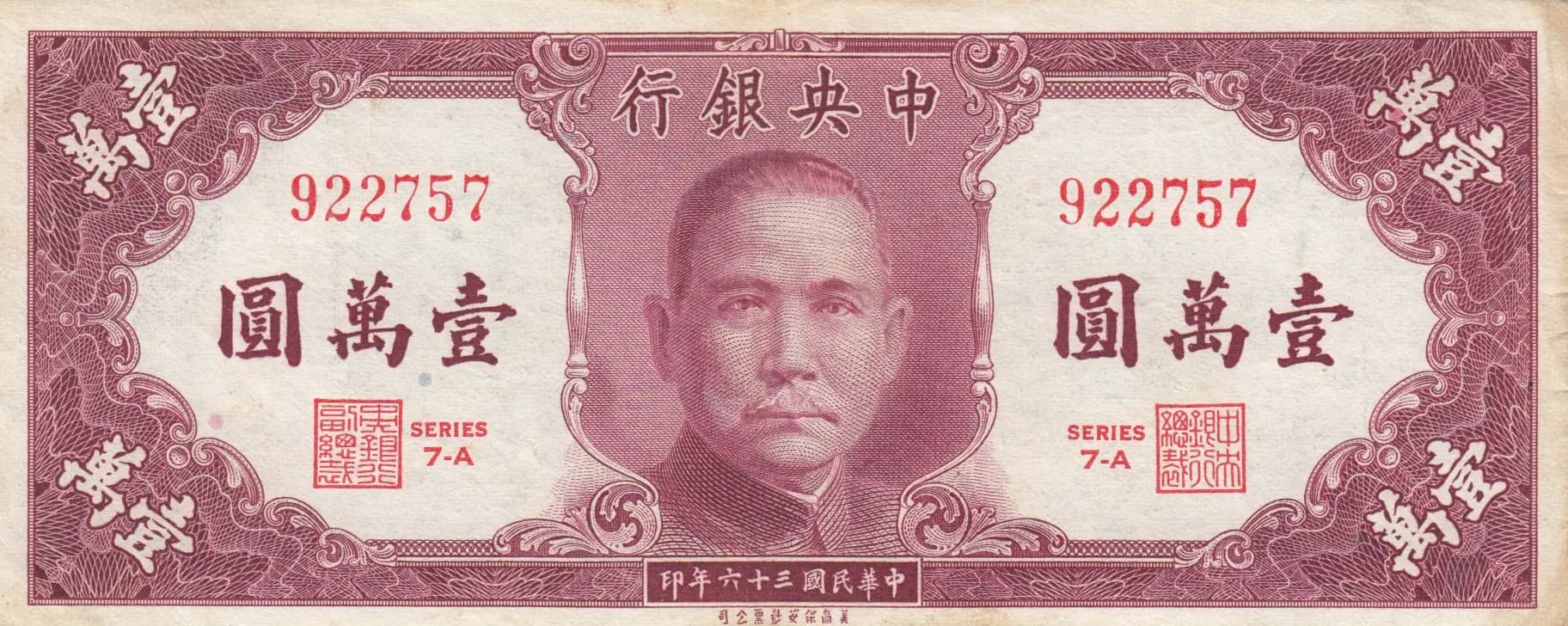
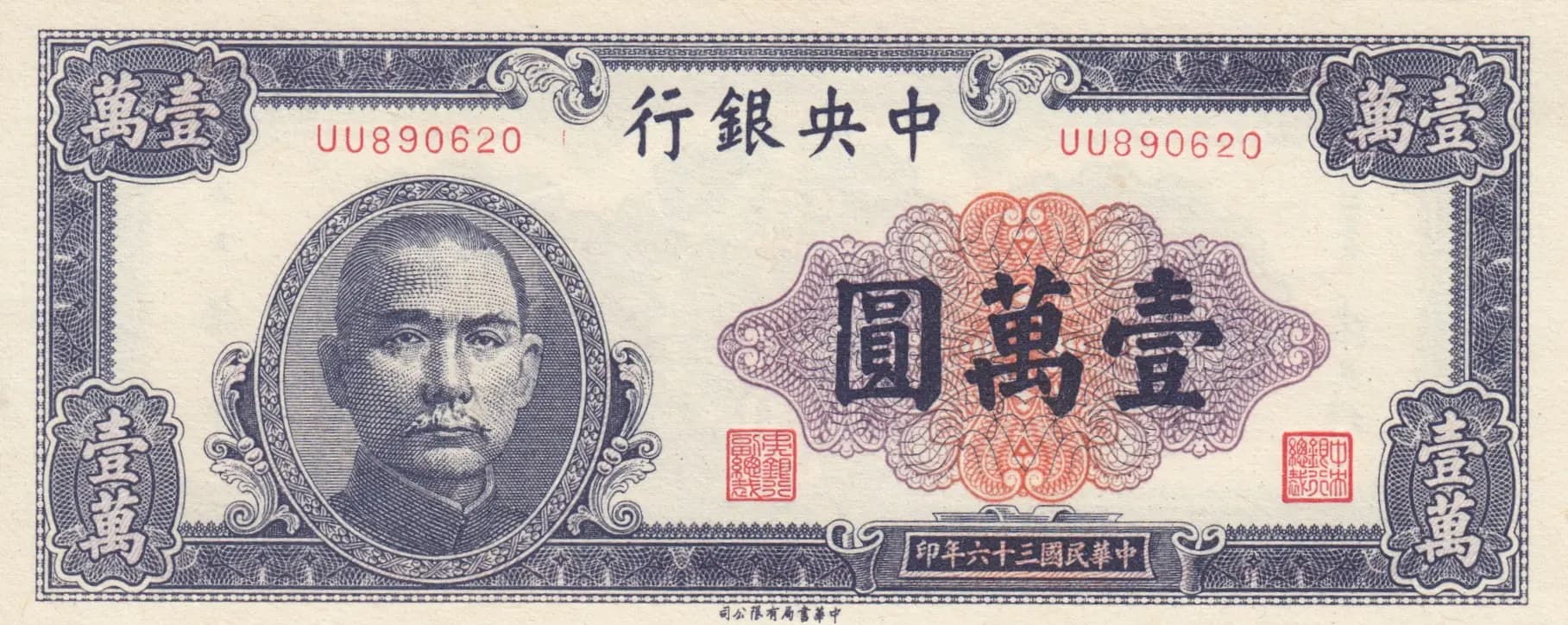
10 000 yuan 1947
Market Prices
12 salesAbout This Note
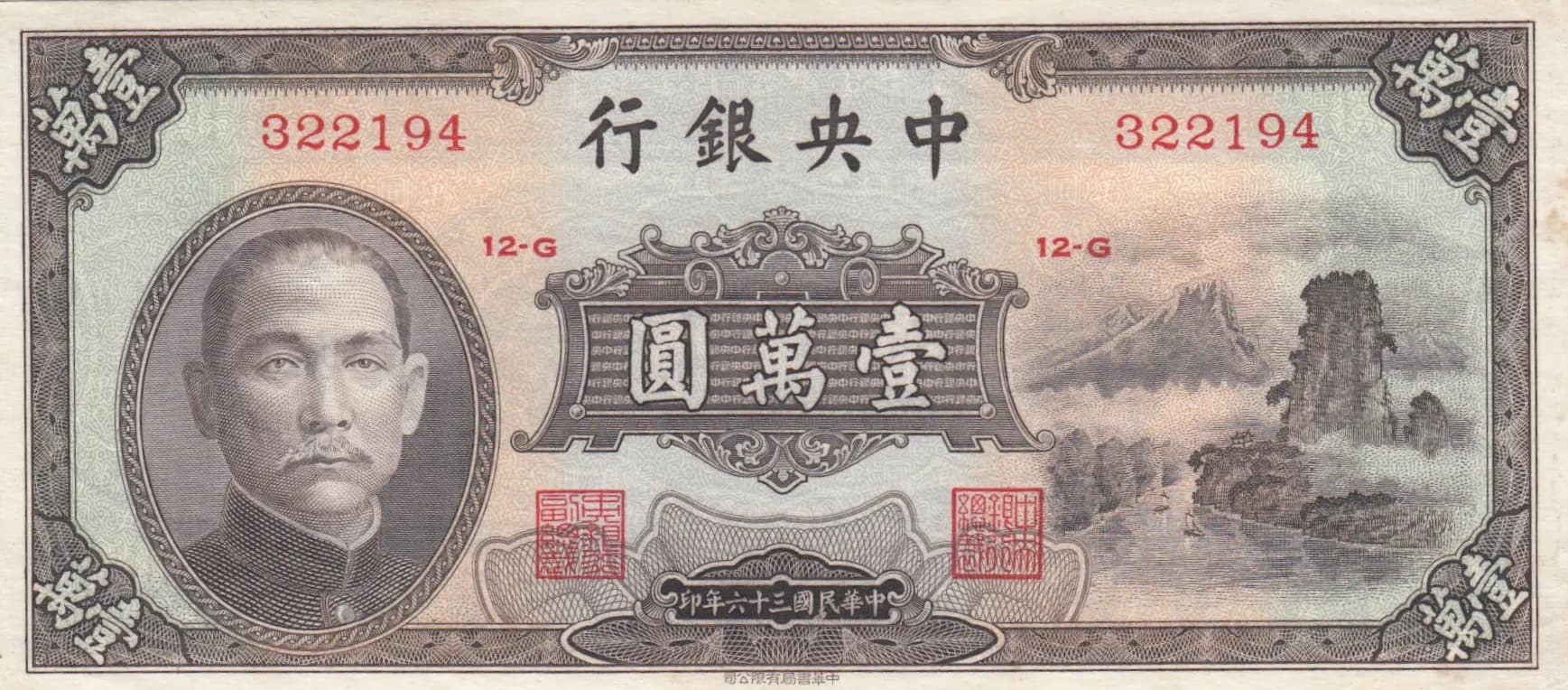
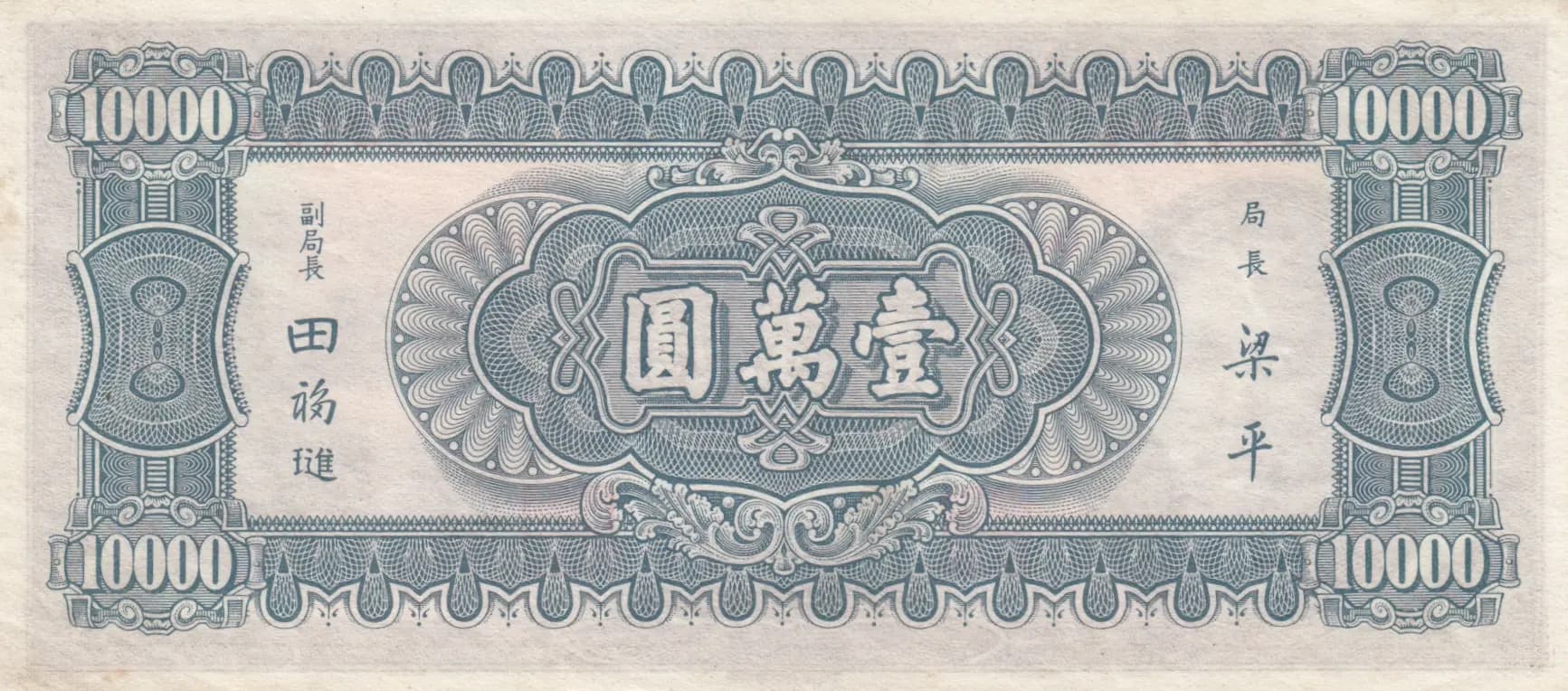
This is a striking 10,000 yuan note from 1947 issued by the Central Bank of China, presented in uncirculated condition with crisp, well-defined printing throughout. The front features an elegant portrait of a distinguished gentleman with a goatee in an ornate circular frame, complemented by a serene mountain landscape with traditional Chinese architecture on the right side. The reverse displays an elaborate symmetrical design with large denomination numerals in the corners and a complex central cartouche, all rendered in sophisticated blue-gray and tan tones with intricate decorative patterns that reflect the high-security engraving standards of the era.
Common. While this is a genuine historical note from the final years of ROC mainland currency production, the eBay market data clearly demonstrates common pricing patterns. Recent sales show specimens grading VF to EF selling consistently in the $7-$15 range, with even PMG-graded notes (VG-40 to AU-58) selling for $39-$51. The 2016 catalog value for UNC is listed at $15, consistent with common note pricing. The large historical print run, continuing availability in the market, and modest price appreciation over the decade shown in the eBay data all confirm this is a common-grade note despite its historical interest.
This note was issued during the final years of the Republic of China (ROC) government on mainland China, specifically in 1947 before the Communist takeover in 1949. The design reflects the formal aesthetic standards of the ROC's Central Bank during a period of significant economic and political transition. The date inscription indicates 'Republic of China, year 63,' placing this note historically at the end of the ROC's currency production era on the mainland before the subsequent hyperinflation and currency reforms that followed.
The front face presents a formal portraiture characteristic of Republican-era Chinese banknotes, featuring a prominent gentleman in Western formal dress with a distinctive goatee, framed within a circular ornate border that serves both aesthetic and security purposes. The background incorporates a romantic mountainous landscape scene with traditional Chinese pagoda architecture, evoking cultural heritage and national pride. The reverse follows a highly symmetrical Arts Deco-influenced design with monumental corner numerals reading '10000' and a complex central ornamental cartouche containing Chinese characters. The entire composition is bordered with elaborate geometric and floral patterns, demonstrating the sophisticated design standards employed by the ROC's currency production. The use of intaglio engraving throughout creates multiple layers of fine-line detail that were intended to serve as effective anti-counterfeiting measures.
Front: '中央銀行' (Central Bank), '壹萬圓' (Ten Thousand Yuan), '322194' (Serial number), '12-G' (Printing designation), '中華民國六十三年' (Republic of China, Year 63 [corresponding to 1947 in the ROC calendar]). Back: '10000' (Denomination in Arabic numerals), '壹萬圓' (Ten Thousand Yuan in Chinese characters), with additional decorative Chinese characters '田族提堤長平' arranged throughout the ornamental cartouche.
This note was produced using intaglio engraving (line engraving), the standard security printing method for high-value banknotes of the era. The visual analysis confirms intricate fine-line cross-hatching, detailed geometric pattern work, and multiple decorative layers characteristic of intaglio production. The 'Central Bank of China' and ROC government would have contracted with established security printers of the period, likely foreign-trained engravers or established Chinese printing facilities equipped with intaglio presses. The quality and complexity of the engraved elements indicate professional production meeting international standards of the 1940s.
The observed serial number '322194' with the '12-G' printing designation suggests a later printing variety from the 1947 production run. The printing designation '12-G' may indicate the twelfth printing series with variant 'G,' though complete variety cataloging for this specific Pick number would require consultation of specialized ROC currency references. The visual quality and crisp condition are consistent with notes from the final organized production runs before the currency became obsolete. No overprints or obvious subsequent modifications are visible, indicating this is a standard-issue note rather than a special variety, overstamped note, or emergency issue.