1 yuan 1940
About This Note
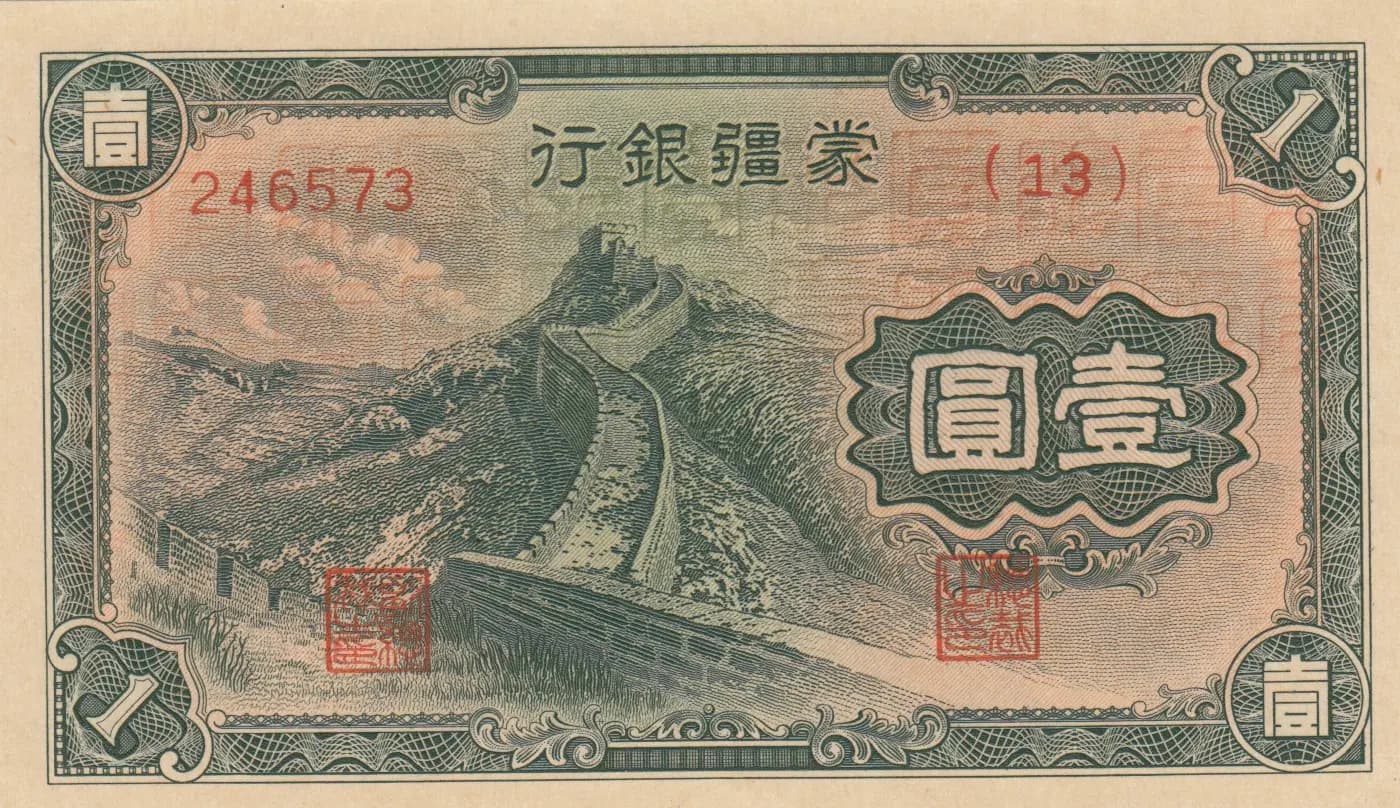
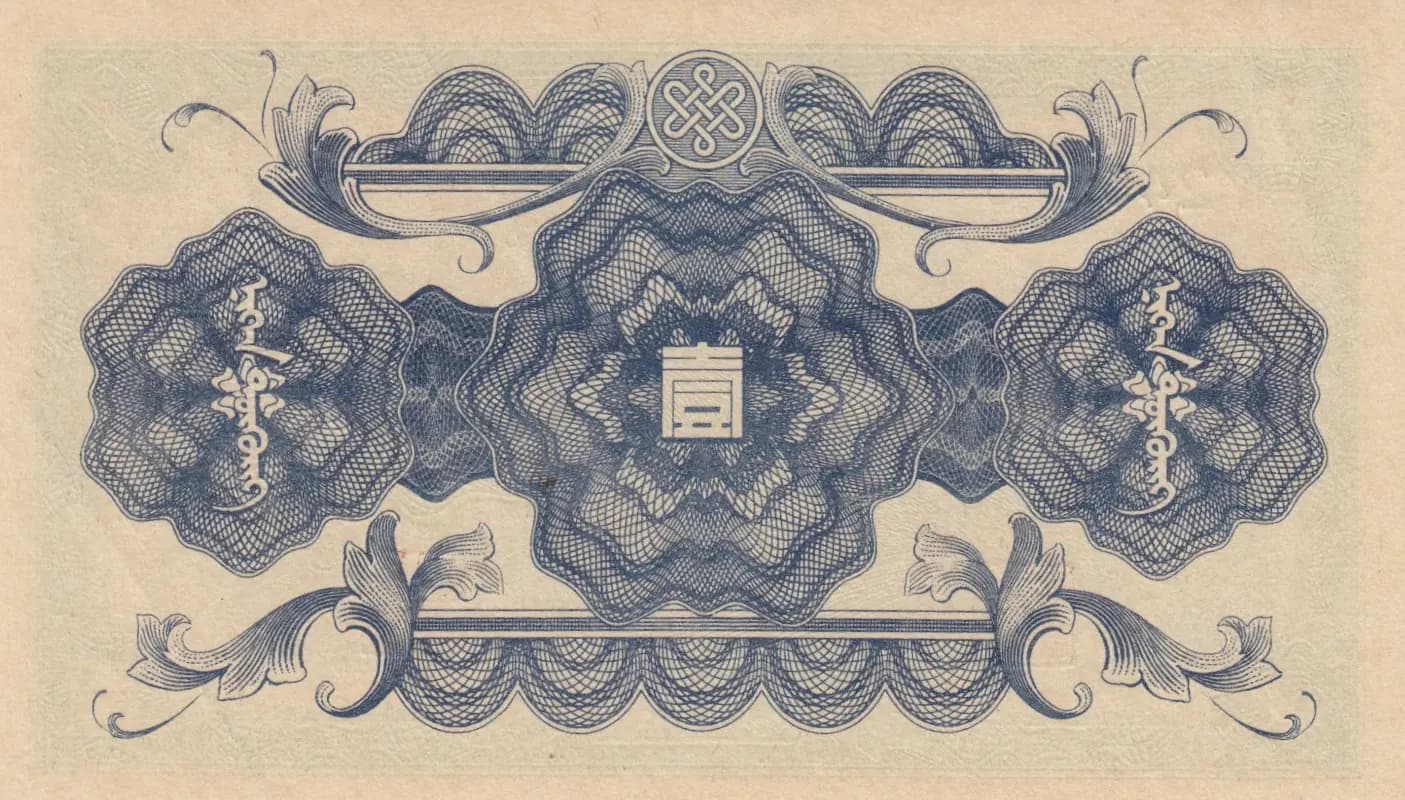
This 1940 Mengchiang Bank 1 yuan note (Pick J104) is presented in AU condition with exceptionally crisp printing and vibrant pastel coloring. The obverse features an iconic horizontal landscape depiction of the Great Wall of China with a fortified tower on mountainous terrain, framed by decorative geometric borders and corner emblems, while the reverse displays symmetrical ornamental scrollwork and cloud medallions. The note's excellent preservation, sharp fine-line engraving details, and historically significant issuer make it a desirable specimen for collectors of Chinese occupation currency.
Common. The Mengchiang Bank operated for a seven-year period (1938-1945) as the monetary authority of a Japanese puppet state with a relatively large territorial base in occupied Inner Mongolia and northern China. Standard denominations including the 1 yuan were likely produced in substantial quantities to facilitate occupation-era commerce. While historically significant as occupation currency, this note presents no indicators of limited print runs, early withdrawal, or short emission periods. Survival in AU condition may be somewhat above average for the type, but the denomination and issuer combination remains readily available to collectors.
The Mengchiang Bank (帝家銀 - Empire Bank) was established in the Japanese puppet state of Mengjiang during the Second Sino-Japanese War, operating from 1938-1945 in occupied Inner Mongolia and parts of northern China. The Great Wall imagery on the obverse symbolically referenced the region's historical significance and served as nationalist iconography co-opted by the occupation authorities. This 1940 emission represents the monetary system of a Japanese-controlled puppet state, making it historically significant as an artifact of wartime occupation and monetary manipulation in China.
The obverse depicts the Great Wall of China in a horizontal landscape orientation, specifically rendered as a fortified tower structure set against mountainous terrain, rendered in soft pastel tones of pink, green, and cream. The composition is framed by an ornamental border featuring geometric crosshatching patterns and square emblems positioned in each corner, each containing intricate geometric designs. Two red seal stamps authenticate the issue. The reverse displays a symmetrical ornamental composition centered on a large circular emblem containing a square geometric motif, flanked by paired cloud-form or floral medallions. The top and bottom feature elaborate scrollwork and flourishes typical of Chinese banknote design. The entire note employs fine-line engraving work and crosshatching throughout for security purposes.
Front side: Serial number 246573 (red numerals on left); 帝家銀 (Reading right to left: 'Empire Bank' or 'Imperial Bank') representing the Mengchiang Bank issuer; 國票 ('National Banknote'); Designation marking (13). Back side: No visible inscriptions observed in the visual analysis.
This note was produced using traditional engraved intaglio printing, evidenced by the fine parallel line work, detailed crosshatching, and geometric pattern complexity visible throughout both sides. The crisp impression quality and sharp registration of the multicolor design (pink, green, blue, cream) suggests professional security printing typical of Japanese-sponsored puppet state currency production during the WWII occupation period. The fine-line patterns and decorative security features are characteristic of the Japanese printing standards employed for occupation currency.
This specimen carries serial number 246573 in red numerals. Known varieties of Mengchiang Bank notes may include different serial number prefixes or color variations, though the Pick J104 catalog designation typically represents a single primary type. The presence of the red seal stamps and specific geometric corner emblems are consistent with standard J104 specifications. No significant varieties (signature variations, overprints, or date changes) are evident from the visual analysis of this particular specimen.