1000 francs 1978
Market Prices
7 salesAbout This Note
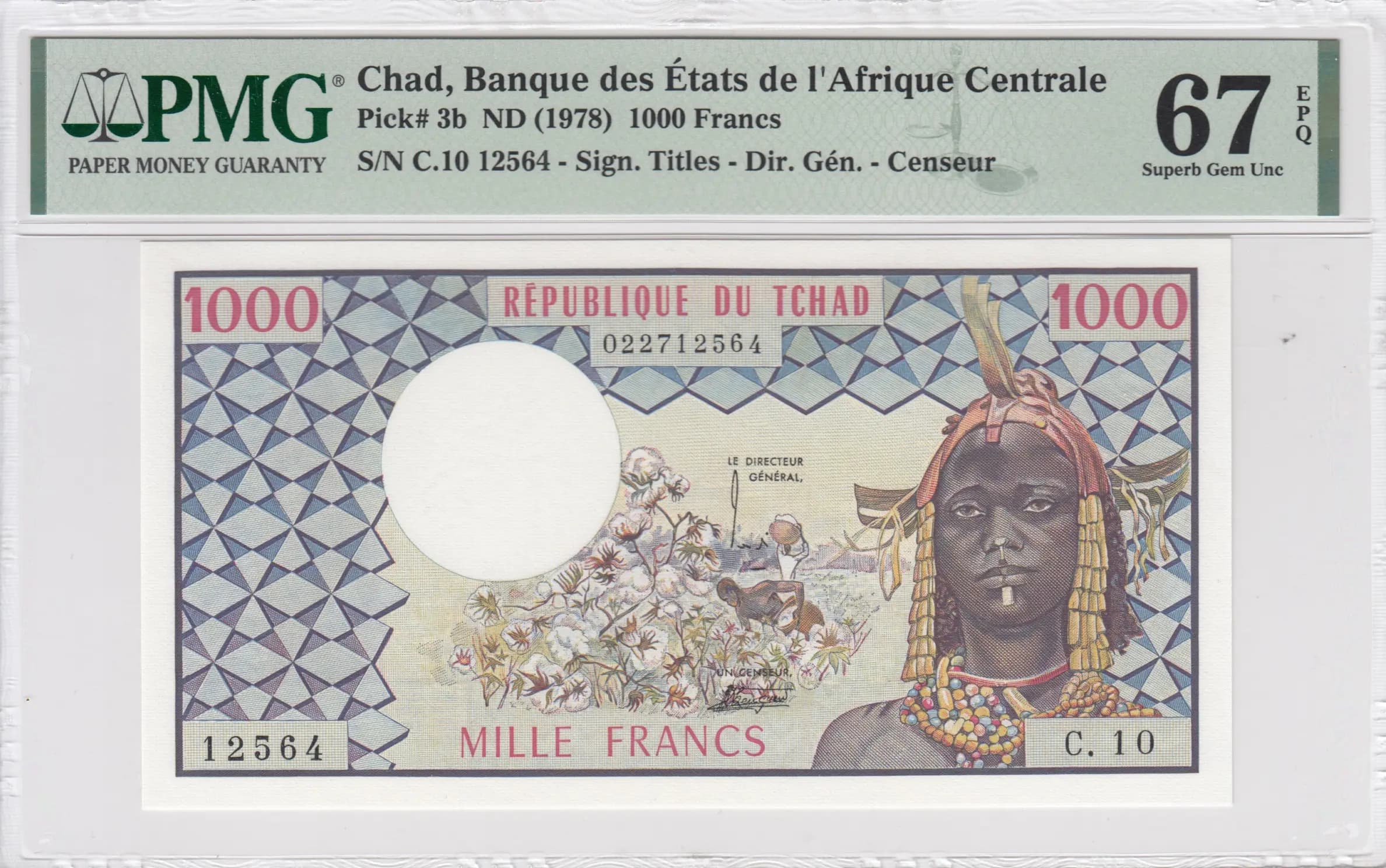
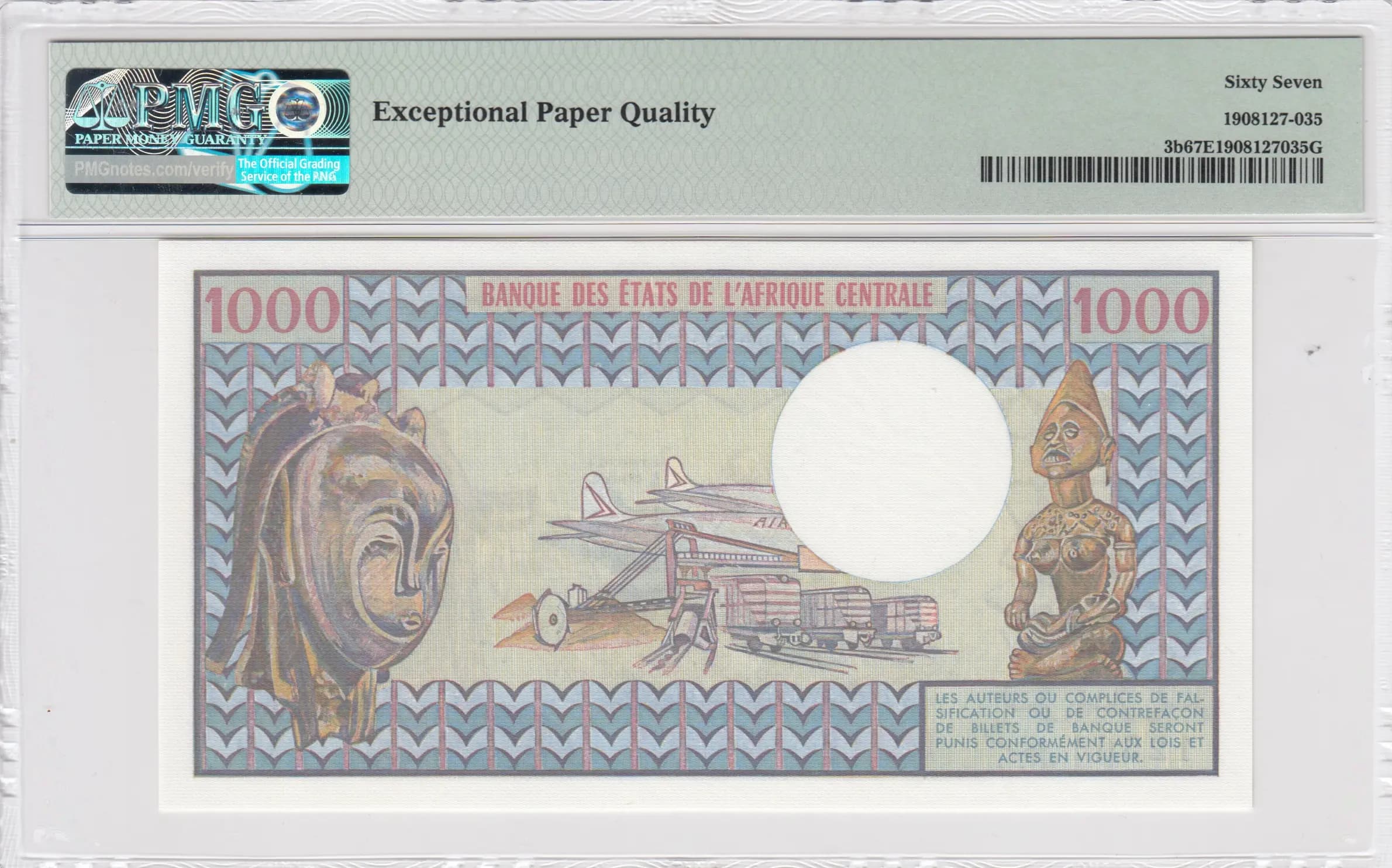
This Chad 1000 Francs note from 1978 (Pick P-3b) is a spectacular example of Central African currency design, graded PMG 67 EPQ, indicating near-gem uncirculated condition with exceptional paper quality. The obverse features an elegantly rendered African woman in traditional dress with vibrant beaded necklaces and red feathered headdress, paired with a cotton harvesting scene, while the reverse showcases African sculptural art alongside modern infrastructure including aircraft and industrial development. The crisp printing, vivid color palette spanning blue, red, brown, and gold, and geometric security patterns demonstrate the sophisticated lithographic techniques employed by the Banque des États de l'Afrique Centrale.
Common. This note has appeared regularly on eBay sales with documented transactions ranging from $11 to $183.50 depending on condition, with most VF-grade examples selling in the $20-37 range (per data from 2012-2024). The 2019 catalogue values list VF at $20 and UNC at $75, consistent with regular-issue circulation patterns. While the PMG 67 EPQ grade is a higher condition tier, the base note type remains common in the numismatic market.
Issued during Chad's period as part of the Banque des États de l'Afrique Centrale (BEAC) monetary union, this 1978 note reflects the nation's post-independence economic identity and development aspirations. The imagery deliberately balances traditional African cultural heritage—represented by the woman's portrait and the sculptural figures on the reverse—with symbols of modernization and progress including aviation, transportation infrastructure, and industrial activity. The cotton harvest depicted on the obverse references Chad's agricultural foundation and economic importance to the Central African region during this period.
The obverse features a portrait of an African woman facing forward, adorned with traditional styling including colorful beaded necklaces in red, yellow, blue, and orange, and a distinctive red feathered headdress, positioned on the right side of the note. The central composition incorporates a cotton field scene with flowering cotton plants and harvesting workers, representing Chad's agricultural economy. A geometric diamond/lattice pattern in blue and white forms the background, creating a decorative border and security element. The reverse displays two African sculptural figures: a profile mask on the left side with African characteristics, and a full-body standing statue on the right with pointed head and geometric body features, flanking a central white circle containing modern transportation imagery including a commercial airplane and truck with industrial infrastructure. The background features a geometric chevron/arrow repeating pattern in light blue and white. Both sides prominently display the denomination '1000' in red at the top corners.
FRONT SIDE: '1000' (denomination in Arabic numerals); 'RÉPUBLIQUE DU TCHAD' (Republic of Chad); 'MILLE FRANCS' (One Thousand Francs); 'LE DIRECTEUR GÉNÉRAL' (The General Director); '022712564' and '12564' (serial numbers); 'C.10' (currency designation). BACK SIDE: '1000' (denomination); 'BANQUE DES ÉTATS DE L'AFRIQUE CENTRALE' (Bank of the Central African States); 'LES AUTEURS OU COMPLICES DE FALSIFICATION OU DE CONTREFACON DE BILLETS DE BANQUE SERONT PUNIS CONFORMÉMENT AUX LOIS ET ACTES EN VIGUEUR' (The authors or accomplices of falsification or counterfeiting of banknotes shall be punished in accordance with applicable laws and acts in force).
Lithographed, as noted in reference materials. The note exhibits fine line engraving throughout with multicolored underprinting visible across both sides, creating depth and complexity in the design. The geometric patterns, sharp color registration, and crisp detail observed in the PMG 67 EPQ grade specimen indicate high-quality lithographic production typical of central bank currency printing during the 1970s.
This note is identified as Pick P-3b variant of the Chad 1000 Francs series. The PMG population reports six variants for this base Pick number (P-3a, P-3b, P-3c, P-3cs, P-3s, P-3sp), with differences noted in watermarks and signature designations. The P-3b variant observed here can be distinguished from P-3a and P-3s by its specific watermark configuration. The signature titles 'LE DIRECTEUR GÉNÉRAL' and 'UN CENSEUR' are consistent with this variant's designation, and the 1978 date on the note corresponds to the later issue period of this series (initially issued in 1974).