10 shillings 1952
Market Prices
5 salesAbout This Note
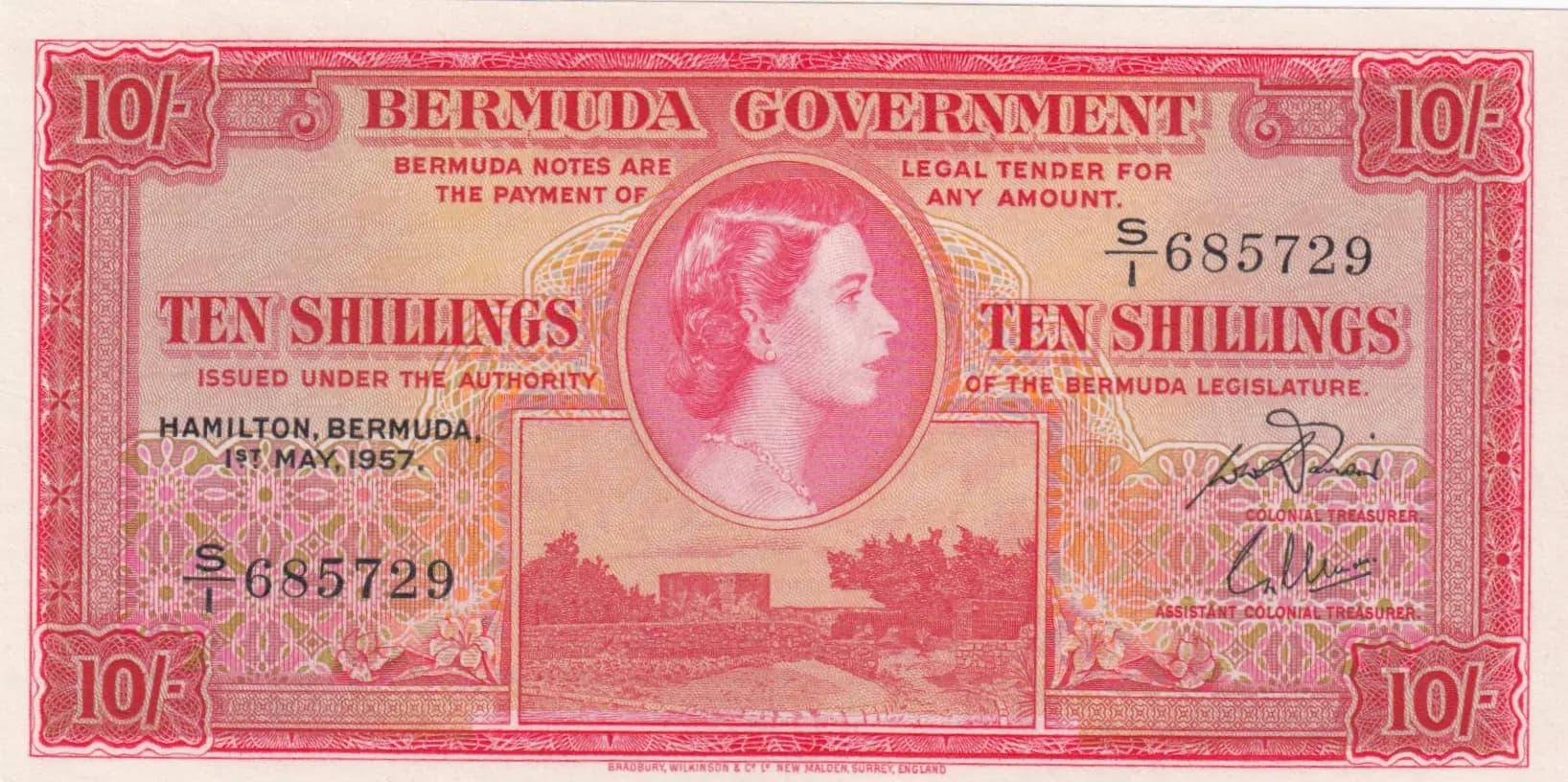
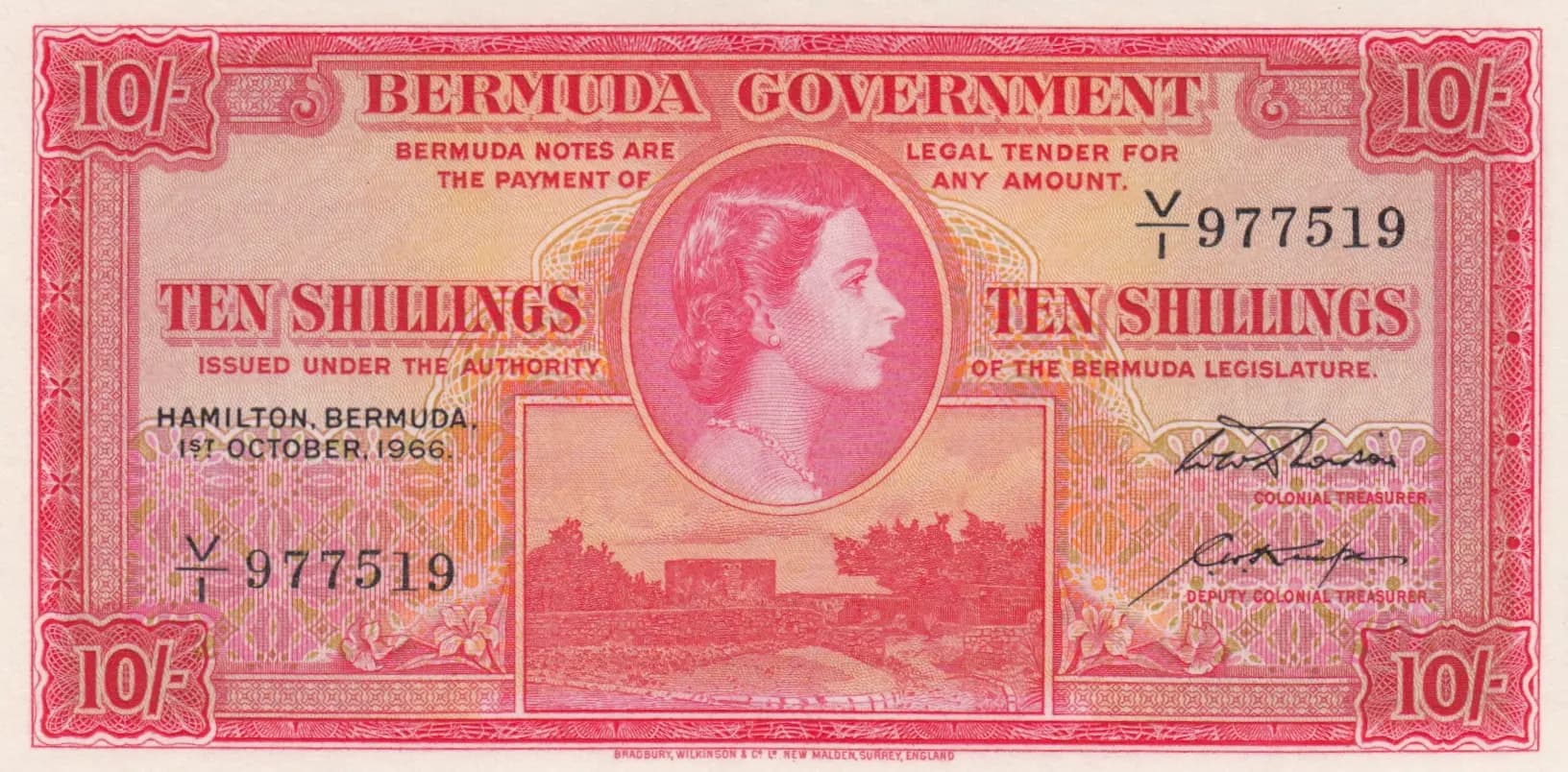
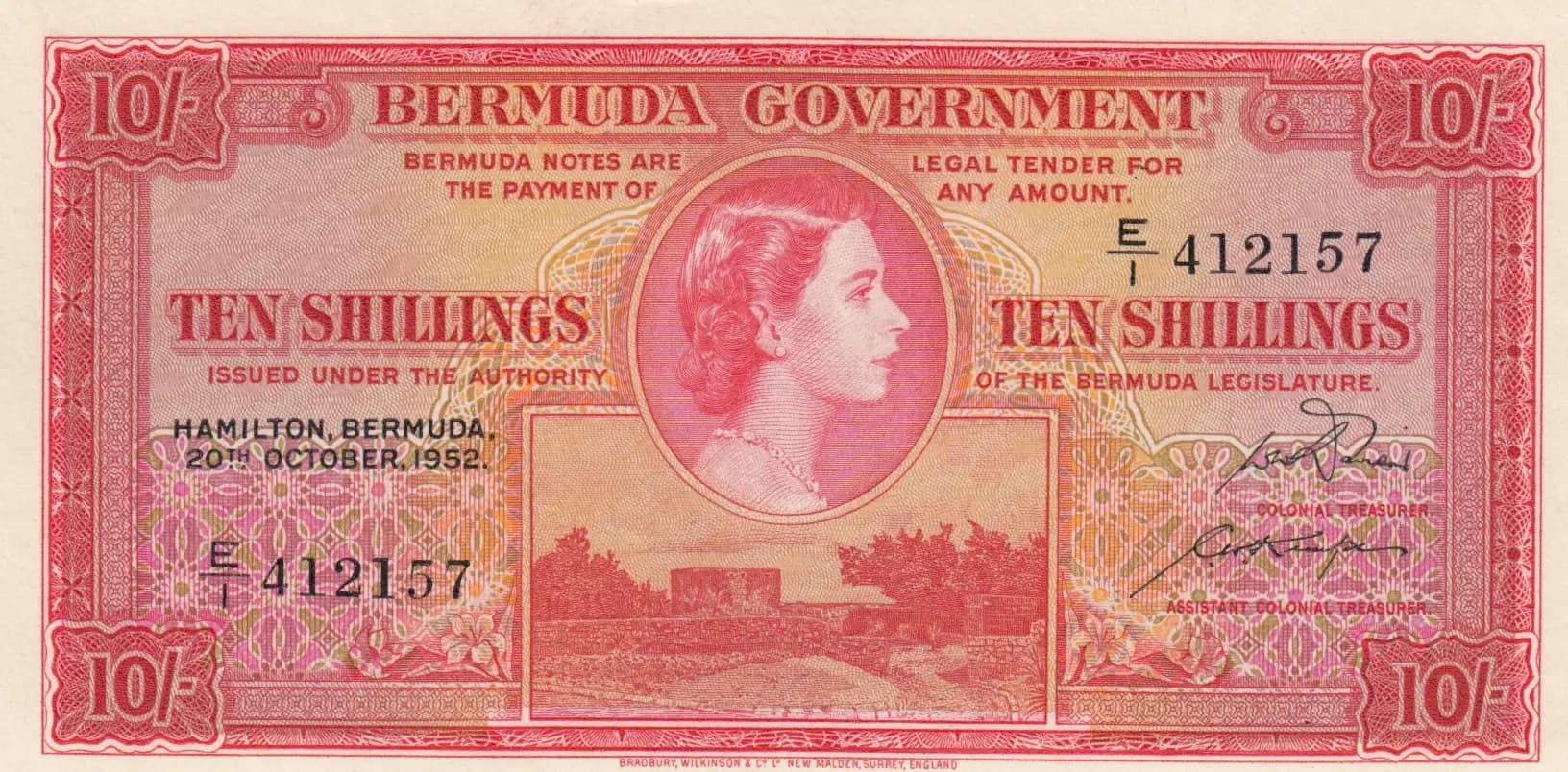
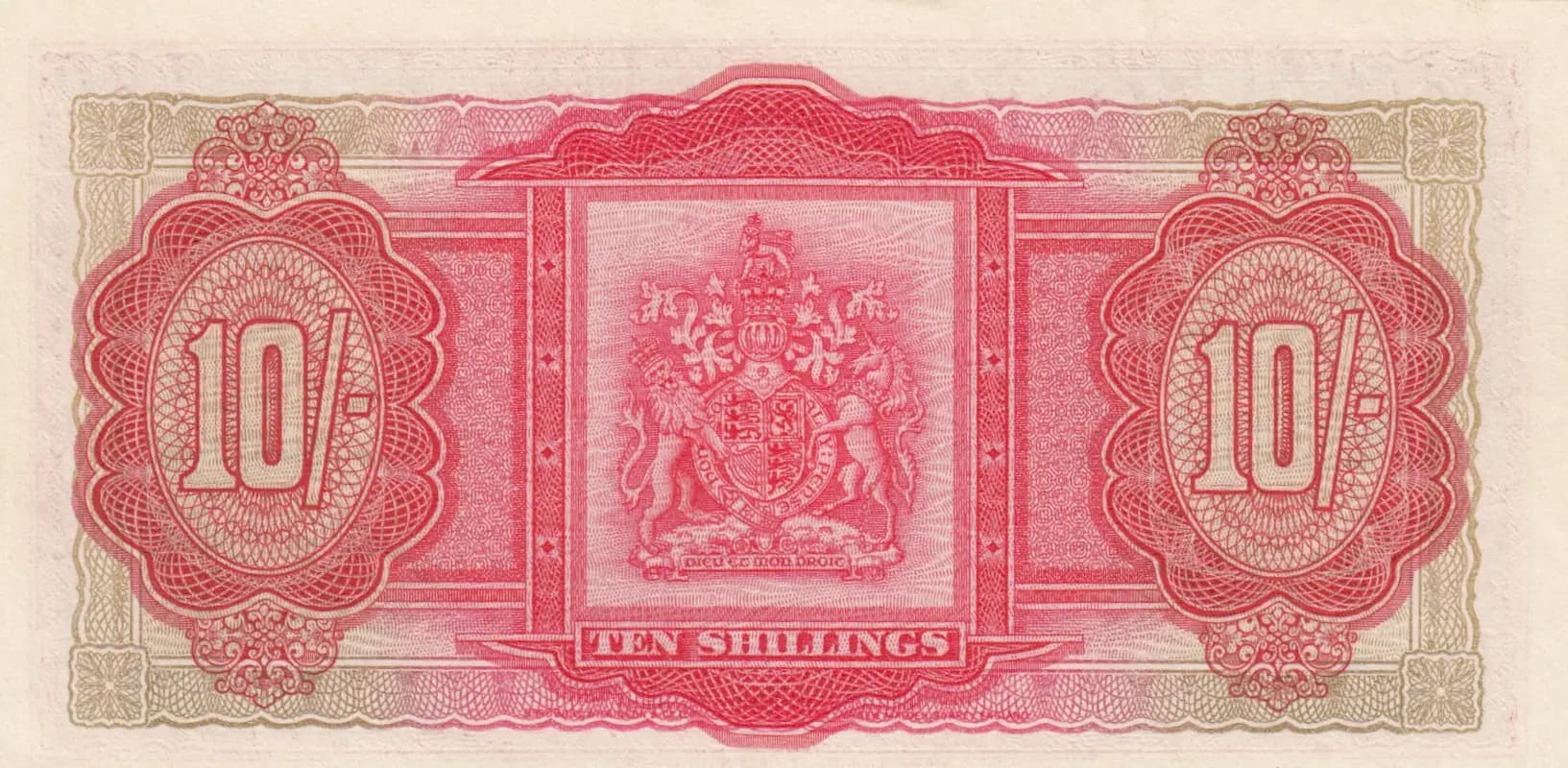
This is an uncirculated 1952 Bermuda Government 10 shillings note (Pick P-19a) featuring Queen Elizabeth II in profile on the obverse and the royal coat of arms on the reverse. The note exhibits the hallmark fine engraving and ornate Victorian-style design characteristic of Bradbury Wilkinson's work, with vibrant pink-red coloration and exceptional preservation showing no signs of circulation wear. As a early post-war Commonwealth note in pristine condition, this example represents significant collector value, with catalog estimates around $425 for UNC specimens.
Common. While this is an early Commonwealth-era note with historical significance, the eBay market data indicates typical VF specimens sell in the $30-50 range, with UNC examples commanding $200-425 depending on grade. The catalog values suggest reasonable availability in circulated grades but scarcity in pristine condition. PMG's population reports show three variants (P-19a, P-19b, P-19c) for this denomination, indicating a sustained print run across multiple printings. The note is not rare, though high-grade uncirculated examples command premium prices relative to their circulation-graded counterparts.
Issued on 20 October 1952 under the authority of the Bermuda Legislature, this note commemorates the early reign of Queen Elizabeth II following her accession in February 1952. The inclusion of Gate's Fort in St. George's on the obverse reflects Bermuda's colonial heritage and military significance, while the royal coat of arms and 'Dieu et mon droit' motto on the reverse underscore the island's status as a British Crown Colony during the height of the Commonwealth era.
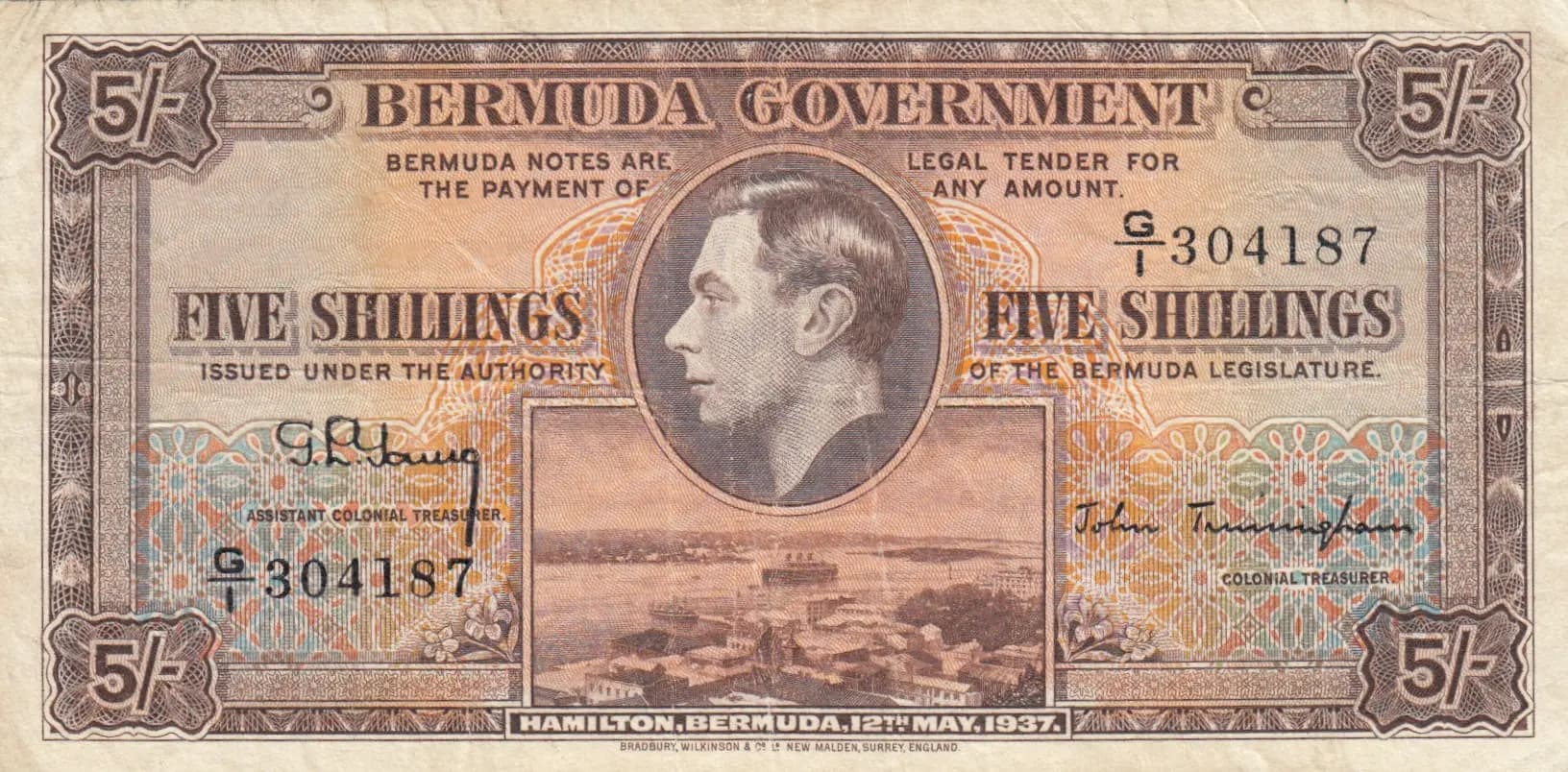
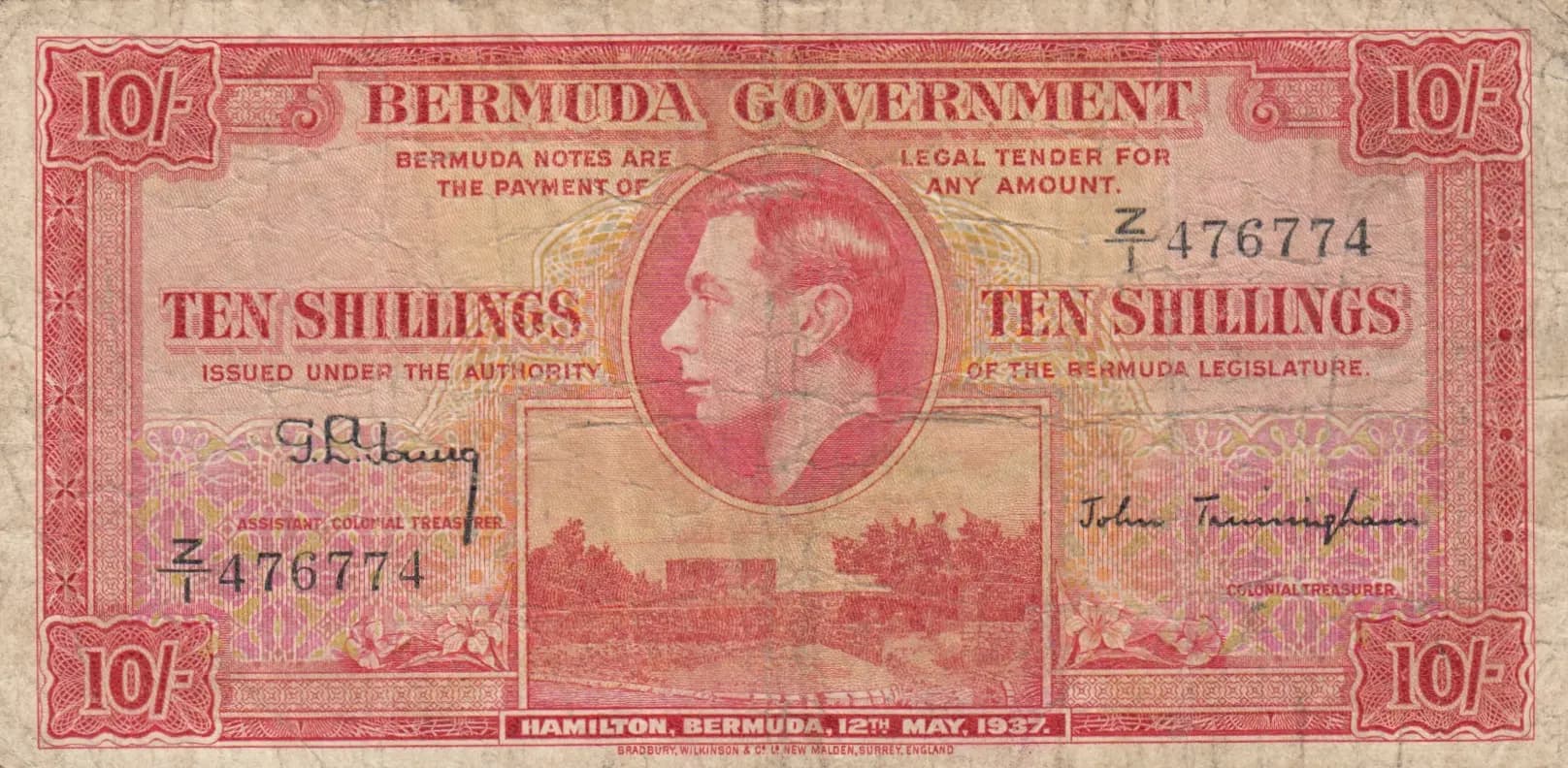
The obverse features a finely engraved portrait of Queen Elizabeth II in right profile, centered within an ornate oval frame, surrounded by decorative rosettes and scrollwork in the four corners. Below the portrait is a vignette depicting Gate's Fort (St. George's), the historic Bermuda fortification, rendered in landscape perspective. The reverse displays the royal coat of arms—featuring the heraldic lions and shield beneath a crown—centered in an ornate frame with a mountainous landscape vignette above. Large denomination numerals '10' appear in scalloped medallion frames flanking the coat of arms on both sides. The entire design is executed in pink and red tones with cream and gold accents, utilizing fine line engraving and intricate cross-hatching patterns throughout.
FRONT: '10/-' (denomination in shillings), 'BERMUDA GOVERNMENT' (issuing authority), 'TEN SHILLINGS' (denomination in words), 'BERMUDA NOTES ARE LEGAL TENDER FOR THE PAYMENT OF ANY AMOUNT' (legal tender declaration), 'ISSUED UNDER THE AUTHORITY OF THE BERMUDA LEGISLATURE' (issuing authorization), 'HAMILTON, BERMUDA 20TH OCTOBER, 1952' (place and date of issue), 'E 412157' (serial number), 'COLONIAL TREASURER' and 'ASSISTANT COLONIAL TREASURER' (signing authorities), 'BRADBURY, WILKINSON & CO LTD, NEW MALDEN, SURREY, ENGLAND' (printer identification). BACK: '10' (denomination numerals in scalloped frames), 'TEN SHILLINGS' (denomination), 'DIEU ET MON DROIT' (French - 'God and my right', the royal motto).
Intaglio engraving (line engraving) executed by Bradbury, Wilkinson & Co Ltd, a premier security printer based in New Malden, Surrey, England. The note displays characteristic features of this technique including fine line work, detailed cross-hatching in background areas, intricate guilloche patterns in decorative borders and frames, and multi-color printing layered over elaborate engraved plates. No additional security features beyond the engraving complexity are evident.
This note is cataloged as Pick P-19a with printer Bradbury, Wilkinson & Co (BWC). The PMG population data indicates three known varieties exist (P-19a, P-19b, P-19c), likely representing different printing sessions or minor design variations. The serial number prefix 'E' and date of 20 October 1952 are consistent with the initial 1952 issue. No overprints or signature varieties are evident in the visual analysis. The specific variety (P-19a vs P-19b vs P-19c) would require comparison with the PMG standard reference plates to distinguish, though variants may relate to printer's marks or minor design elements not readily visible in standard photography.