10 dollars 1970 specimen
Market Prices
3 salesAbout This Note
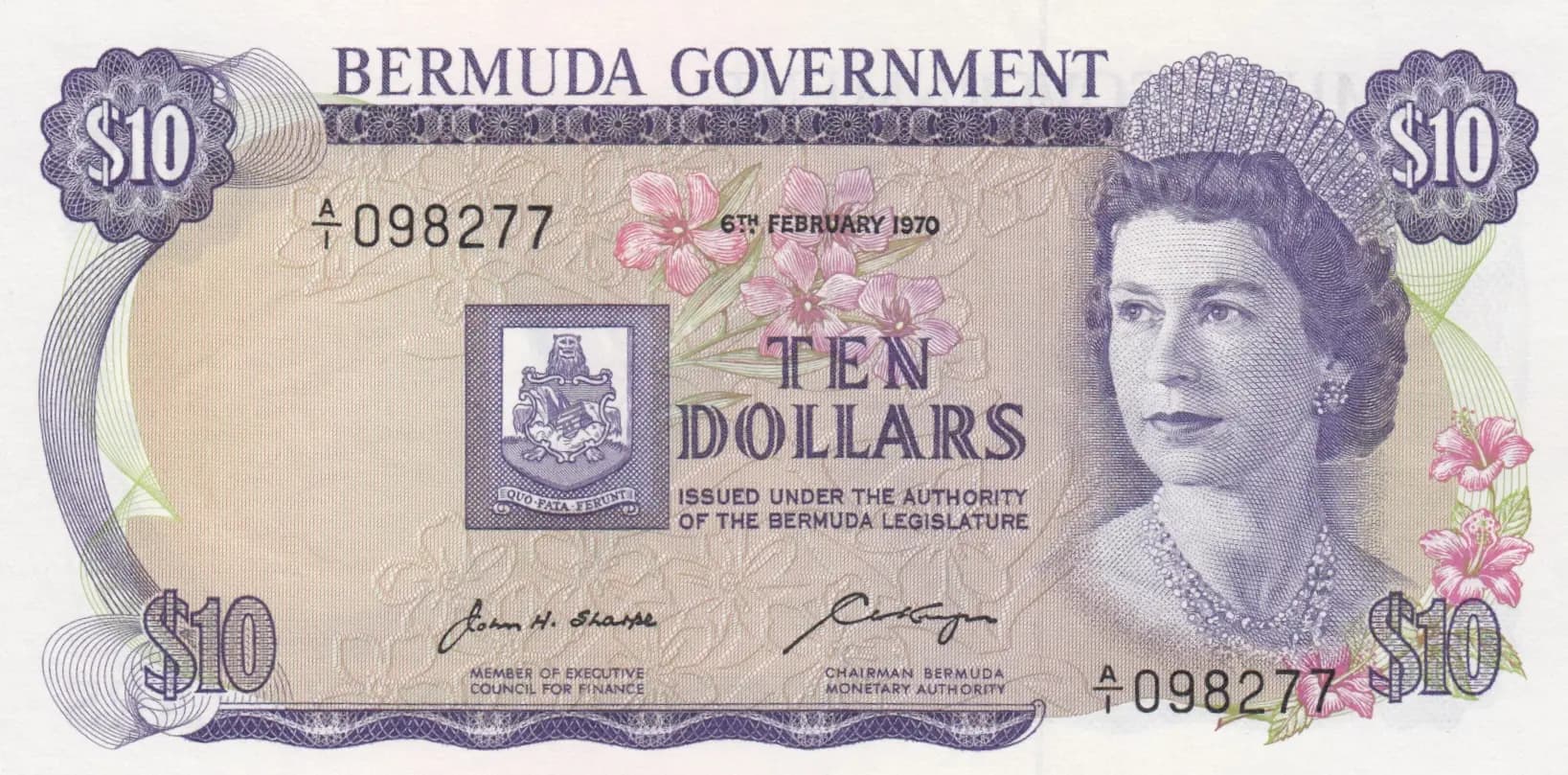
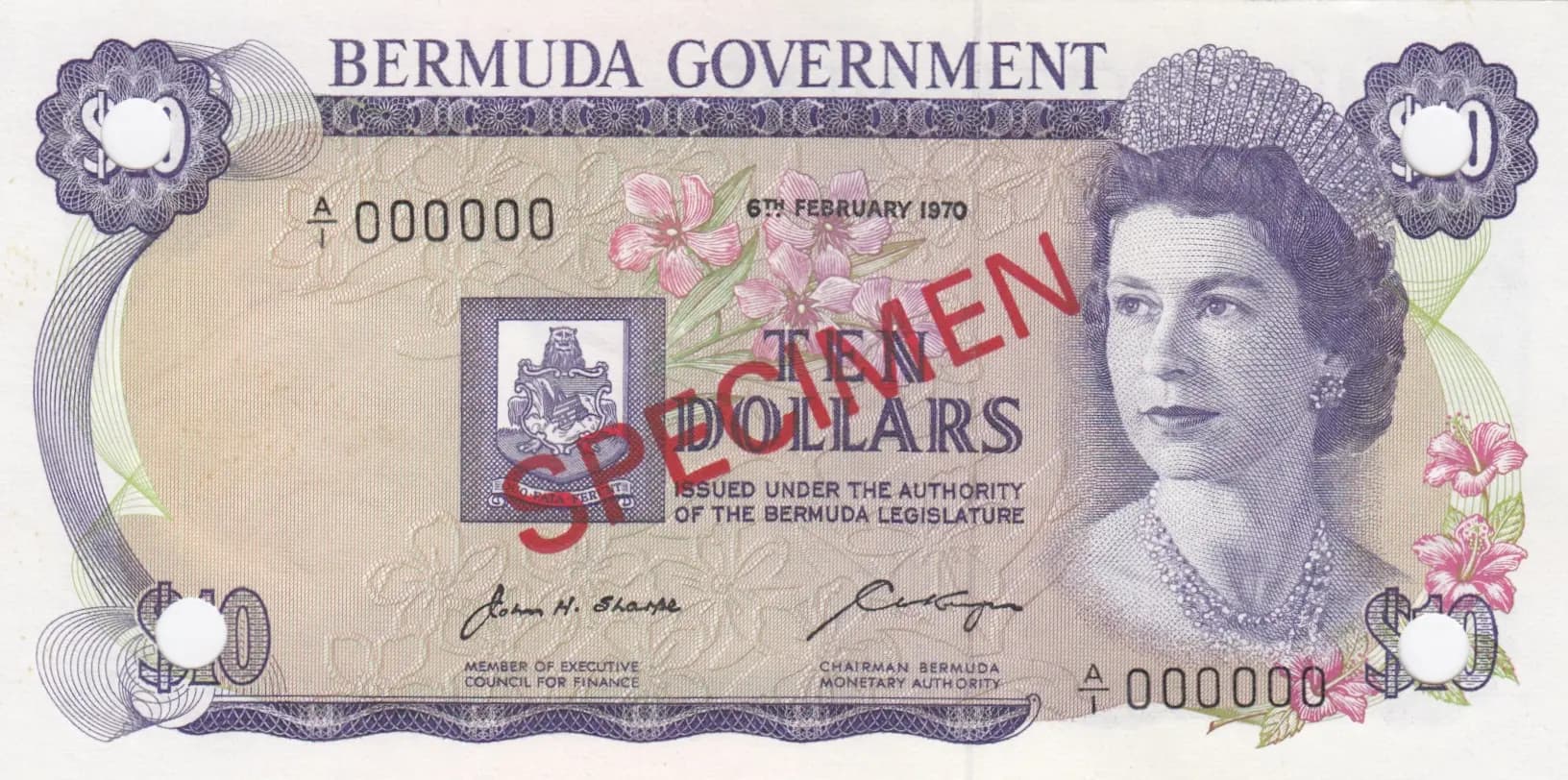
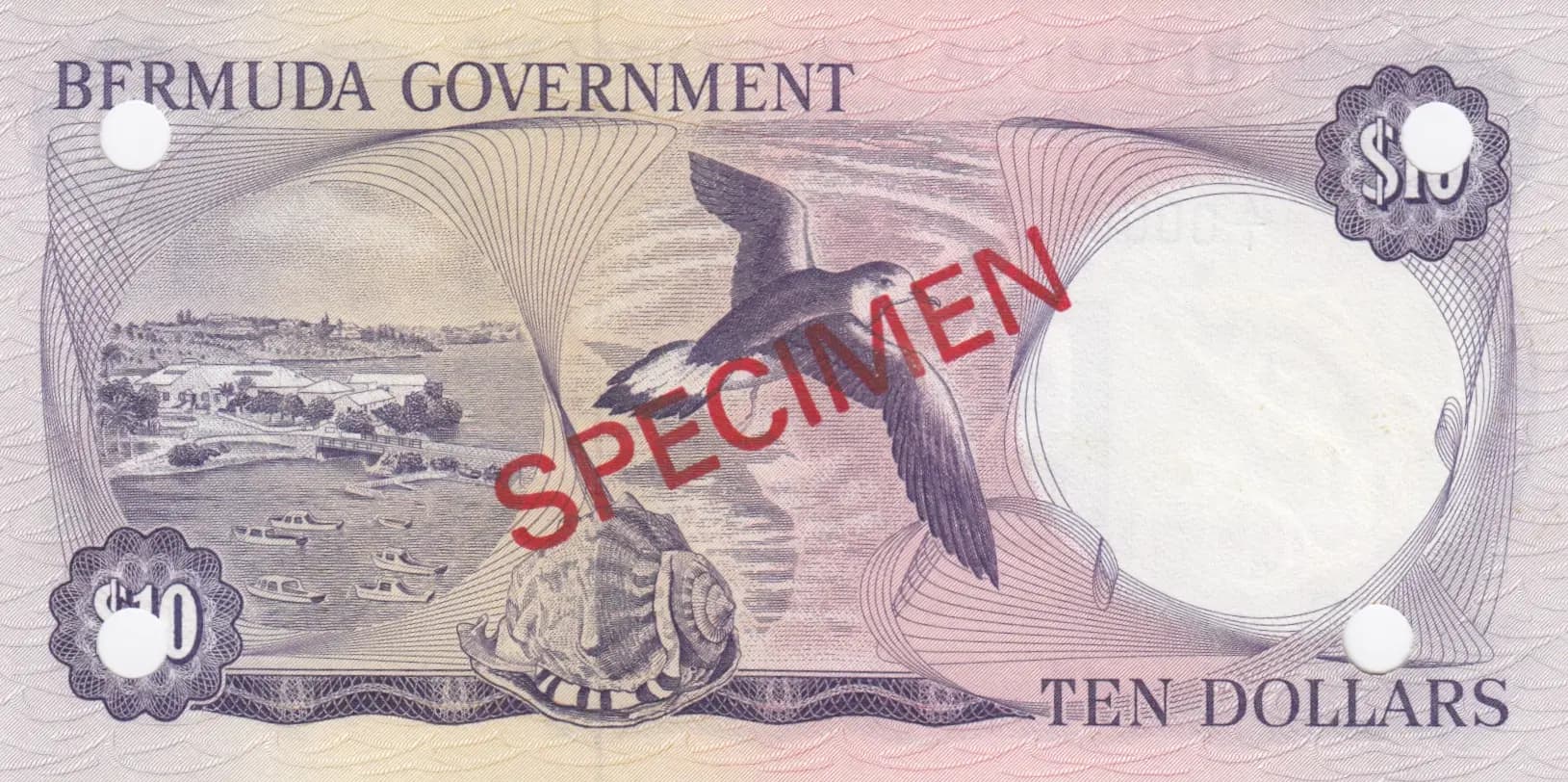
This is a crisp uncirculated specimen note of the Bermuda Government 10 Dollars from 1970, featuring Queen Elizabeth II in profile on the obverse and a Bermuda petrel in flight on the reverse. The note displays the characteristic purple and pink color scheme with cream undertones typical of this issue, and bears the red diagonal 'SPECIMEN' overprint indicating its non-circulating status. As a specimen note in pristine condition, this represents an important archival example of Bermuda's early decimal currency period.
Common. While specimen notes are inherently less common in circulation than regularly issued notes, this denomination and year remain readily available in the collector market. eBay pricing data shows specimens selling in the $100-250 range depending on grading, with the 2019 catalog value for UNC listed at $25, indicating steady but moderate collector demand. The print run for this series was substantial, and specimen notes were deliberately preserved, making them accessible to collectors. No evidence suggests this particular variety was recalled or produced in severely limited quantities.
This 1970 banknote was issued during Bermuda's transition to decimal currency under the authority of the Bermuda Legislature, as inscribed on the obverse. The inclusion of Queen Elizabeth II reflects Bermuda's status as a British Crown dependency at the time, while the reverse imagery of the Bermuda petrel—an endemic seabird—emphasizes the island nation's natural heritage and cultural identity. The coastal landscape and harbor scene on the reverse further reinforce Bermuda's maritime significance during this period of economic development.
The obverse features a three-quarter profile portrait of Queen Elizabeth II positioned on the right side of the note, depicted wearing pearls in the formal style typical of Commonwealth currency of this era. The composition includes the Bermuda coat of arms/heraldic shield at center, surrounded by ornamental rosette designs bearing dollar signs in all four corners. Decorative floral elements, particularly pink flowers, and extensive scrollwork and filigree patterns fill the background. The reverse presents a large Bermuda petrel (the national bird) depicted in flight as the dominant central element, set against a detailed coastal landscape scene with a harbor, small boats, and water features. Both sides employ fine-line engraving and guilloché patterns throughout, with the Bermuda coat of arms repeated at the bottom center of the reverse.
Front: 'BERMUDA GOVERNMENT' (governing issuer); '6TH FEBRUARY 1970' (official issue date); 'TEN DOLLARS' (denomination); 'SPECIMEN' (red overprint indicating non-circulating status); 'ISSUED UNDER THE AUTHORITY OF THE BERMUDA LEGISLATURE' (legal authority); 'John H. Sharpe, MEMBER OF EXECUTIVE COUNCIL FOR FINANCE' (official signature line); '[CHAIRMAN BERMUDA MONETARY AUTHORITY]' (additional signature line); Serial number 'A 000000' (specimen numbering). Back: 'BERMUDA GOVERNMENT' (issuer identification); 'SPECIMEN' (red overprint); 'TEN DOLLARS' and '$10' (denomination in text and numeral forms).
Intaglio (line engraving) printing with multiple color separation passes, creating the layered purple, pink, and cream color scheme. The note exhibits sophisticated security features including fine-line background engraving, complex guilloché decorative patterns in borders and rosettes, and intricate line work in both the portrait and seabird illustration. The watermark (tuna fish) was integrated during the paper manufacturing stage. No specific printer attribution is definitively established from standard catalogs, though Bermuda's currency of this period was typically produced by established British security printers.
This note is cataloged as Pick P-25s (the 's' suffix denotes specimen status). The PMG population report indicates P-25a as the primary variant with tuna fish watermark, suggesting this specimen represents the standard variety of the 1970 issue. The serial number prefix 'A' and the all-zero specimen numbering (A 000000) are typical of specimen notes produced for distribution to banks and collectors rather than for general circulation. No significant varieties within the specimen category have been documented for this Pick number.