1 dollar 1970 specimen
Market Prices
1 saleAbout This Note
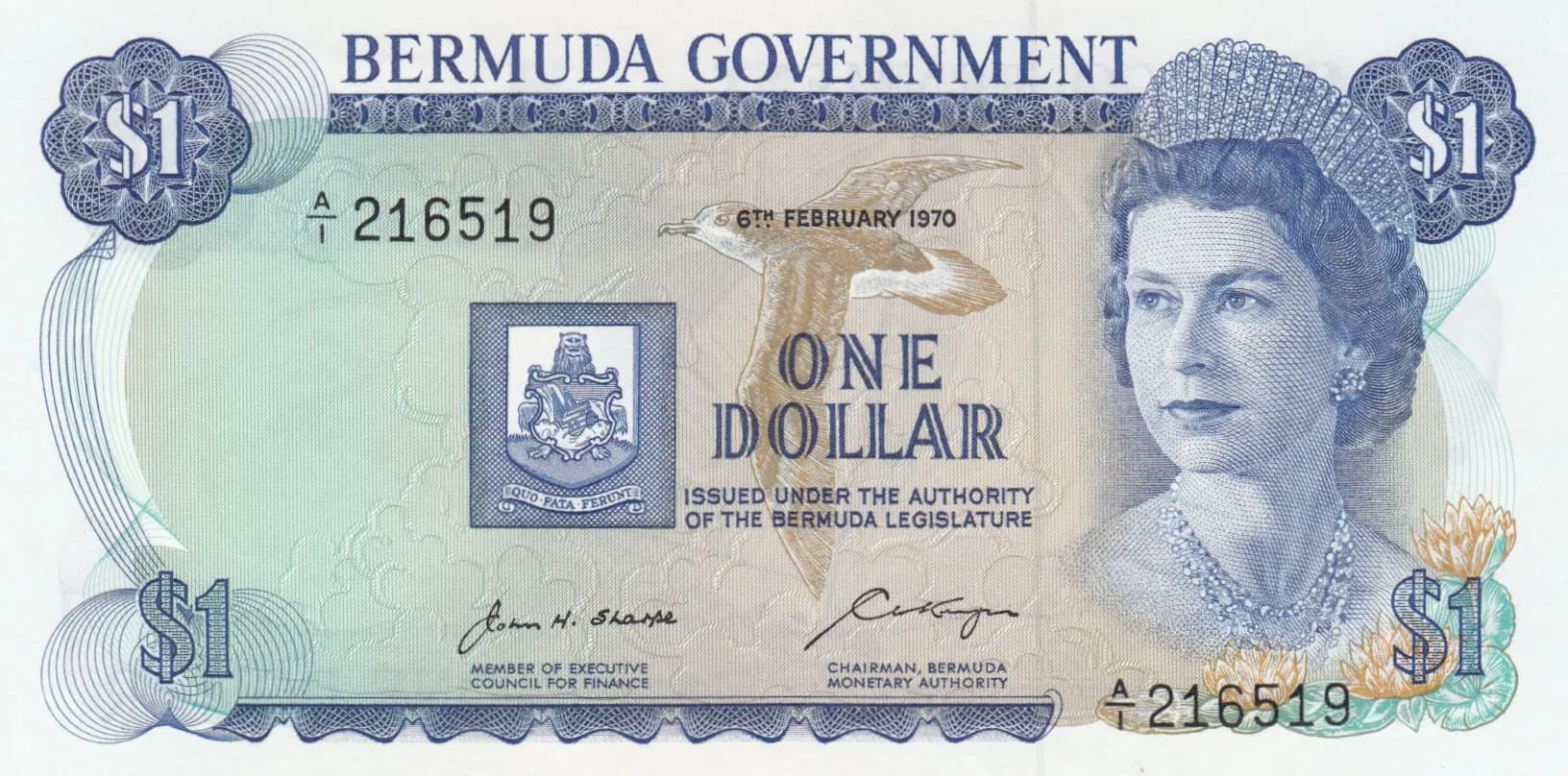
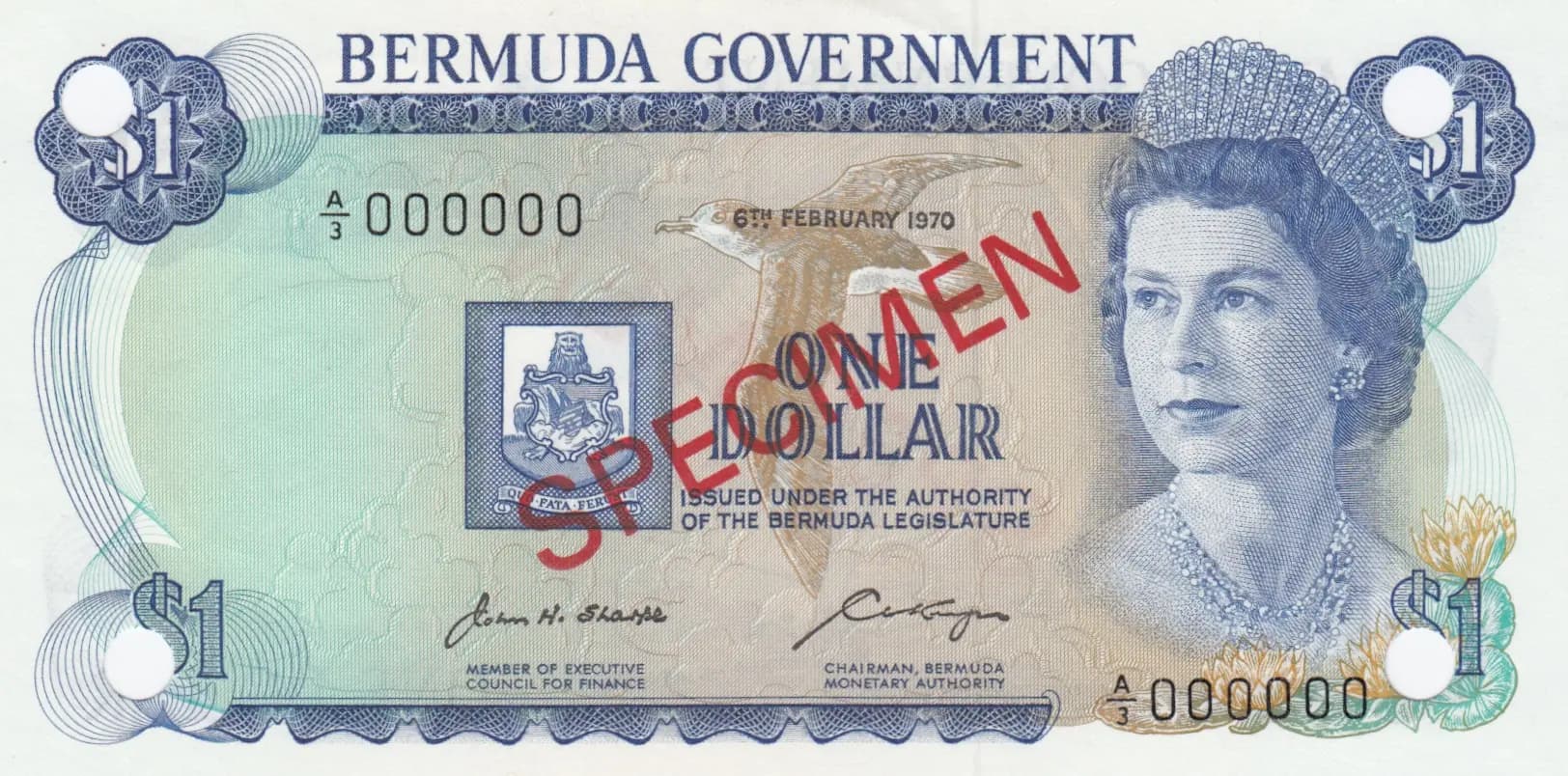
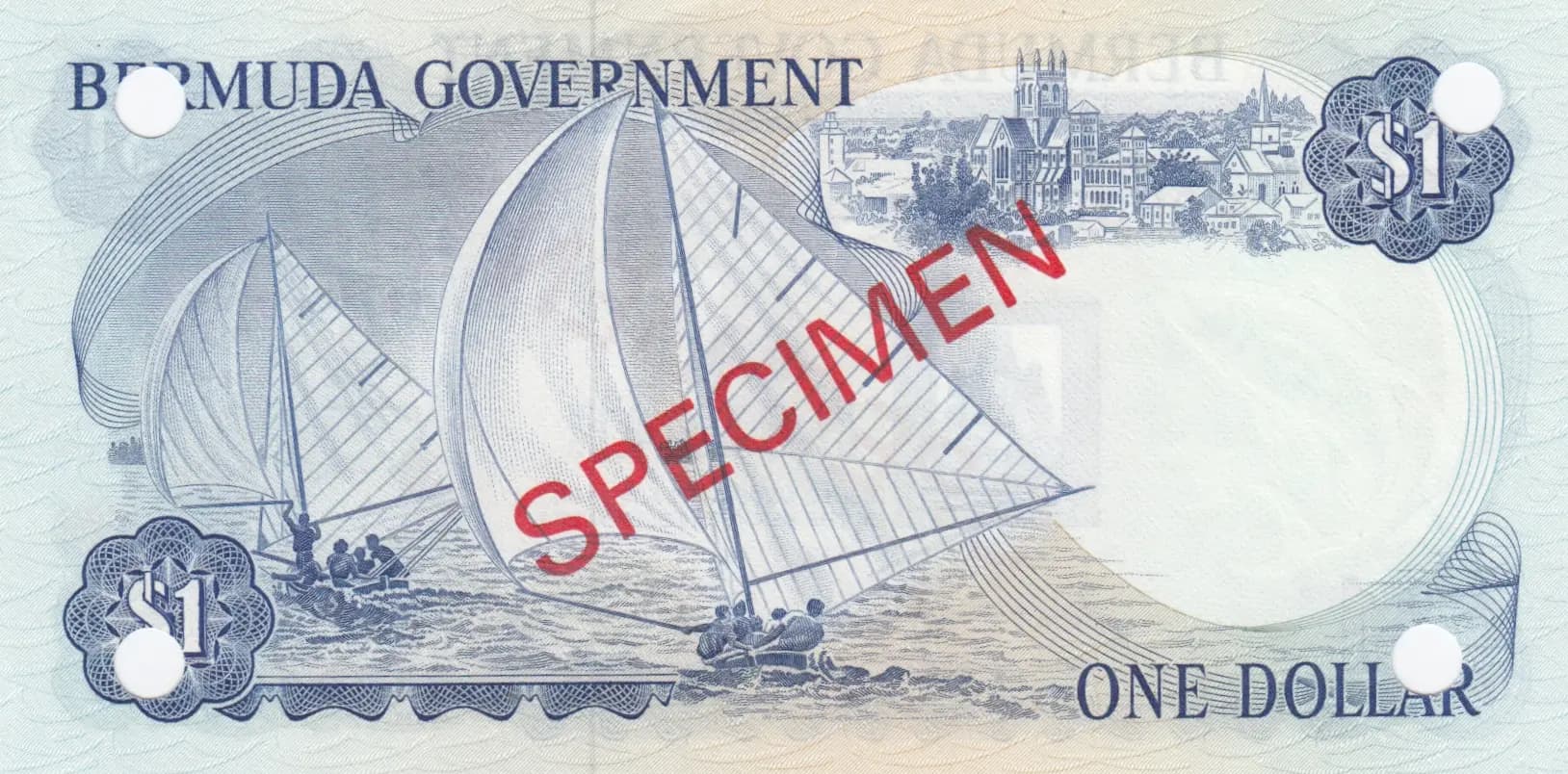
This is a Bermuda Government 1 Dollar specimen note from 1970, graded UNC, representing the first issue of Bermuda's decimal currency system. The note features Queen Elizabeth II in profile on the obverse, with the reverse showcasing a traditional Bermuda-rigged sailing vessel against a colonial harbor scene, reflecting the island's maritime heritage. As a specimen note with prominent red 'SPECIMEN' overprints, it was never intended for circulation and represents an important reference example from Bermuda's monetary transition period.
Common. While specimen notes are generally scarcer than circulating issues, the 1970 Bermuda 1 Dollar specimen remains readily available in the collector market. The catalog value listed at $25 UNC (2019) and eBay sales in the $90-100 range for PMG 64 examples indicate consistent collector demand but no particular scarcity premium. The first decimal issue status and specimen designation create collector interest, but adequate quantities were produced and survived to prevent rarity.
Issued on 6 February 1970, this note marks Bermuda's transition to decimal currency under the Bermuda Monetary Authority. The imagery—combining the reigning monarch with iconic maritime scenes of colonial Hamilton harbor and traditional Bermuda sailing craft—reflects the island's dual identity as a British territory with a proud seafaring heritage. The specimen notes served as reference examples for the banking system and remain important historical records of Bermuda's 20th-century monetary modernization.
The obverse features a three-quarter profile portrait of Queen Elizabeth II positioned on the right side, adorned with jewelry including necklace and earrings, following Commonwealth banknote tradition. The center-left displays the Bermuda Government coat of arms within a square heraldic frame, featuring a shield with the Bermuda seal and the motto 'FATTI FATTI' (Latin: 'Let it be done'). The reverse depicts a meticulously engraved scene of a traditional Bermuda-rigged sailing vessel with full sails deployed on open water, with colonial-era architecture including churches and buildings visible in the background harbor scene, representing Hamilton. The entire note is framed by ornamental rosette designs at the four corners executed in dark blue. The color scheme combines light green and beige on the obverse with light blue and beige on the reverse, complemented by dark blue engraving lines and ornamental borders.
FRONT SIDE: 'BERMUDA GOVERNMENT' (issuing authority), '$1' and 'ONE DOLLAR' (denomination in both symbols and words), '6TH FEBRUARY 1970' (official issue date), 'ISSUED UNDER THE AUTHORITY OF THE BERMUDA LEGISLATURE' (legal authority), 'SPECIMEN' (red overprint indicating non-circulating reference note), 'Jean H. Sharpe / MEMBER OF EXECUTIVE COUNCIL FOR FINANCE' (authorizing official signature), 'Percy / CHAIRMAN BERMUDA MONETARY AUTHORITY' (second authorizing official), 'A/3 000000' (serial number with denomination indicator). BACK SIDE: 'BERMUDA GOVERNMENT' (issuing authority), 'ONE DOLLAR' (denomination), '$1' (denomination symbol), 'SPECIMEN' (red overprint).
Intaglio (relief) engraving combined with multi-color lithography. The fine guilloché patterns, intricate line work, and detailed portraiture indicate professional security printing typical of Commonwealth currency production. The note displays the hallmarks of De La Rue or similar specialist security printers who produced Bermuda's currency during this period, evidenced by the sophisticated anti-counterfeiting design elements including fine line work, ornamental borders, and precise color registration.
This note is Pick 23s (specimen variant). The 's' designation indicates this is a specimen issue with red 'SPECIMEN' overprints, distinguishing it from the circulation issue P-23. The serial number format shows 'A/3 000000' typical of specimen notes. The primary variety characteristic is the specimen overprint in red ink across both sides of the note. This represents the standard 1970 specimen variant with tuna fish watermark as cataloged in PMG records, with no notable sub-varieties observed in the visual analysis.