2 dollars 1974
Market Prices
3 salesAbout This Note
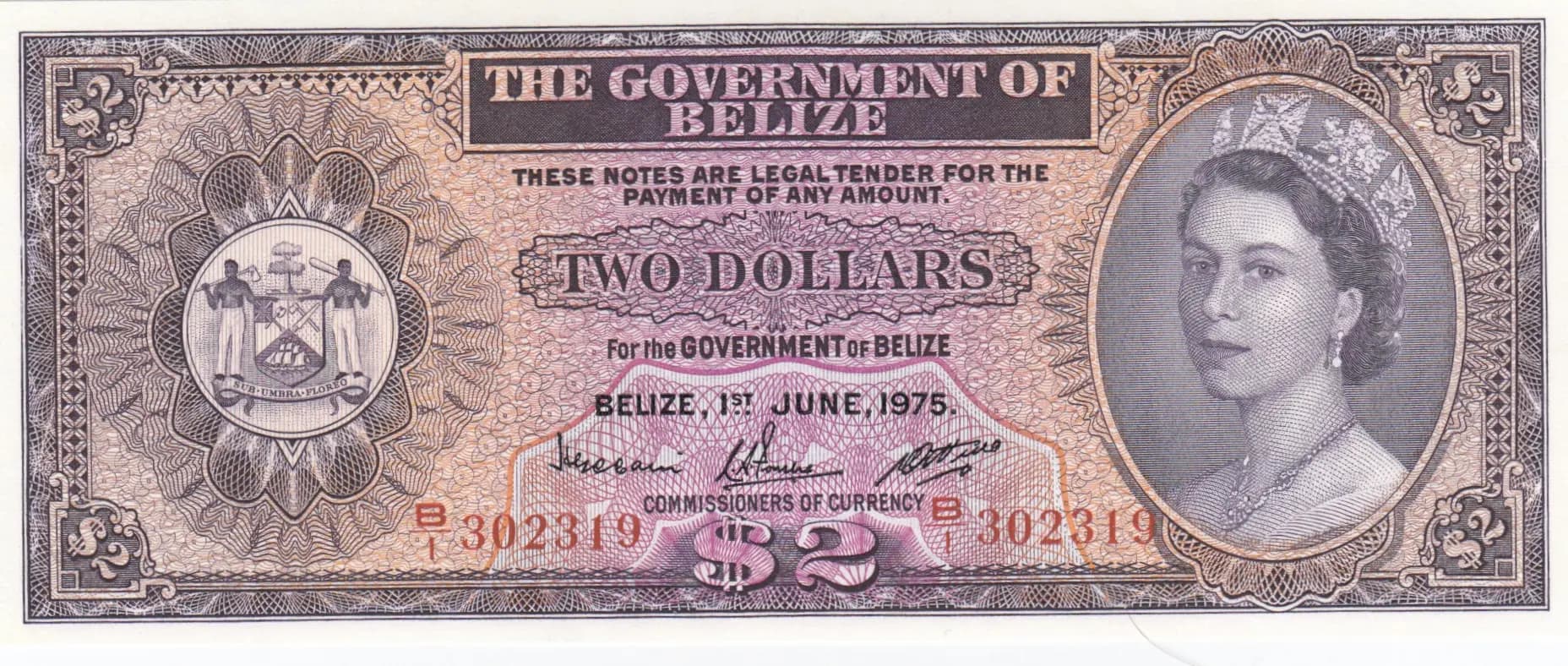
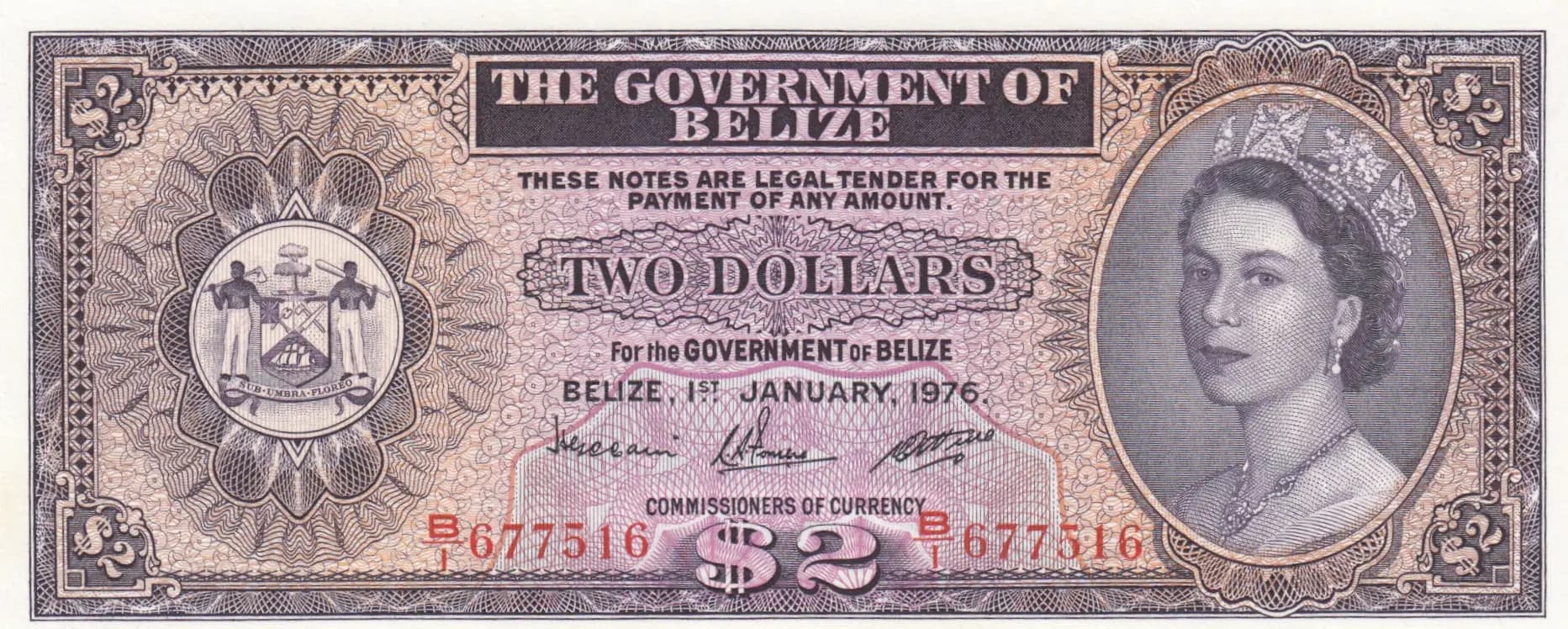
This is a striking uncirculated example of the Belize 2 Dollar note from 1974, the inaugural issue of independent Belize's currency. The note features exceptional detail with crisp, sharp printing throughout, displaying an ornate design incorporating the newly independent nation's coat of arms on the obverse and an elaborate geometric decorative scheme on the reverse. The pristine condition, sharp borders, and absence of any circulation wear make this an attractive specimen for collectors of Commonwealth currency and early post-independence issues.
Common. Despite being the inaugural currency issue of independent Belize, this Pick number was produced in adequate quantities for regular circulation (reflected in the modest catalogue value of $175 UNC and the availability of multiple examples in the secondary market). eBay historical sales data shows UNC examples trading in the $170-175 range, with lower grades (VF, F, PMG 58-64) available at substantially lower prices ($23.50-$169.50), indicating reasonable supply. The note is not from a recalled series, short-lived issue, or extremely limited mintage, placing it squarely in the common range despite its historical significance.
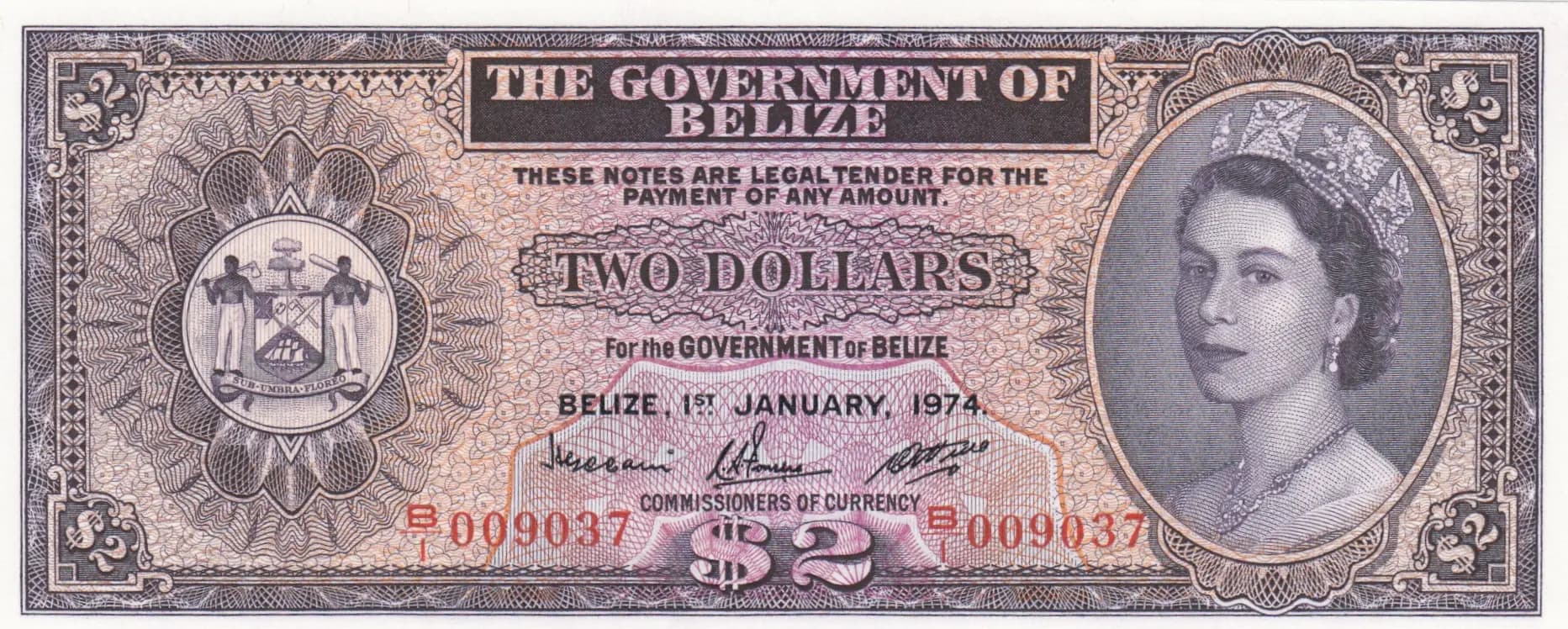
Issued on 1st January 1974, this note marks the establishment of Belize's independent currency system following the country's transition from British Honduras. The obverse prominently features a portrait of Queen Elizabeth II, reflecting Belize's continued membership in the Commonwealth despite achieving independence. The governmental coat of arms, depicted with maritime imagery (featuring a ship) and two supporting figures, symbolizes the nation's maritime heritage and newly sovereign status as it issued its own fiat currency under the authority of the Commissioners of Currency.
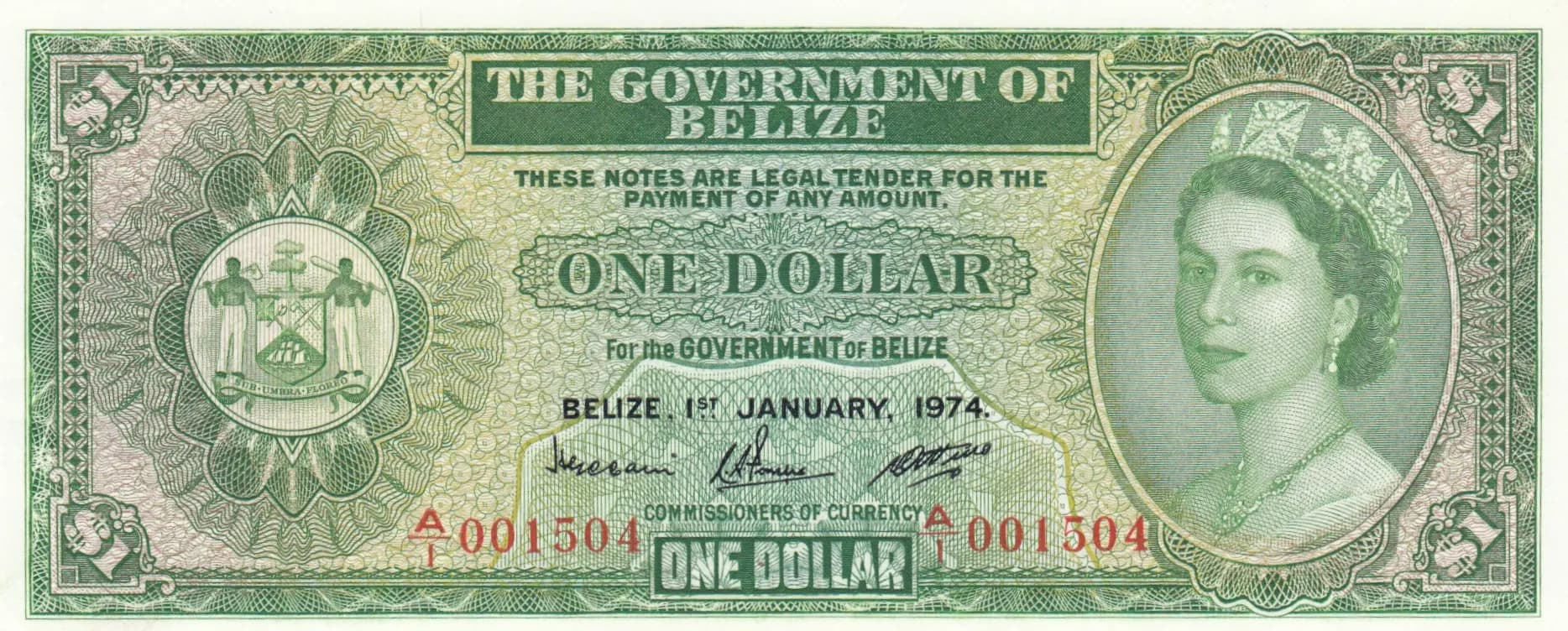
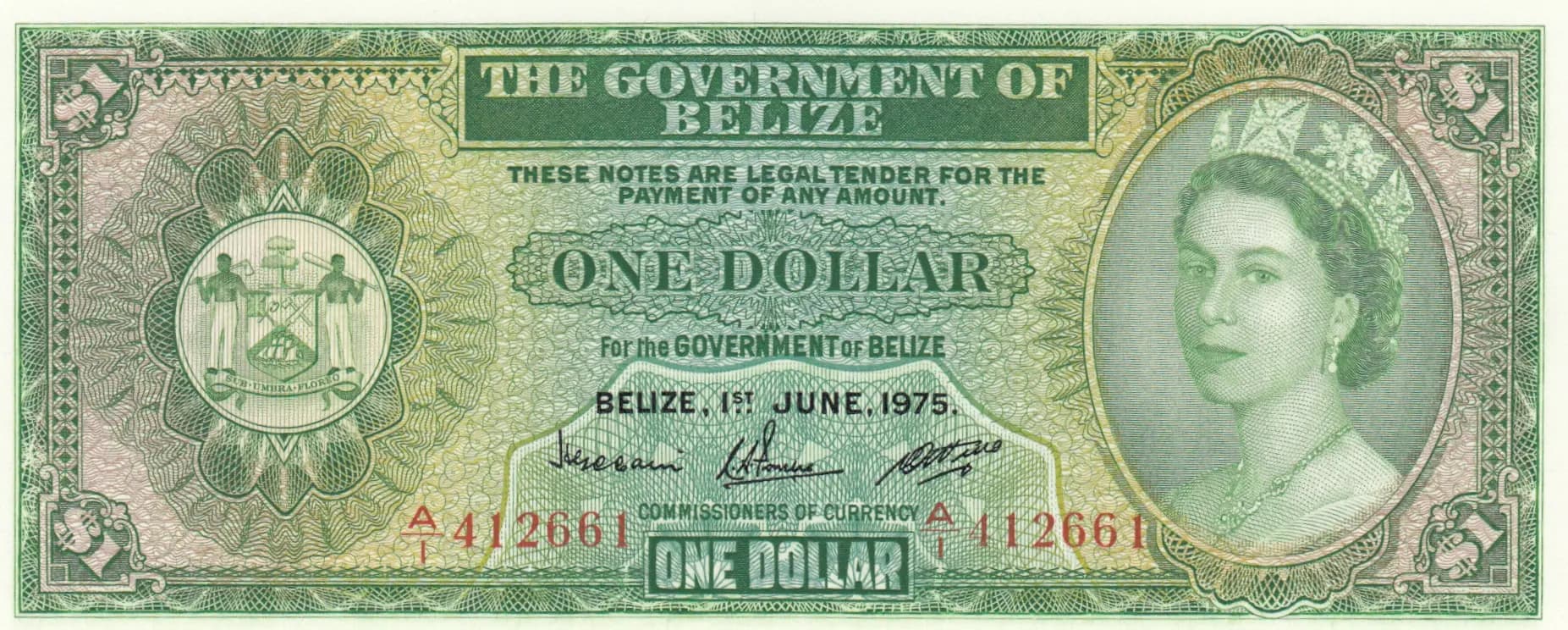
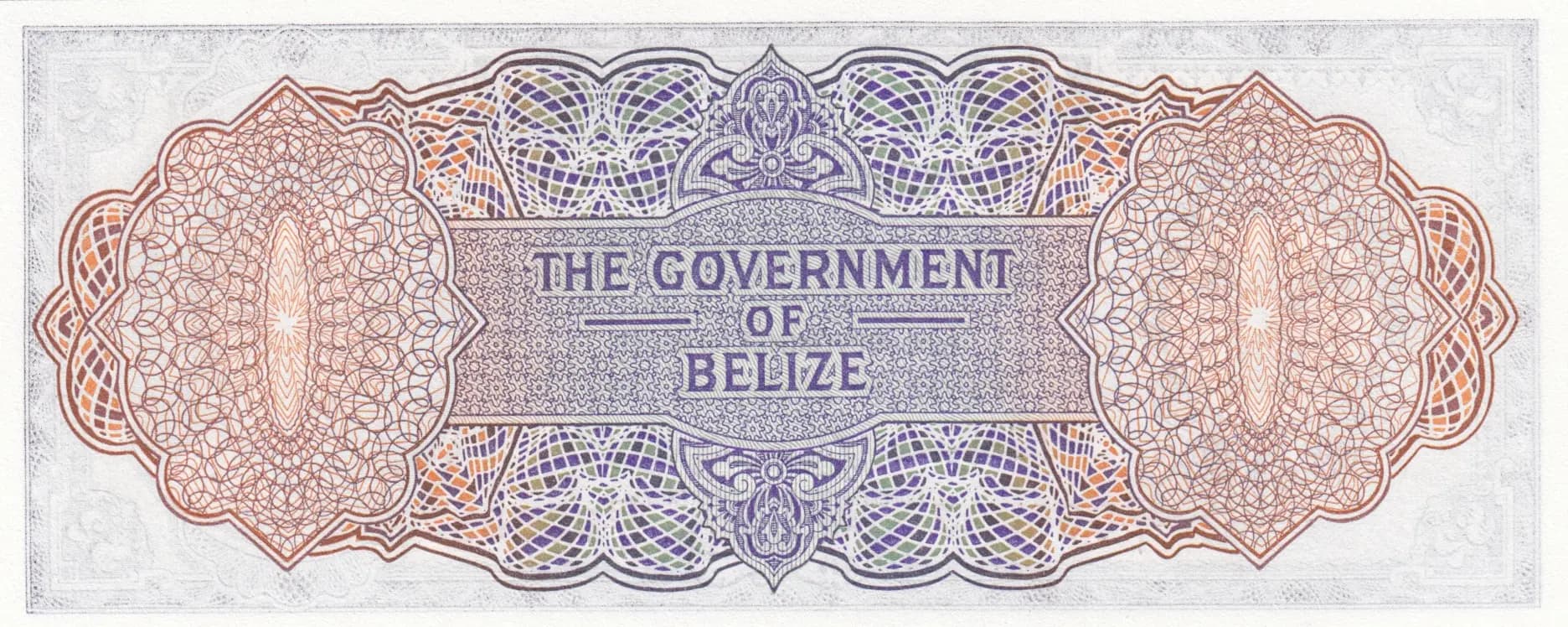
The obverse features Queen Elizabeth II in profile facing left on the right side of the note, rendered in formal state portrait style characteristic of Commonwealth currency of the era. The left side displays the coat of arms of Belize within a circular medallion, incorporating a ship and two figures representing the nation's maritime tradition and dual cultural heritage. The entire design is framed by intricate ornate borders composed of fine geometric and floral patterns in brown, tan, and accent colors. The reverse presents a symmetrical, highly decorative composition centered on a rectangular panel containing the governmental inscription, surrounded by elaborate mesh-work patterns, ornamental corner flourishes, and a crown-like ornamental design at the top—all rendered in brown, purple, blue, and green tones to create visual depth and anti-counterfeiting complexity.
FRONT: 'THE GOVERNMENT OF BELIZE' (issuing authority); 'TWO DOLLARS' (denomination); 'BELIZE, 1ST JANUARY, 1974' (date of issue); 'THESE NOTES ARE LEGAL TENDER FOR THE PAYMENT OF ANY AMOUNT' (legal tender declaration); 'for the GOVERNMENT OF BELIZE' (authorization statement); 'COMMISSIONERS OF CURRENCY' (issuing body); Serial number 'B009037'. BACK: 'THE GOVERNMENT OF BELIZE' (issuing authority designation on central panel).
Intaglio (engraved) printing method, evidenced by the fine line work, intricate geometric patterns, detailed portraiture, and precise border work visible throughout both sides. The sharp definition of the coat of arms, portrait, and mesh-pattern security elements confirms high-quality engraved plate production typical of Commonwealth currency printing. The note was likely produced by a major security printer such as Bradbury Wilkinson or Thomas De La Rue, standard suppliers for British Commonwealth currency issues of this period.
This note is catalogued as Pick P-34a, the primary variety of the 1974 2 Dollar issue. The PMG Population Report indicates four additional varieties exist (P-34b, P-34c, P-34cts, and P-34s), likely representing signature varieties, overprint differences, or printer variants. The observed serial number prefix 'B' and the 1st January 1974 date confirm the standard issue variety; however, without access to signature blocks or detailed comparison with other catalogued varieties, the specific distinguishing characteristics of P-34a versus other Pick variants cannot be definitively confirmed from the visual analysis alone. Collectors should consult detailed Pick or Krause catalogs for clarification on signature and technical distinctions between P-34a through P-34cts.