10 francs 1957
“1.02.57”
Market Prices
35 salesAbout This Note
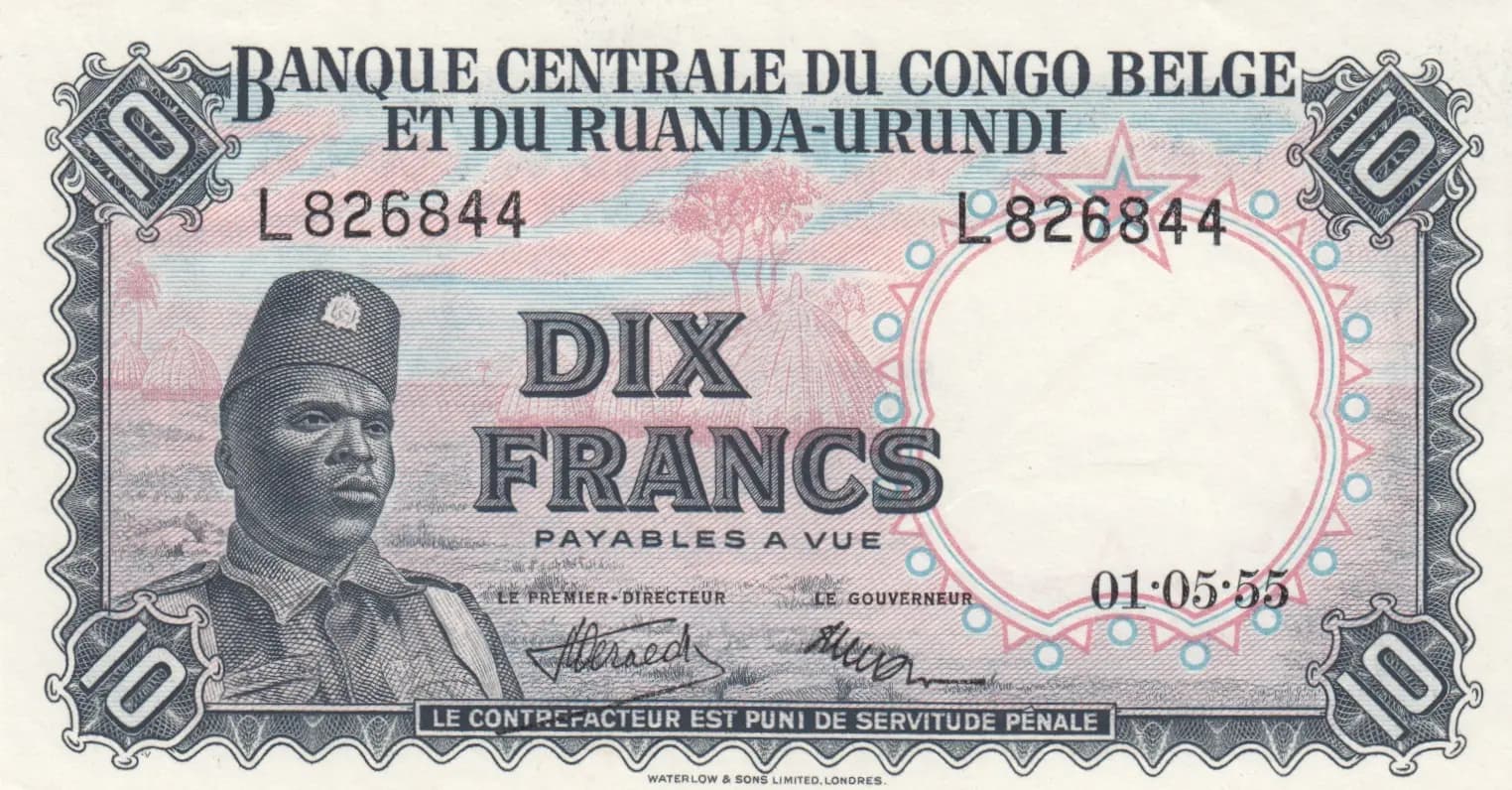
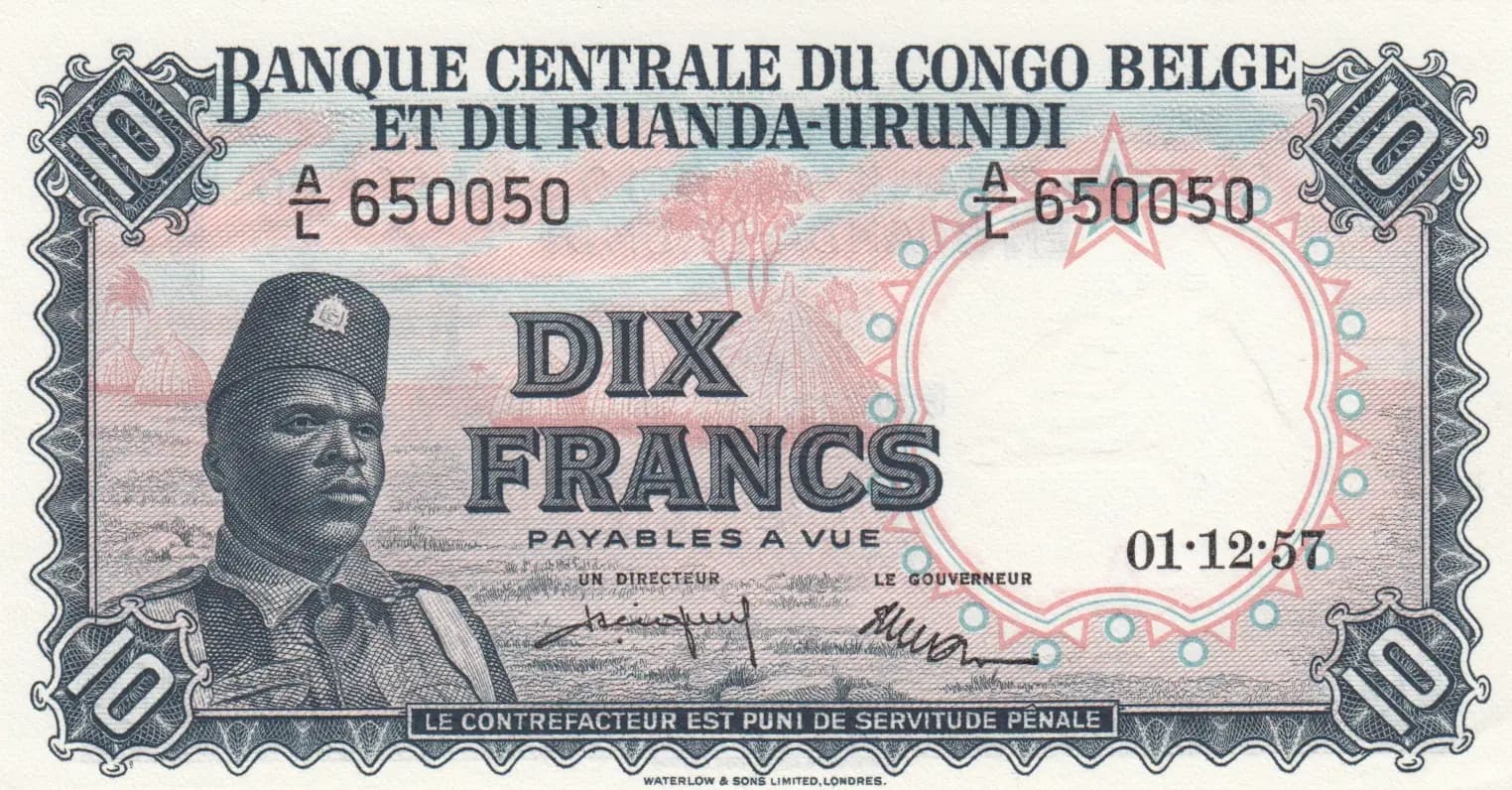
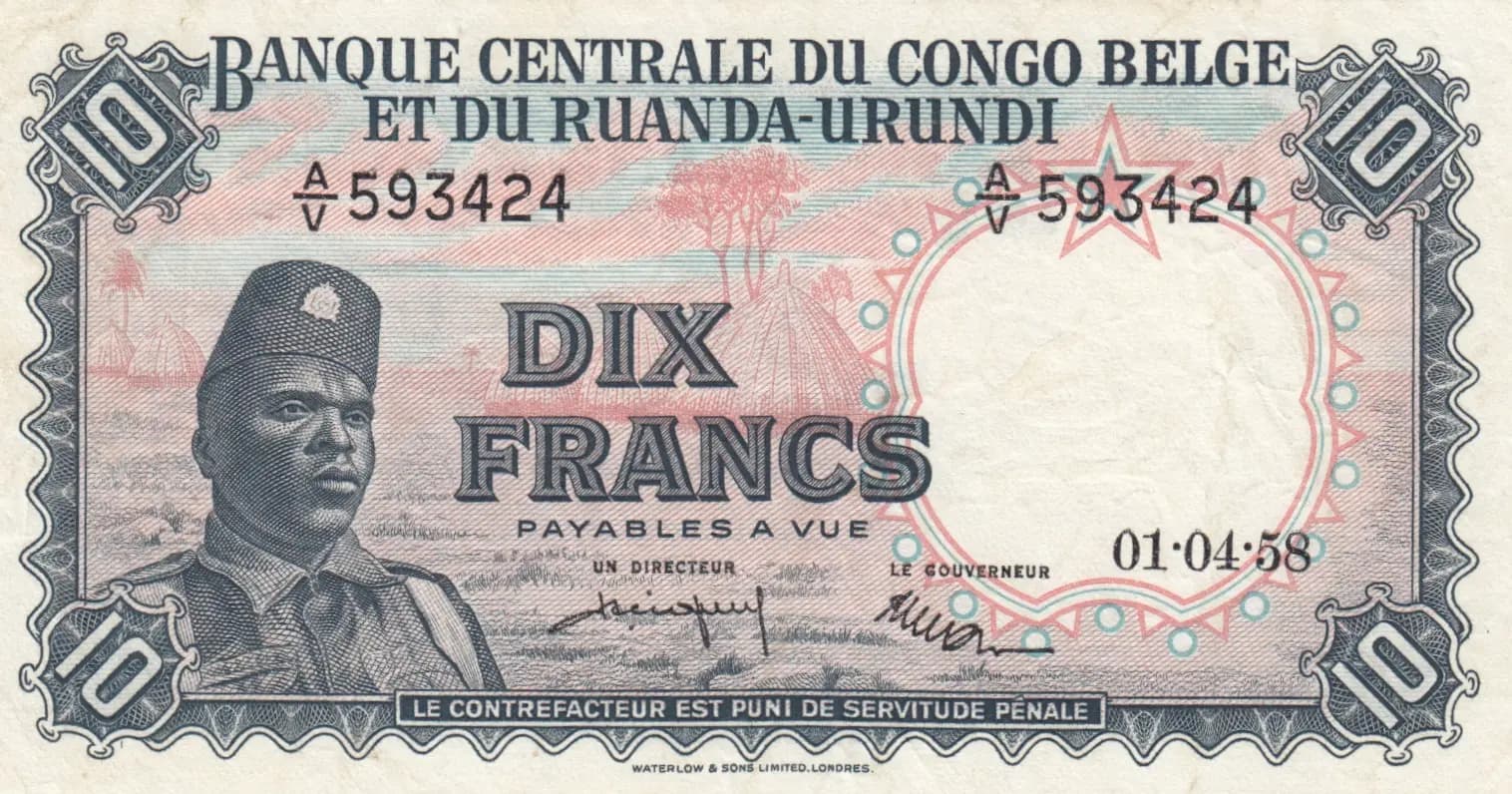
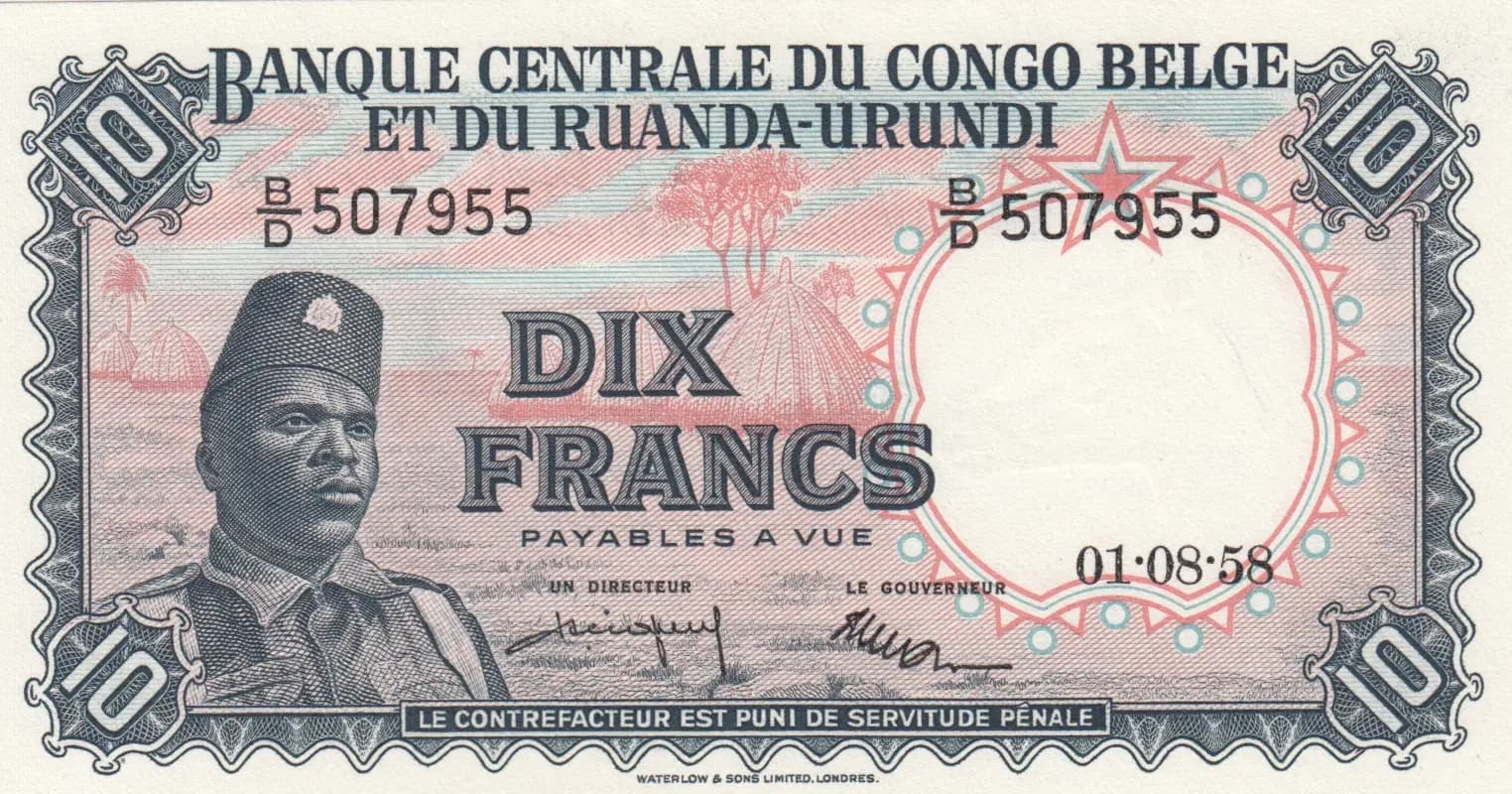
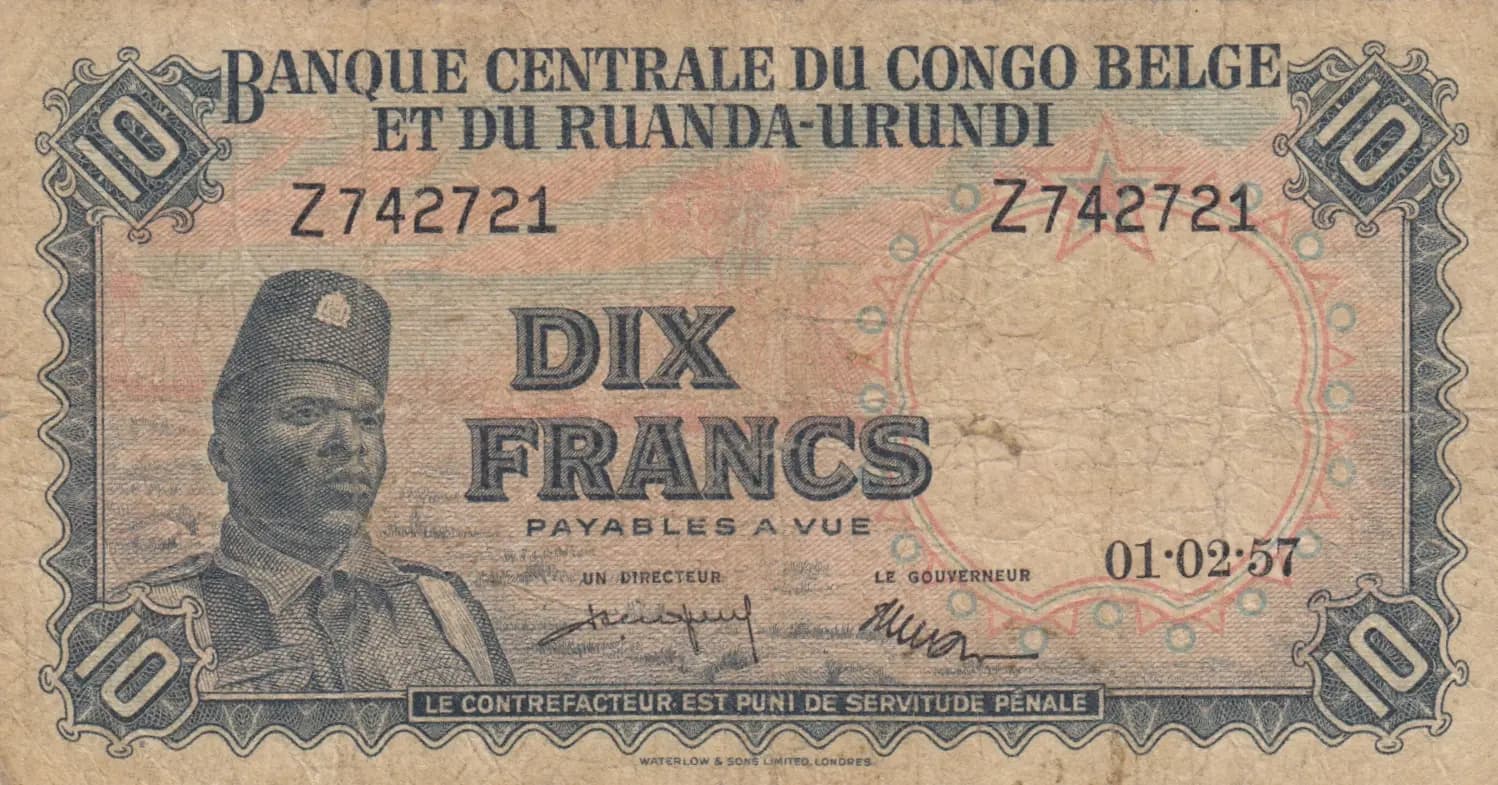
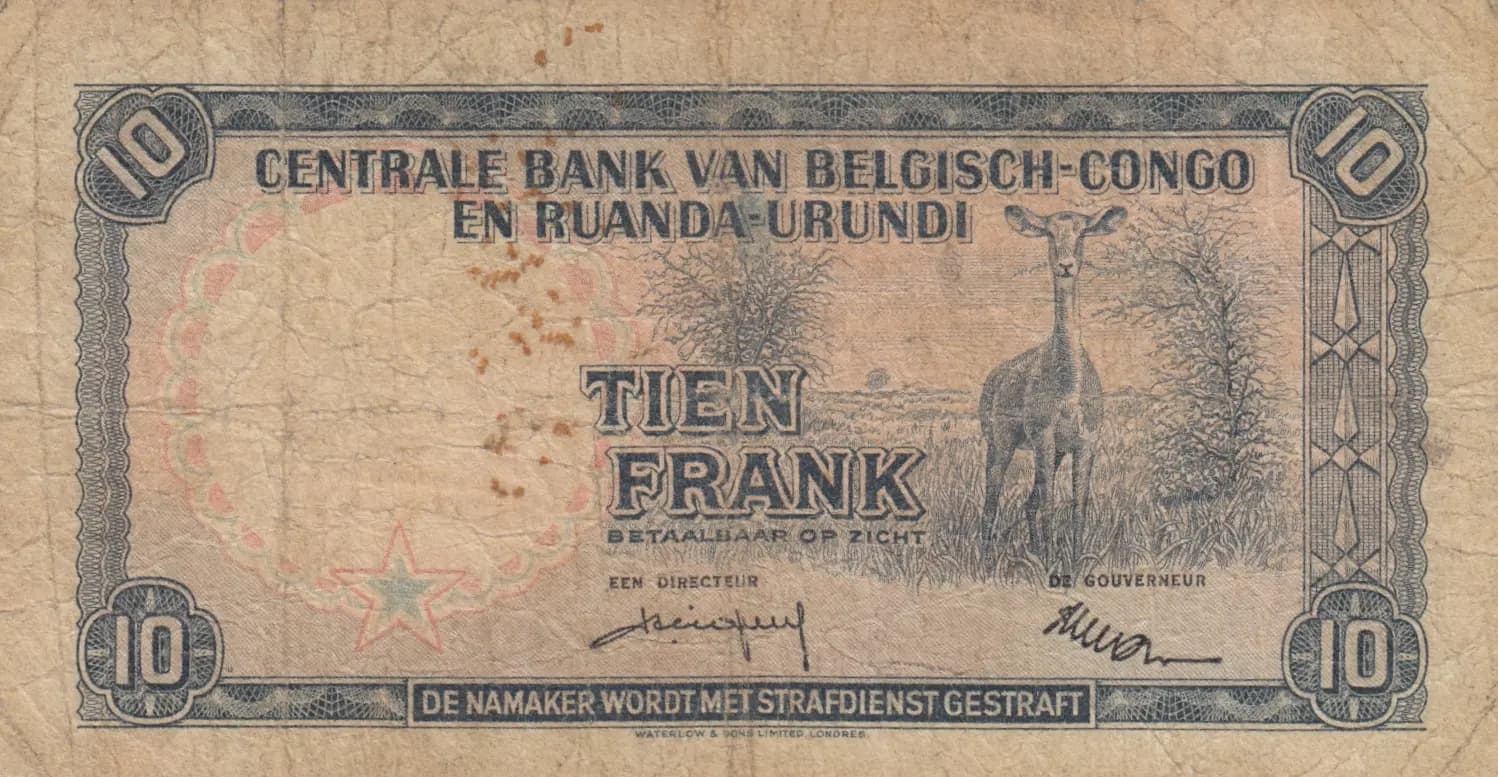
This is a VG-graded 10 Francs note from the Banque Centrale du Congo Belge et du Ruanda-Urundi, dated 01.02.57 (Pick-30b). The note displays the characteristic tan and blue color scheme with visible circulation wear including multiple folds, creases, and light foxing throughout. The front features a portrait of a Force Publique soldier (Askari) in military dress with a distinctive tall hat, while the reverse depicts a giraffe in a savanna landscape with acacia tree—both iconic representations of Belgian Congo colonial imagery.
Common. eBay market data shows consistent sales across multiple condition grades with prices ranging from $5.50 (poor condition) to $166.50 (PMG 66), with VG-graded examples regularly selling for $7.69–$14.50. The 2016 catalog value for VG condition was $2, with VF at $7.50. These price points and consistent market activity indicate this is a readily available note with no particular scarcity. The issue date range 1956-1959 and the issuance by the Banque Centrale (not a short-lived emergency issuer) further confirms common status.
Issued during the final years of Belgian Congo's existence as a colonial territory (this note predates independence by just four years in 1960), the 10 Francs denomination served the colonial administration and general circulation needs. The bilingual French/Dutch inscriptions reflect Belgium's dual linguistic heritage and administrative structure in Congo and Ruanda-Urundi. The imagery—the Force Publique soldier and African wildlife—exemplifies how colonial powers used banknote design to project authority and colonial narratives.
The obverse features a left-facing profile portrait of a Force Publique soldier (Askari), identifiable by his distinctive tall military hat and formal uniform, positioned at the left side of the note. The reverse depicts the note's namesake wildlife element: a giraffe in its natural habitat with an acacia tree, representing the fauna of Belgian Congo. Both sides are framed by ornate decorative borders featuring geometric patterns, diamond-shaped corner ornaments, and wavy line designs typical of early-to-mid twentieth century security printing. The color scheme combines tan/beige undertones with dark blue and gray elements, accented by light pink/rose tinting. Serial number 'Z7142721' appears in multiple locations. The note measures standard banknote dimensions and includes fine-line engraving throughout to prevent counterfeiting.
FRONT (French): 'Banque Centrale du Congo Belge et du Ruanda-Urundi' (Central Bank of Belgian Congo and Ruanda-Urundi), 'Dix Francs' (Ten Francs), 'Payables à vue' (Payable on demand), 'Un Directeur' (A Director), 'Le Gouverneur' (The Governor), 'Le Contrefacteur est puni de servitude pénale' (Counterfeiting is punishable by penal servitude), 'Waterlow & Sons Limited, Londres' (Waterlow & Sons Limited, London). Date: '01·02·57' (February 1, 1957). BACK (Dutch): 'Centrale Bank van Belgisch-Congo en Ruanda-Urundi' (Central Bank of Belgian Congo and Ruanda-Urundi), 'Tien Frank' (Ten Francs), 'Betaalbaar op zicht' (Payable on demand), 'Een Directeur' (A Director), 'De Gouverneur' (The Governor), 'De namaker wordt met strafdienstgestraft' (The counterfeiter is punished with penal servitude), 'Waterlow & Sons Limited Londres' (Waterlow & Sons Limited London).
Intaglio (line engraving) combined with multi-color offset printing, as confirmed by the Waterlow & Sons Limited imprint visible on the note. Waterlow & Sons, based in London, was a prominent security printer specializing in banknote production. The fine-line engraving patterns, ornate borders, and intricate decorative elements are characteristic of intaglio printing's tactile quality and security features. The multi-color printing (tan, blue, gray, pink) required separate passes or color applications typical of mid-20th century banknote production.
This note is catalogued as Pick-30b (Waterlow & Sons printer variant). The PMG Population Report identifies two variants for this base Pick number: P-30a and P-30b, both printed by W&S (Waterlow & Sons). The specific variety P-30b is distinguished by its Waterlow & Sons printing. The serial number format appears to use a letter prefix ('Z' in this example) followed by numerical sequence, consistent with the documented format for this issue. The date notation '01·02·57' on this specimen confirms it falls within the 1956-1959 issue period and represents the early portion of the series.