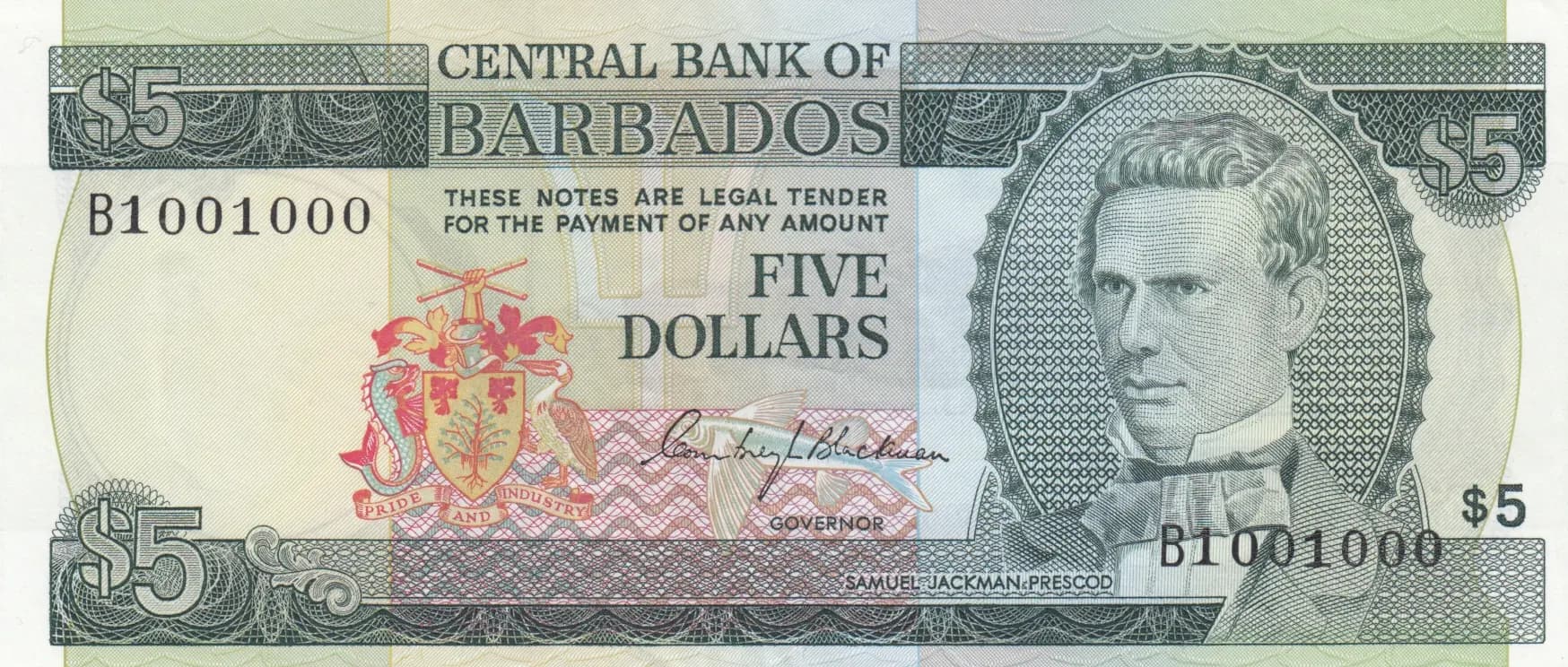
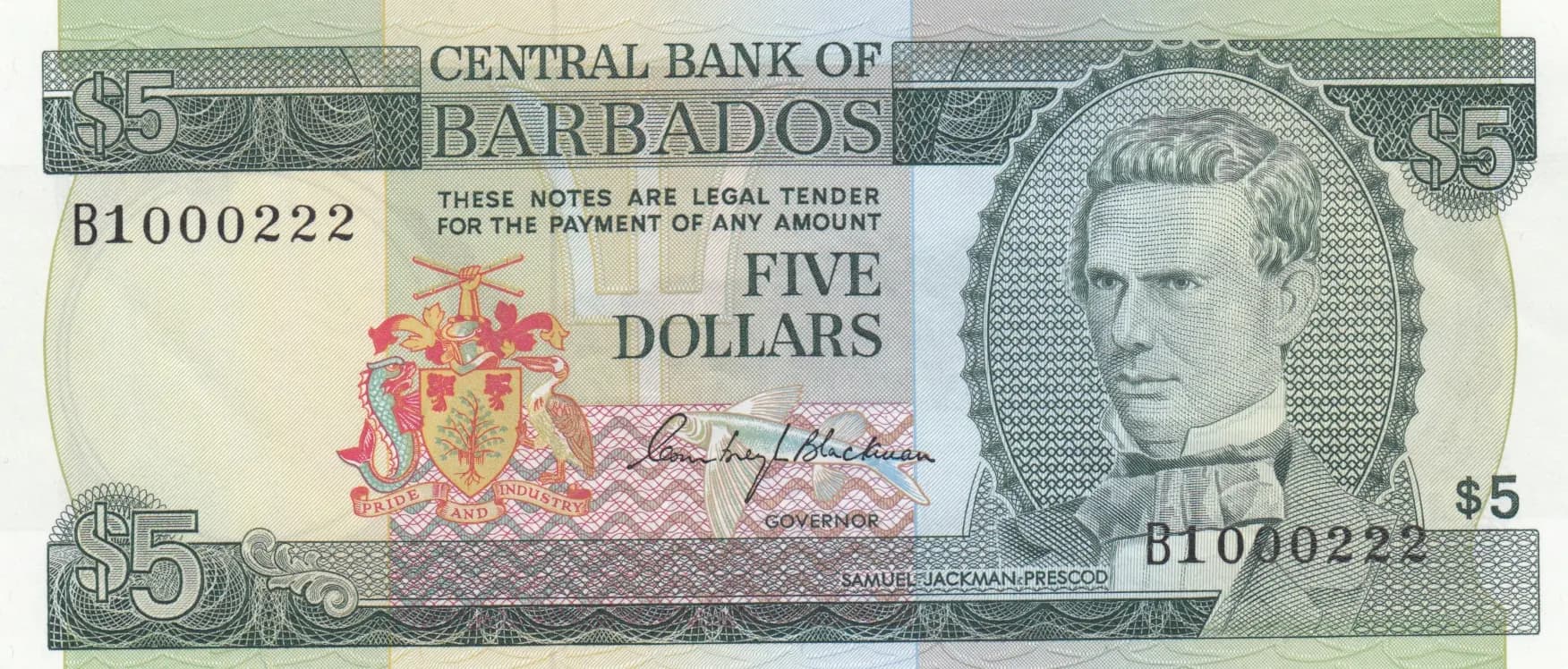
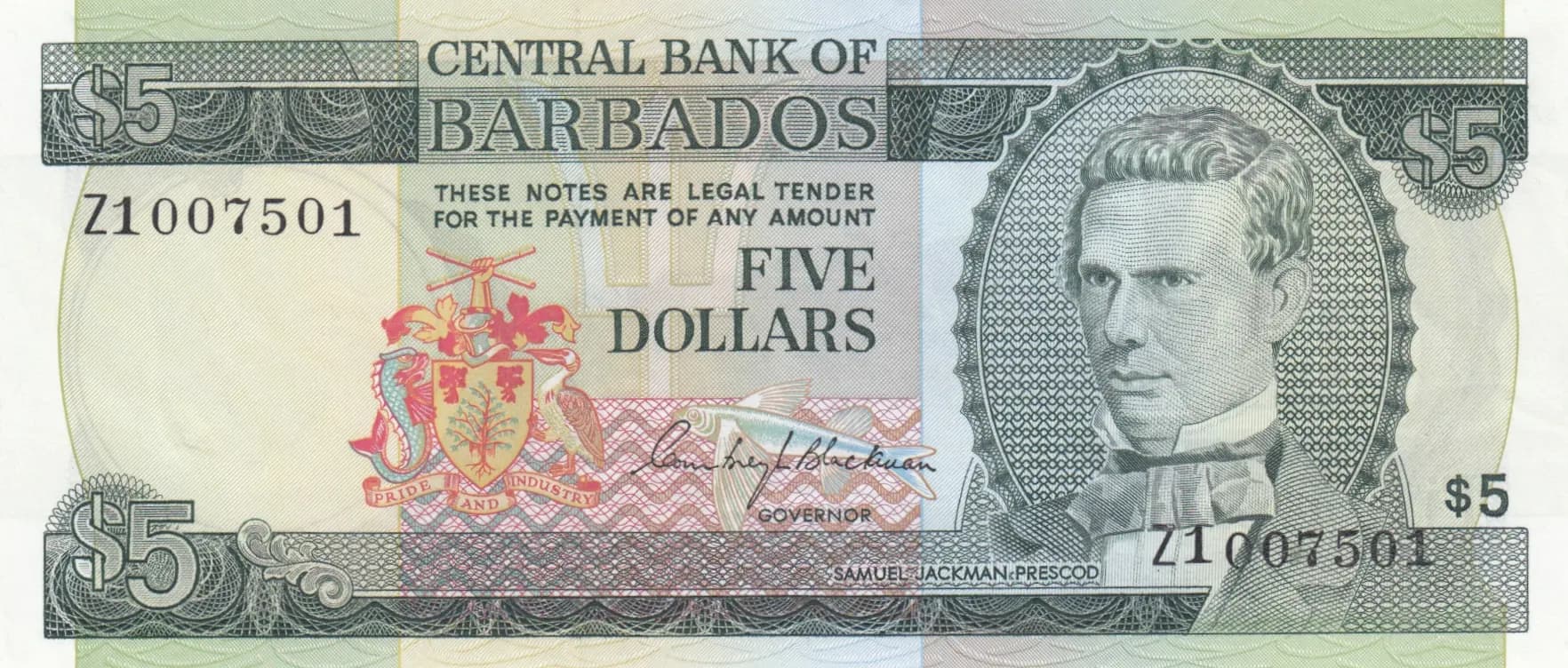
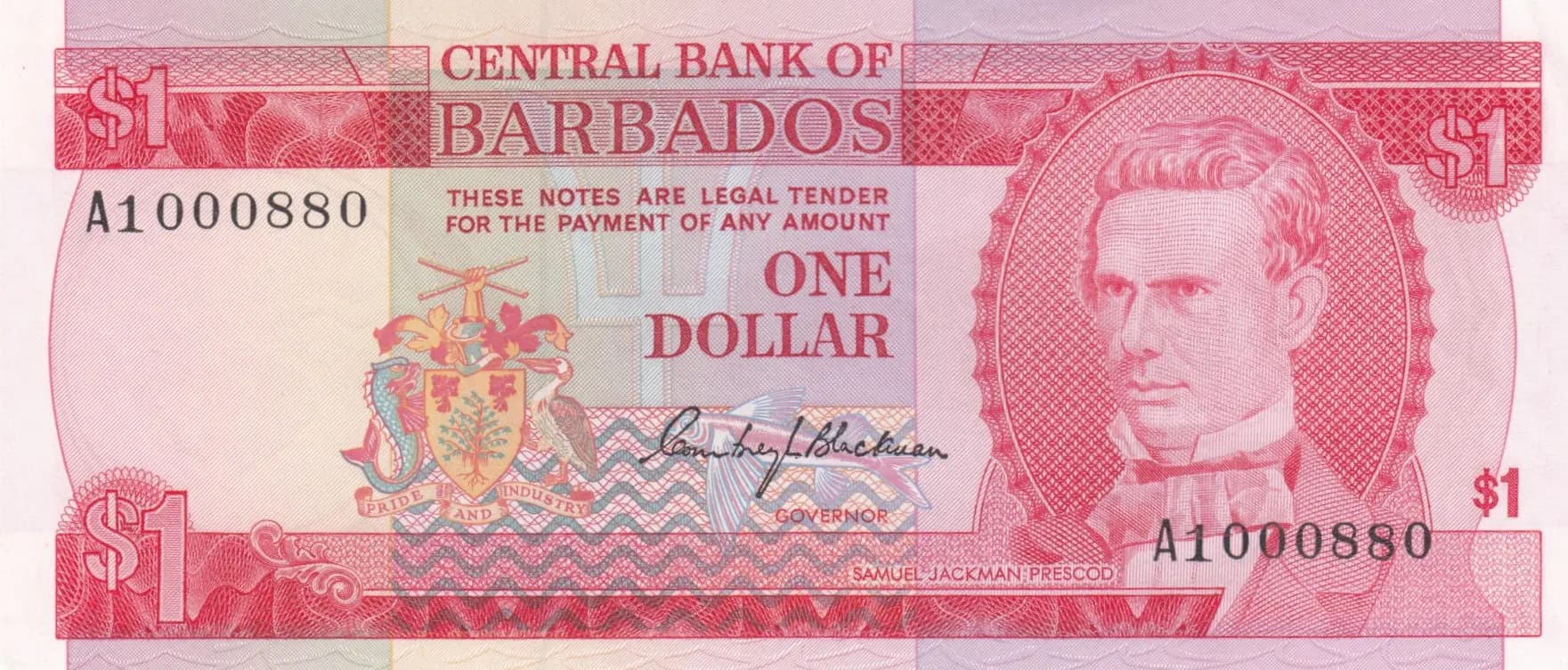
5 dollars 1973 specimen
Market Prices
About This Note
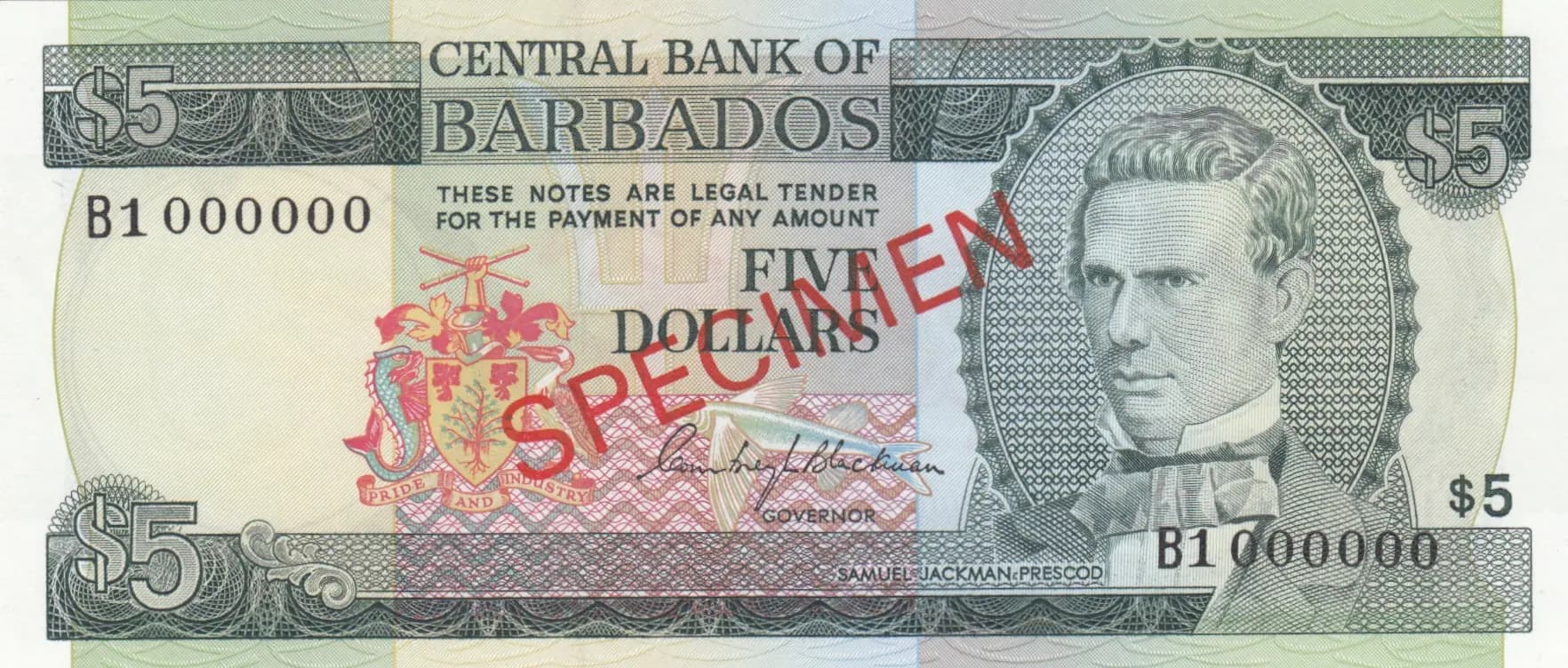
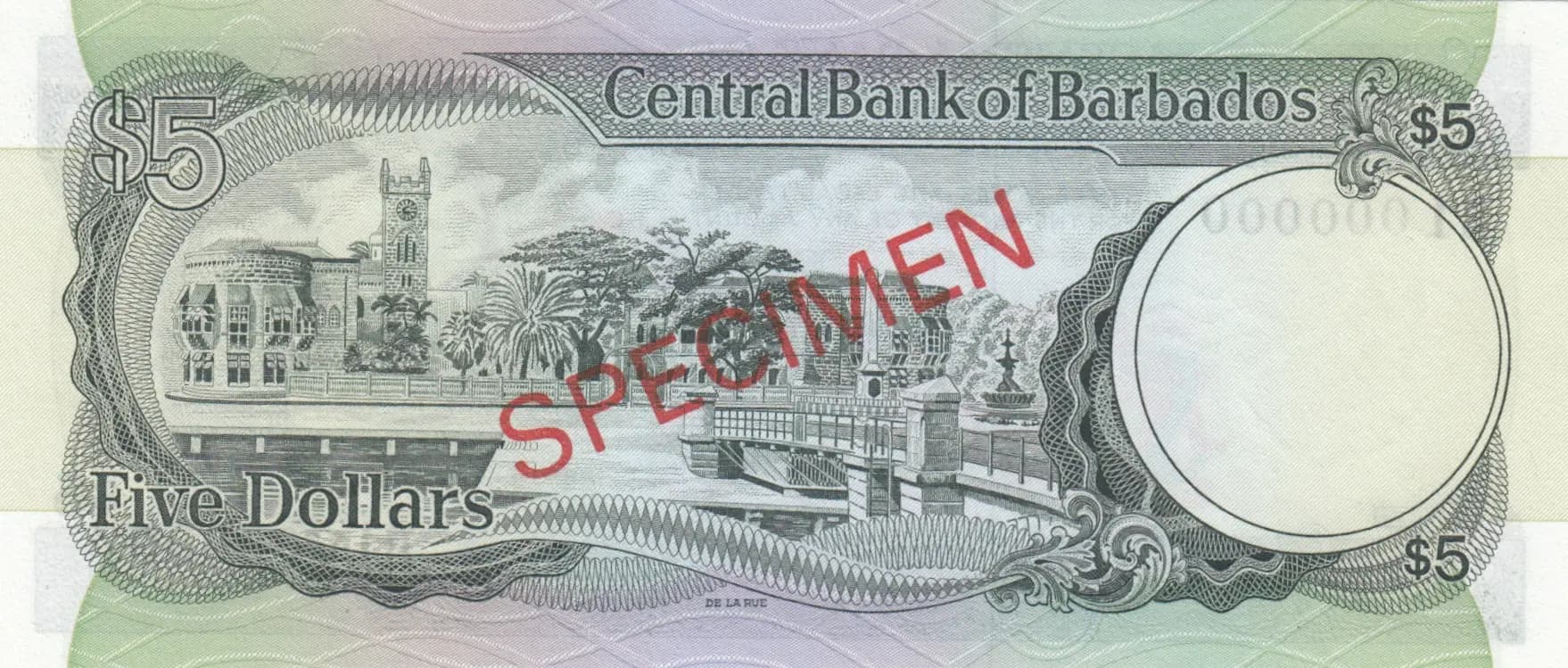
This is a 1973 Barbados $5 specimen note from the Central Bank of Barbados, printed by De la Rue in London. The note features a striking portrait of Samuel Jackman Prescod on the obverse and an architectural scene of Trafalgar Square (National Heroes Square) in Bridgetown on the reverse, both rendered in green and gray tones with fine engraving throughout. In uncirculated condition with a prominent red 'SPECIMEN' overprint, this note exemplifies the high-quality banknote design standards of the early post-independence Caribbean period.
Common. While specimen notes are technically non-circulating issues with smaller print runs than regular notes, this 1973 issue is widely available in the collector market. eBay pricing data shows specimen examples trading consistently in the $6–$20 range, with only exceptional grades commanding higher prices (one XF example at $49). The 2019 catalogue value of $90 for UNC appears optimistic relative to actual market activity. Barbados specimen notes from this era were produced in sufficient quantities for institutional and archival distribution, making them readily obtainable for collectors without premium pricing.
Issued in 1973, three years after Barbados achieved independence from British rule in 1966, this banknote celebrates the nation's heritage through the portrait of Samuel Jackman Prescod, a 19th-century educator and social reformer who played a crucial role in Barbadian history. The depiction of Trafalgar Square (renamed National Heroes Square in 1999) on the reverse reflects the colonial architectural legacy that remained central to Bridgetown's civic identity during this formative post-independence period. The Central Bank of Barbados' adoption of De la Rue's prestigious printing standards signals the young nation's commitment to modern currency security and international credibility.
The obverse features a left-facing profile portrait of Samuel Jackman Prescod positioned at the right side of the note, rendered in fine engraving with historically accurate styling. To the left center appears the coat of arms of Barbados featuring a shield with heraldic elements and a crowned top, surrounded by ornate scrollwork and decorative flourishes in all corners. The reverse displays an engraved architectural scene of Trafalgar Square (now National Heroes Square) in Bridgetown, featuring a prominent colonial-era church or government building with a distinctive clock tower, accompanied by tropical vegetation including palm trees, stone walls, and what appears to be a monument or statue on the grounds. Both sides employ intricate geometric cross-hatch patterns and fine line engraving as security features. The overall color scheme is predominantly green and gray on white stock.
FRONT SIDE: '$5' (denomination), 'CENTRAL BANK OF BARBADOS' (issuing authority), 'THESE NOTES ARE LEGAL TENDER FOR THE PAYMENT OF ANY AMOUNT' (legal tender declaration), 'FIVE DOLLARS' (denomination in words), 'SPECIMEN' (indicating non-circulating specimen), 'GOVERNOR' (signature designation), 'SAMUEL JACKMAN PRESCOD' (portrait identification), 'B1000000' (serial number), 'PRIDE INDUSTRY AND FAITH' (national motto of Barbados). REVERSE SIDE: 'Central Bank of Barbados' (issuing authority), '$5' (denomination), 'Five Dollars' (denomination in words), 'SPECIMEN' (specimen overprint), 'DE LA RUE' (printer/engraver identification).
Intaglio engraving (steel engraving) executed by Thomas De la Rue of London, the preeminent British banknote security printer of the 20th century. The fine geometric patterns, detailed portraiture, and intricate line work visible throughout both obverse and reverse are characteristic of De la Rue's intaglio process. The specimen overprint in red was applied separately after the primary engraving was completed.
This note is catalogued as Pick P-31s (specimen variant). The visual analysis confirms the signature of C. Blackman (Governor), the De la Rue printer mark, and the characteristic red 'SPECIMEN' diagonal overprint. The serial number visible is B1000000, typical of specimen notes which often feature sequential or special serial number ranges. PMG cataloguing records indicate P-31a as the primary variant (standard issued notes), confirming this specimen issue as a distinct and documented variety within the Pick catalogue system.